Range Rover GT reimagines off-road royalty as a sporty electric grand tourer
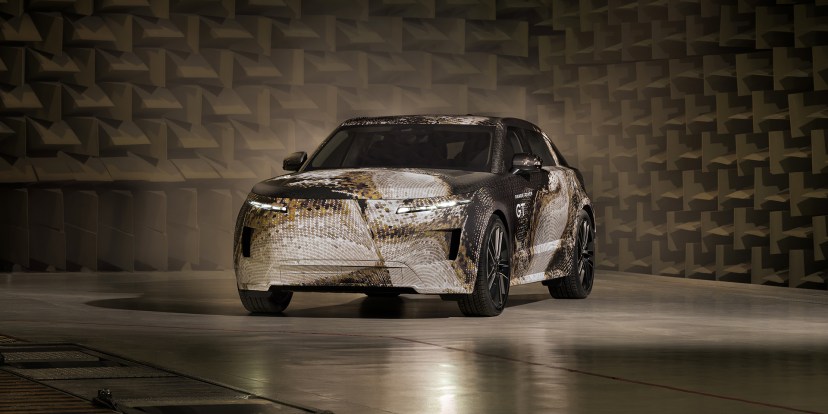
The standard recipe for British luxury has always been reassuringly predictable: take a towering, brick-shaped vault of absolute opulence, line it with the finest hides, and give it the ability to conquer a muddy hillside or cruise down a boulevard with equal disdain. But the rules of the road are changing, and the newly teased Range Rover GT is a fascinating, low-slung curveball that completely tilts the axis of the brand. Purists might scoff at the idea of a Range Rover trying to mimic a sleek, fastback grand tourer - after all, a proper Solihull product is supposed to look like a rolling country manor. But, seeing this new dynamic shape breaking cover confirms that the luxury marque is tired of building high-riding fortresses and is ready to chase a sporty, road-biased edge.
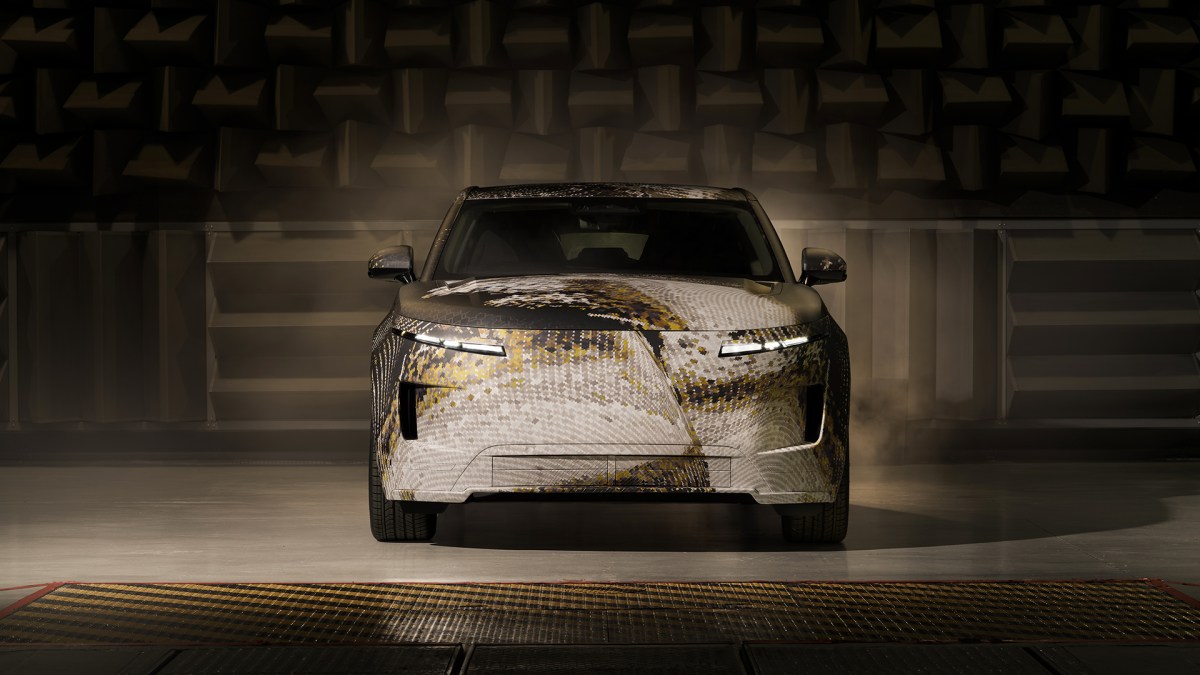
The visual drama here is entirely dictated by the wind tunnel and a heavy dose of modern stance. It is easily the lowest vehicle in the brand's history, dropping the traditional two-box SUV silhouette for a heavily raked, fastback rear screen that drops sharply just past the rear wheels. By stretching out to roughly 189 inches in length, it mirrors the footprint of its siblings, but sits much closer to the tarmac. Much of that road-hugging attitude is down to engineering realities: anchoring a massive 1,623 lb battery pack flat between the axles naturally drops the center of gravity straight to the floor. The result is a striking coupe-SUV aesthetic with a slitty, trapezoidal glasshouse fighting the vast expanse of sheet metal.
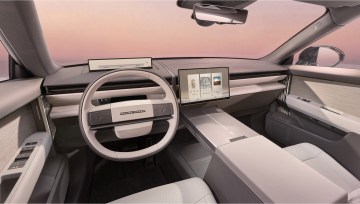
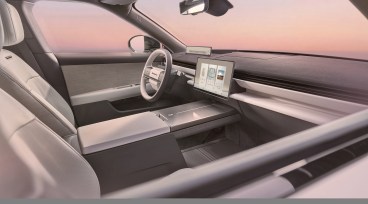
Step inside, and you are met by a masterclass in modern minimalism. Range Rover calls it their "reductive design" philosophy, but to me, it looks like it was lifted clean off a high-end residential interior designer's drawing board. The dashboard is dominated by uncompromisingly straight lines, anchored by a full-width concealed air vent sitting above a floating horizontal shelf inspired by the clean lid of an upright piano (at least that's what Range Rover says). The flat top of the dash is wrapped in a porous, tactile fabric that does double duty by letting acoustics pour through from a hidden central speaker. If you are the kind of driver who likes a physical button for every conceivable function, prepare to be disappointed - apart from the steering wheel controls and the window switches on the armrest, the cockpit is an absolute desert of switchgear, relying instead on a conversational AI to manage the onboard environment.
The undisputed star of the dashboard is a crisp, 13-inch OLED touchscreen that floats in the center like a swollen tablet. Measuring just 0.67 inches thick, it handles the heavy lifting alongside a slim digital driver's binnacle and a standard Head-Up Display. JLR's engineering team has thankfully avoided the annoying habit of replicating identical information across all three screens, preferring to prioritize vital data exactly where your eyes need it. Up front, the layout feels intimately driver-focused, with a center console nicknamed "the bridge" that separates the driver and passenger in a manner that reminds me of the shocking Jaguar Type 00 concept. The bridge has a translucent sliding cover, which creates a subtle ambient glow as the light from smartphones resting on the twin wireless charging pads radiates softly upwards through the material - clever for sure, but a bit too much drama.
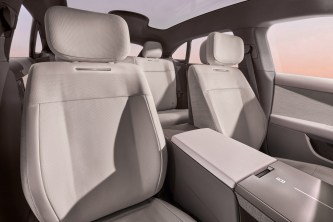
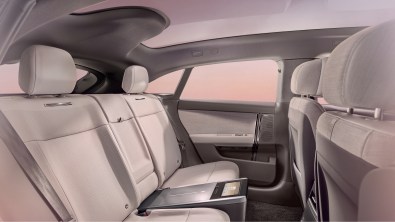
As a proper grand tourer, rear-seat comfort is where this machine needs to make its case, and it delivers in buckets. Opting for the sporty four-seat configuration grants you a fold-down central armrest with its own dedicated climate control screen, sliding cup holders, and dual wireless phone chargers. Range Rover claims that this platform offers class-leading space, and sitting in the back confirms it: the generous 8 inches of rear kneeroom easily eclipses direct luxury electric rivals like the BMW iX3 or the new Volvo EX60, which often leave taller passengers feeling tightly packaged on long journeys. When put against a wider market, the GT's low-slung posture occupies a curious middle ground - wider and more planted than a typical mid-sized electric crossover, and yet with a cabin space that punches well into the territory of larger luxury haulers.
Under the skin we find JLR's much-awaited Electric Modular Architecture, or EMA - an architecture that carries quite a bit of corporate backstory. Conceived during a chaotic period of shifting market winds, EMA was initially meant to be a hybrid-compatible platform before former JLR executives famously declared it would go fully electric to catch the global EV surge. Then, as global premium EV demand hit a bumpy patch, JLR scrambled to bake hybrid flexibility back into the product roadmap. Because of that sudden engineering pivot, the hybrid variants are delayed until at least 2028, forcing this sleek GT to spearhead its launch in 2027 as a pure battery-electric vehicle.
To keep this heavy-hitting tourer moving over long distances, the battery setup gets advanced prismatic cells sourced from Tata's gigafactory in Somerset. The cell-to-pack design groups these modules directly into a single-layer rectangular tray, skipping heavy structural framing to save precious mass while allowing engineers to cram up to 120 kWh of capacity into the floor. While it stops short of being a true structural cell-to-body setup like you find in a Tesla or a BYD, the layout maximizes packaging efficiency by pushing the heavy power electronics transversely under the rear seats. Fed by an 800V electrical architecture, the GT targets a long-legged 500-mile highway driving range and hooks up to 350 kW DC fast chargers to juice the pack from 10% to 80% in close to 20 minutes.
When it comes to actually tearing up the tarmac, the GT relies on in-house developed permanently excited synchronous motors paired with advanced silicon carbide inverters. Apparently, scouring external suppliers for 18 months yielded nothing capable of balancing low-speed off-road crawling with high-speed road efficiency, so Range Rover built their own Electric Drive Units. If the outputs mimic its upcoming big brother, the full-sized Range Rover Electric, we can expect a dual-motor, all-wheel-drive setup sending at least 542 bhp and 627 lb-ft of torque to the pavement. The instant, microscopic torque adjustments of these electric motors mean the integrated traction management system can stamp out wheel slip 100 times quicker than old-school mechanical solutions, allowing those electric ponies to go wild without throwing you into a ditch.
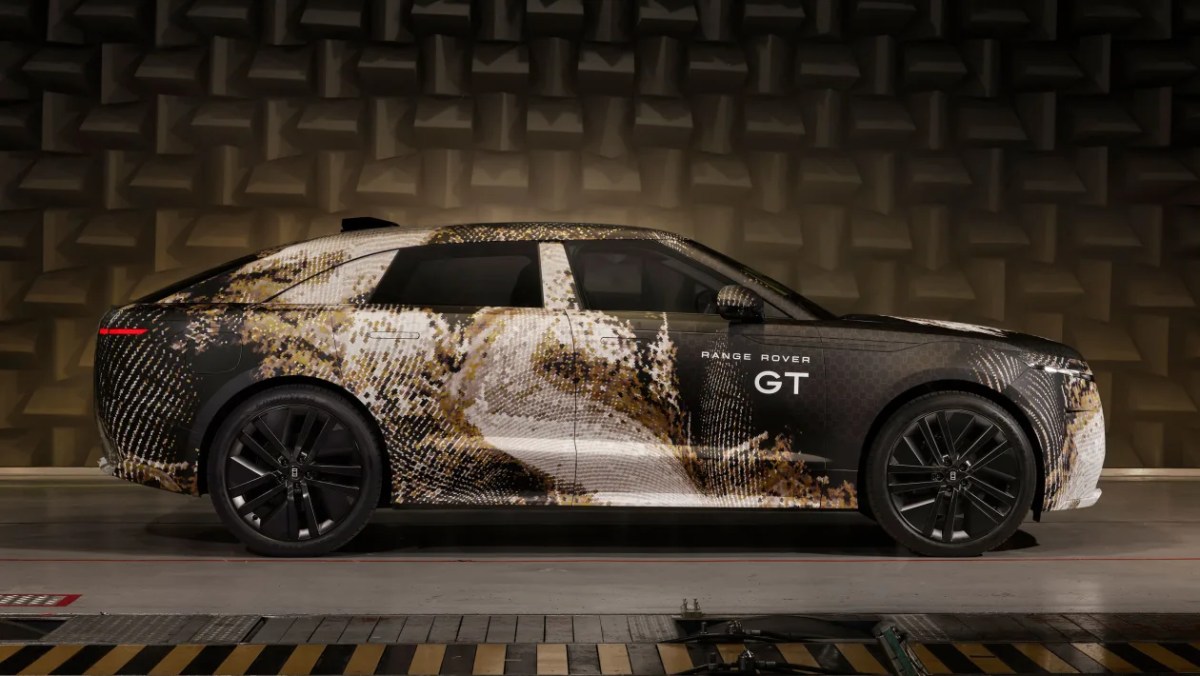
Lest you think this is purely a boulevard cruiser, the engineers have kept the legendary Terrain Response system, ensuring this low-slung fastback can still crawl over rocks, tackle deep mud, and wade through up to 35.4 inches of standing water. Production will begin in the first half of 2027 at the upgraded Halewood facility on Merseyside, following a massive investment to retool the production lines. As for the financial damage? The dino juice-powered Velar kicks off around $78,300, meaning this heavy dose of next-generation electric opulence will easily command a luxury premium well in excess of $96,000 when order books open. It is a steep entry price for sure, but for a vehicle that successfully bridges the gap between high-riding off-road royalty and low-slung asphalt carver, it is a fascinating new chapter for the brand.
Related


Reader comments
Nothing yet. Be the first to comment.