The sub-$30,000 Kia EV3 arrives in the US at the perfect moment
Spend five minutes reading industry headlines, and you could swear the electric transition had hit a brick wall. We love a good crisis - tales of unsold inventory on dealer lots, companies dusting off combustion blueprints, and buyers going back to the familiar embrace of gas station.
But walk into an American showroom right now, and sales don't show any signs of stopping. Automakers are shifting cars at an extraordinary clip. Nobody embodies this slightly cheeky momentum quite like Kia, an outfit that transitioned from building bargain-bin penalty boxes twenty-odd years ago into a design-led titan capable of humbling Detroit and Stuttgart alike.
The Korean brand chalked up its best August in corporate history, delivering 83,793 vehicles in the United States alone - a tidy 1% lift year over year and an all-time monthly high. Through the first eight months of the year, Kia has found homes for 590,377 cars, running 3% ahead of last year's record-smashing pace and practically guaranteeing its fourth consecutive annual sales record.
But look closer at those figures, and there's a glaring split. It's not EVs that are driving all this success in the US. Traditional combustion staples and electrified hybrids are doing all the heavy lifting. The Seltos surged 53%, the Carnival people-carrier jumped 13%, and hybrids across the board spiked 99% in August, spearheaded by the Sportage Hybrid leaping 40% and the Sorento Hybrid climbing 22%. Across the first eight months, Kia's hybrid volume is up 111%.
Then you look at pure battery-electric vehicles, and the champagne stays in the fridge. Pure EVs took a beating last month: the swoopy EV6 plummeted 60% year over year to 712 units, leaving its year-to-date tally down 39% at 5,429 cars. Even the huge three-row EV9 slipped 33% in August to 1,789 registrations, but its year-to-date total still sits comfortably in the black at 10,474 units, up 12%.
The culprit behind this stall is neither range anxiety nor charging phobia - it is cold, hard maths. When you ask middle-class families to drop $60,000 or more on a brand-new crossover during uncertain economic weather, they will naturally walk across the showroom floor and drive home in a hybrid Sportage for half the monthly finance hit.
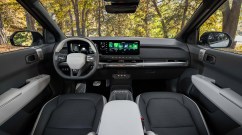
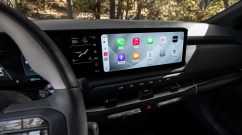
The 2027 Kia EV3 enters the American market with a base sticker of $29,890 - or $31,385 once you tack on the inescapable $1,495 delivery charge. In an era where the average transaction price of a new car hovers uncomfortably close to $50,000, delivering a design-forward crossover that ducks below the thirty-grand waterline is nothing short of an automotive shock.
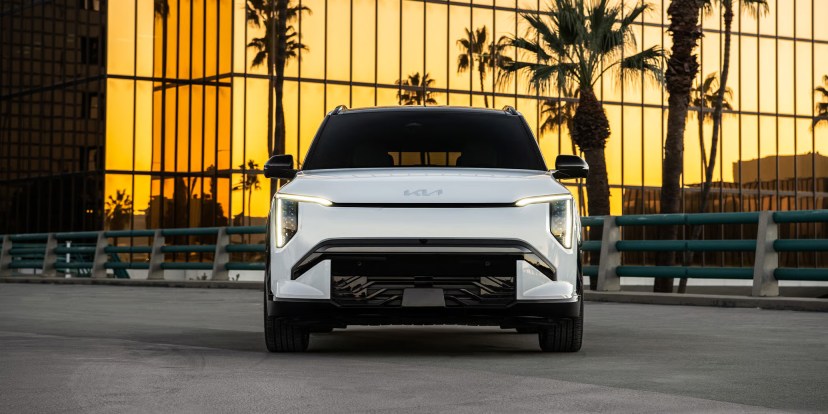
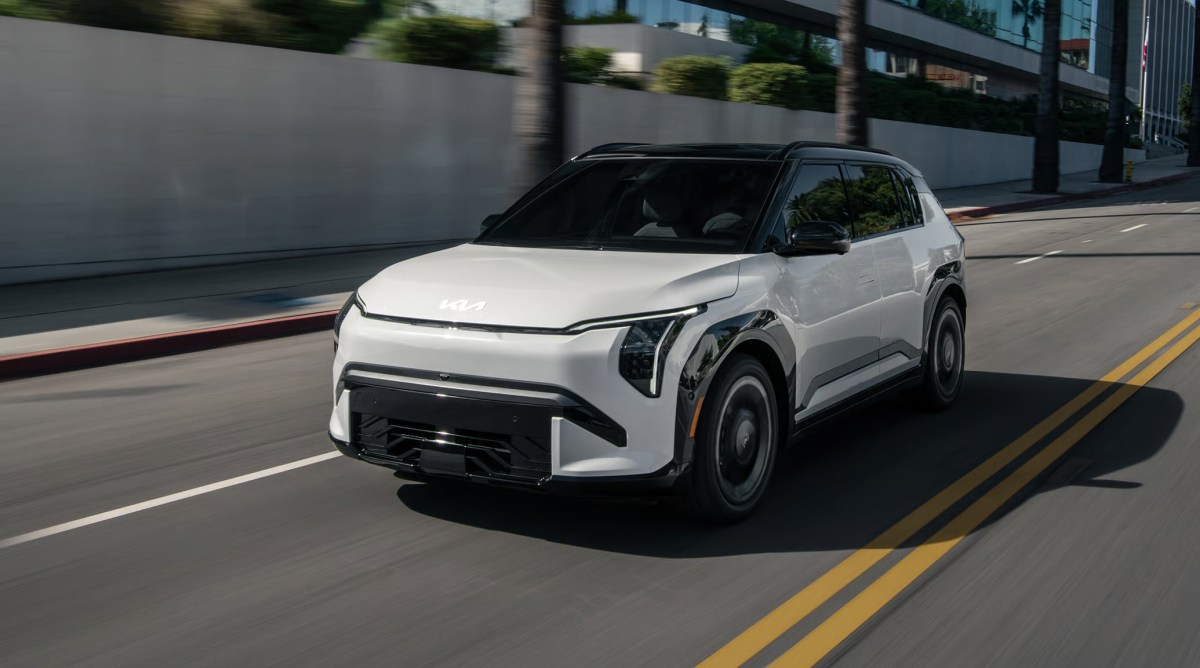
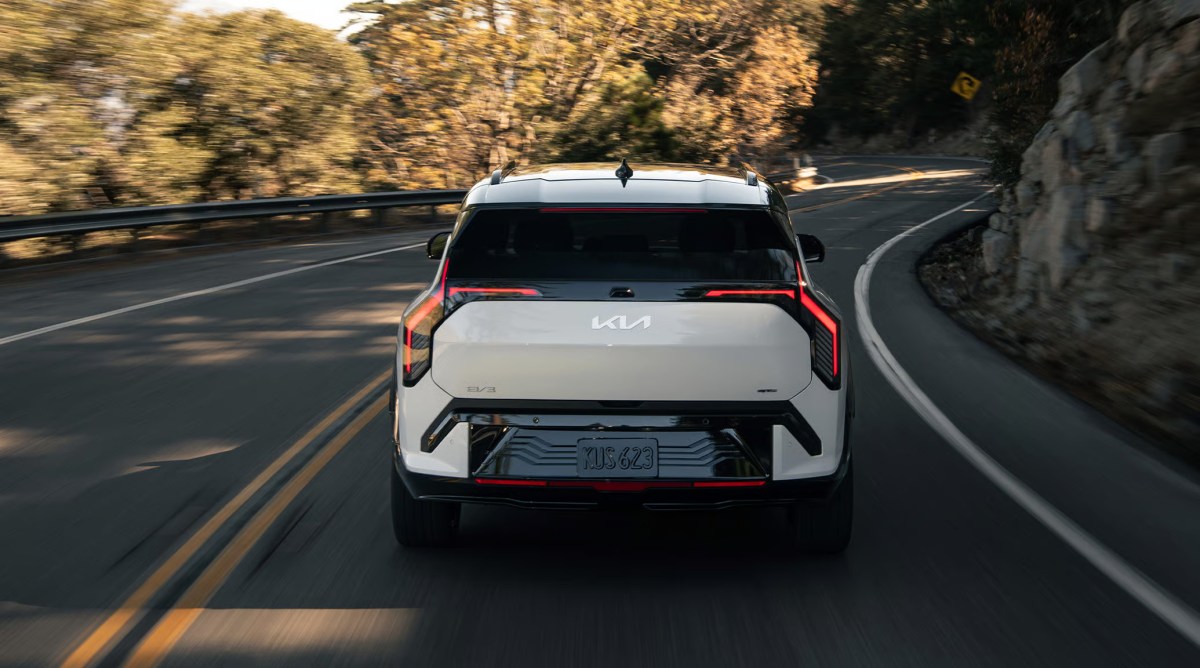
Visually, the EV3 pulls off a neat trick: it does not look like a cut-price concession. Too many entry-level runabouts resemble melted lozenges designed inside a wind tunnel with zero regard for human emotion. The EV3, by contrast, looks like someone shrunk the hulking EV9 in a hot wash. It has the same chiseled, cyberpunk jawline, squared-off wheel arches, and intricate vertical lighting signatures that give its big brother such imposing presence. It sits stout and purposeful on the road, broadcasting genuine SUV attitude rather than sheepish econobox humility.
Pull out the tape measure, and you realize how cleverly Kia packaged this machine against its direct peers. The EV3 stretches 169.3 inches from bumper to bumper, spans 72.8 inches wide, stands 61.4 inches tall, and rides on a generous 105.5 inches wheelbase, with curb weights ranging from 3,968 lb to 4,156 lb depending on the battery size.
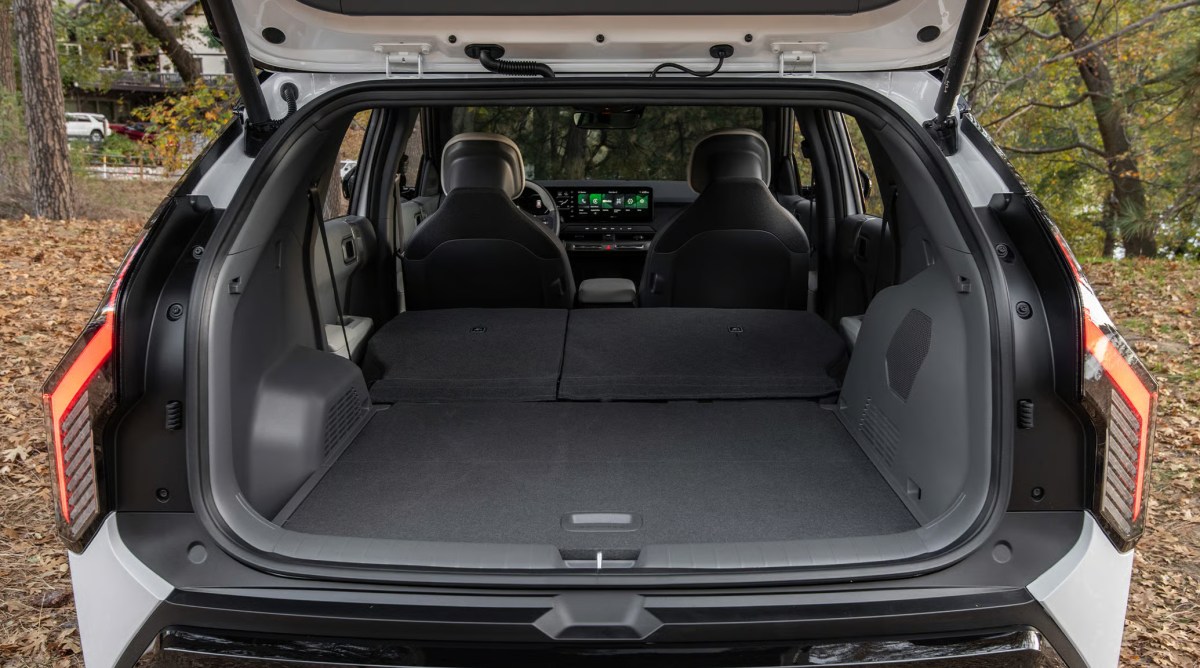
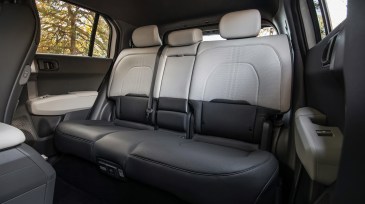
Consider it against the old Nissan Leaf, which measures a longer 176.8 inches with a 106.3 inches wheelbase and tips the scales between 3,483 lb and 3,814 lb, yet suffers from an outdated chassis, front-wheel drive wheeziness, and awkward proportions. Even Volvo's pocket-rocket EX30, which measures 166.7 inches and weighs roughly 4,034 lb, comes at a premium starting near $36,000 despite back seats so tight they border on punishment. The EV3 nails the size conundrum: tidy on the outside for tight city parking, but genuinely comfy for four adults on the inside.
Kia managed to avoid the fatal trap of offering a low headline price that saddles you with a useless, city-only battery pack. The entry-level EV3 Light FWD at $29,890 packs a respectable 58.3 kWh unit good for an EPA-estimated 221 miles of driving range. That is plenty for daily suburbia, but the real sweet spot is just one rung higher. Step up to the Wind FWD at $34,990 or the Land FWD at $38,490, and you unlock an 81.4 kWh pack that pushes your single-charge leash all the way to an EPA-estimated 321 miles.
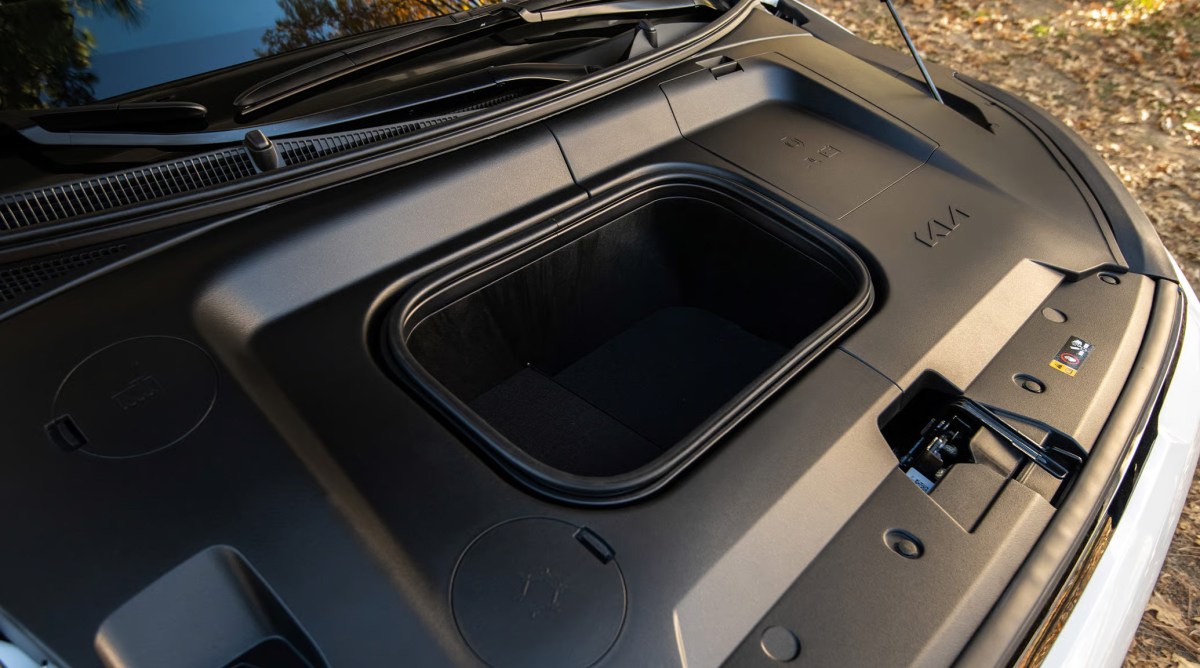
Finding that kind of long-legged cross-country endurance at this price point is virtually unheard of. For those living in the snow belt who demand four-wheel security and twin-motor shove, Kia offers all-wheel-drive configurations across the Wind AWD ($38,690), Land AWD ($41,690), GT-Line AWD ($43,490), and top-shelf GT AWD ($45,890), all delivering a hearty 280 miles of range with the big pack while turning the performance dial up a few notches.
Naturally, to hit a $30,000 target without losing their shirts, Kia's engineers had to make some calculated compromises under the skin. Unlike the EV6 and EV9, which ride on a cutting-edge 800V electrical architecture capable of juicing from 10% to 80% in about 18 minutes, the EV3 uses a cost-effective 400V setup.
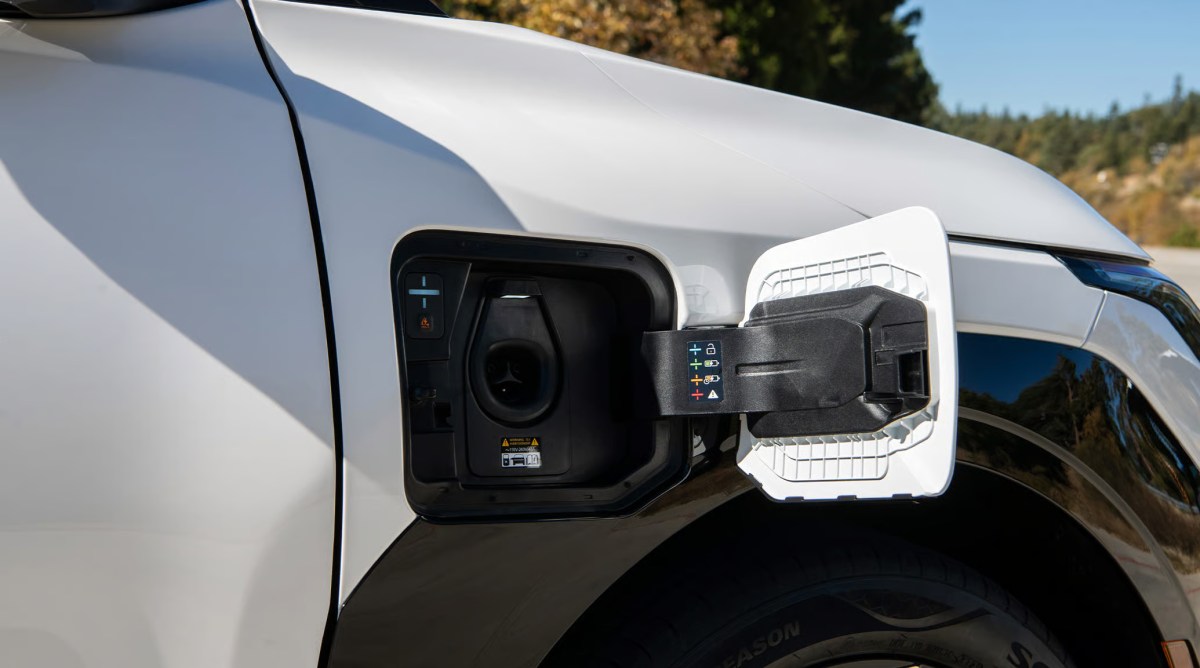
Plugged into a 350 kW DC fast charger, recharging the 58.3 kWh pack from 10% to 80% takes 29 minutes, while the larger 81.4 kWh pack demands roughly 31 minutes. In the real world, an extra ten minutes at the charger is a compromise ninety-nine percent of buyers will happily accept in exchange for keeping thousands of dollars in their bank accounts. Let's not forget that Kia fitted every American EV3 with a native NACS charge port - no fiddling with clumsy third-party adapters in the pouring rain. You simply back into any Tesla Supercharger stall, plug in, and get on with your day.
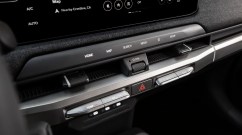
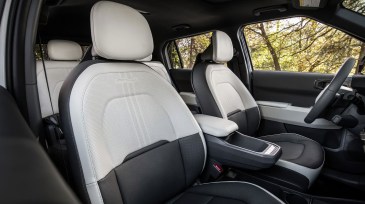
The clever execution continues in the cockpit. Instead of the button-free desolation that passes for modern minimalism in certain Silicon Valley machines, the EV3 adopts a warm, Scandinavian-inspired lounge vibe. You get textured, sustainable fabrics across the dashboard, tactile switches for climate functions, and a sliding center console that doubles as a laptop desk or picnic tray when parked. It feels cheerful, airy, and clever - a true masterclass in smart automotive interior architecture that punches way above its shy window sticker.
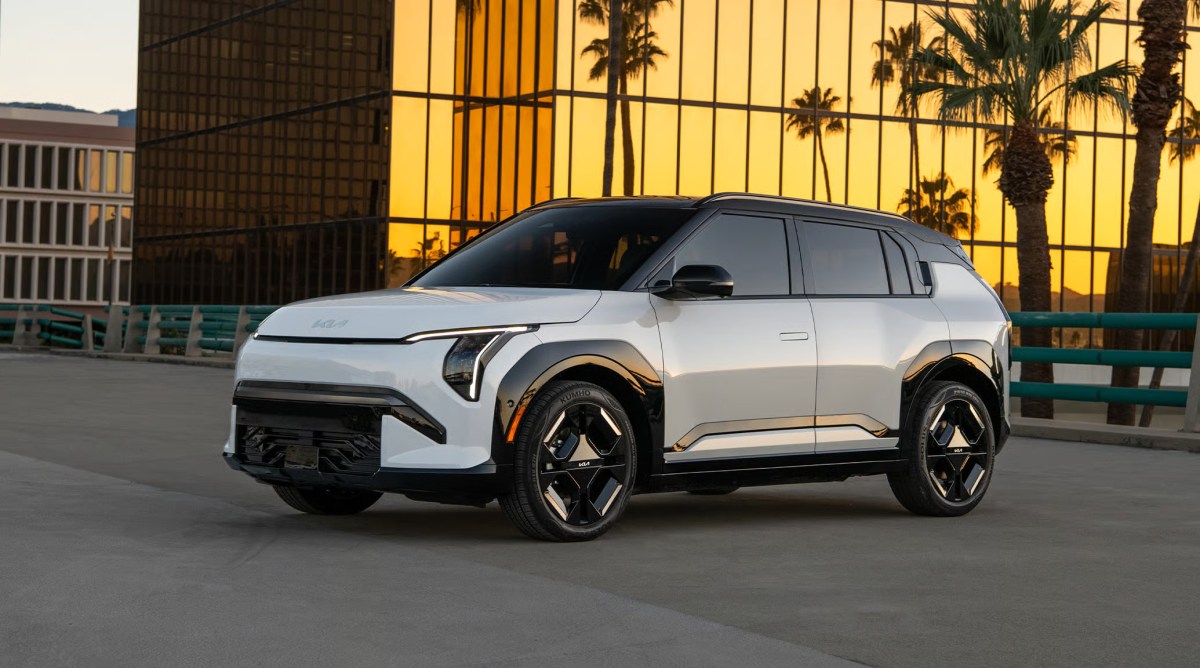
This "charm" explains why the EV3 is already taking over the sales charts in the UK and Continental Europe, where drivers have long favored compact footprints and agile dynamics over bloated suburban tankers. In America, the arrival of this baby crossover is a necessary cultural reset. The electric vehicle conversation in the States has been dominated by thousand-horsepower super-trucks and fragile $100,000 halo machines that normal people can only view from behind velvet ropes.
Kia's gas-powered models and hybrids might be smashing sales records for now, but the EV3 is the brand's true long game. Eye-catching styling, three hundred miles of genuine highway legs, native Supercharger access, and a low entry price - the future of personal transport does not need a second mortgage. It simply needs building an honest, brilliant little car.
Related

Reader comments
This is a rather odd article. The headline claims "sub-$30,000 Kia EV3", but all pricing is otherwise listed in pounds. It claims the Wind and its 321 mile range is an unprecedented value at $34,990, but the best-selling Tesla Model Y with ...
- 03 Sep 2026
- qpf
- nji
launch ev2 too
- 03 Sep 2026
- U@m