2026 Mercedes-Benz GLB 350 4Matic review
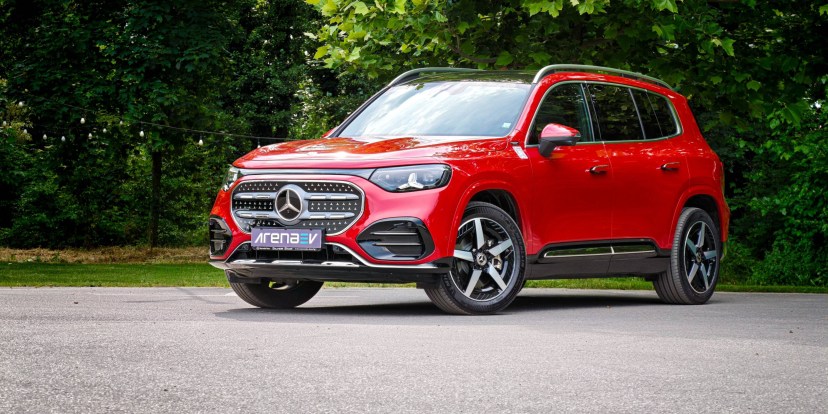
The Mercedes-Benz GLB has been on the market for less than a decade, yet it is already entering its third generation. The original model proved popular thanks to its unique combination of compact dimensions and seven seats, although it was not without quality issues. Its electric counterpart, the EQB, also faced criticism for its styling and cabin execution.
With the latest generation, Mercedes has addressed those shortcomings by bringing its electric and combustion-powered variants together under the GLB name. The new model introduces a more premium design, and refinements all around, creating a far more cohesive package than its predecessors.
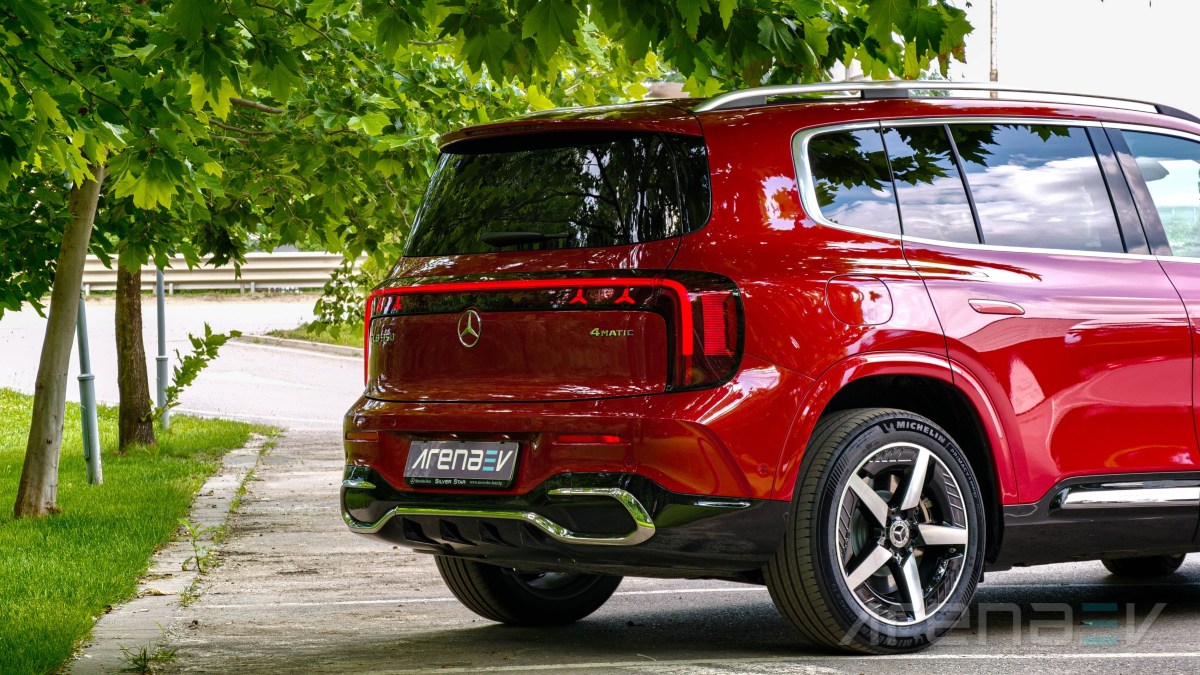
Table of Contents:
- Exterior
- Interior
- Storage & practicalities
- Driving experience
- Ride comfort
- Tech features
- Cabin noise
- Acceleration and braking
- Consumption
- Charging speed
- Competition
- Verdict
The GLB nameplate doesn’t carry any historical burdens and that allows Mercedes to experiment and see what will stick. Currently, there aren't many three-row electric SUVs on the European market, which makes it easy for the GLB to carve a niche for itself. Seven seats usually mean a huge vehicle that is hard to maneuver and a burden to park in the city, yet the GLB is compact enough to offer the same utility in the footprint of a Mercedes CLA.
The model we are reviewing today is the Mercedes GLB 350 4Matic, which is the fastest and most capable version in the current lineup. It offers 354 hp, 380 lb-ft and AWD, which means it's never short on power.
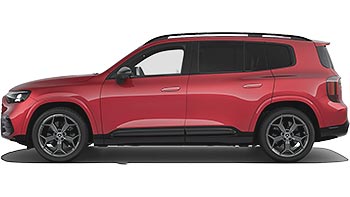
Mercedes GLB 350 4Matic 2025 -
- Dimensions: 186.3 inches x 73.3 inches x 66.4 inches, 113.7 inches wheelbase.
- Drivetrain tested: 350 4Matic - AWD 260 kW (354 hp), 380 lb-ft, 85 kWh usable battery capacity
- Other drivetrains: 250+ – RWD 200 kW (272 hp), 247 lb-ft, 85 kWh usable battery capacity
- Charging: 320 kW CCS; 10-80% in 22 min
- Range: 382 miles WLTP
- Weight: 5,027 lb unladen, 8,333 lb gross
- Other features: Massaging seats, Panoramic screens, OTA updates.
Exterior
The GLB has embraced a boxy and rugged appearance since its introduction, and the latest generation sticks to the same formula. The resemblance to its predecessor is immediately apparent, as seen in the photos below.
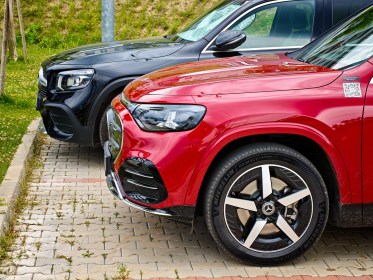
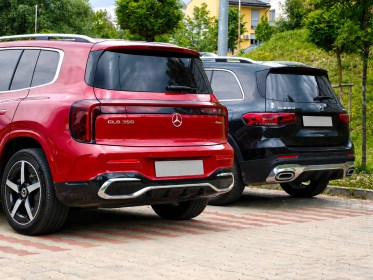
The new vs old Mercedes GLB
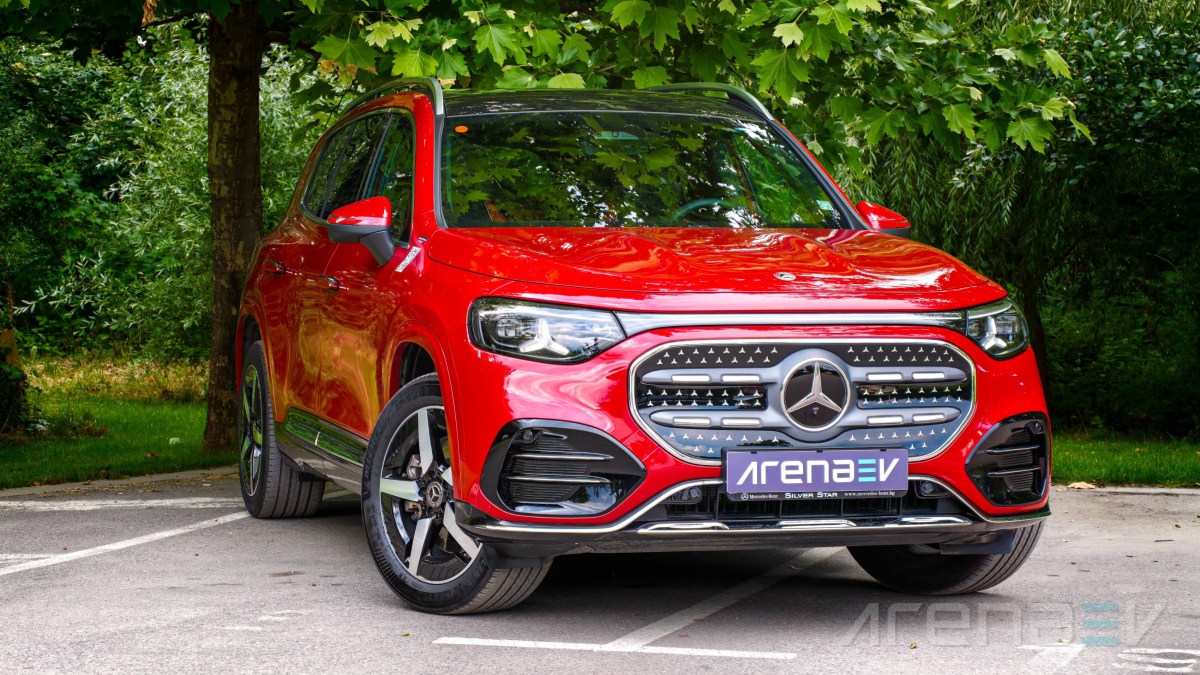
Up front, the 2026 Mercedes GLB makes a strong impression with its large chrome grille, which illuminates at night to give the vehicle an imposing road presence.
The headlights' come in the shape of a Mercedes star. Mercedes makes extensive use of its iconic logo across the design, although in some areas the repetition can feel slightly excessive.
A full-width LED strip connects the headlights, though its execution is less than convincing. It does not integrate particularly well with either the headlight housings or the surrounding lighting signature, making it appear more like an added design element than an integral part of the front end.
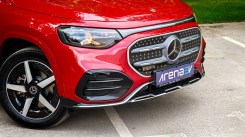
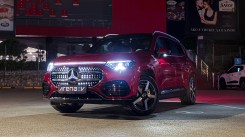
Mercedes GLB front end
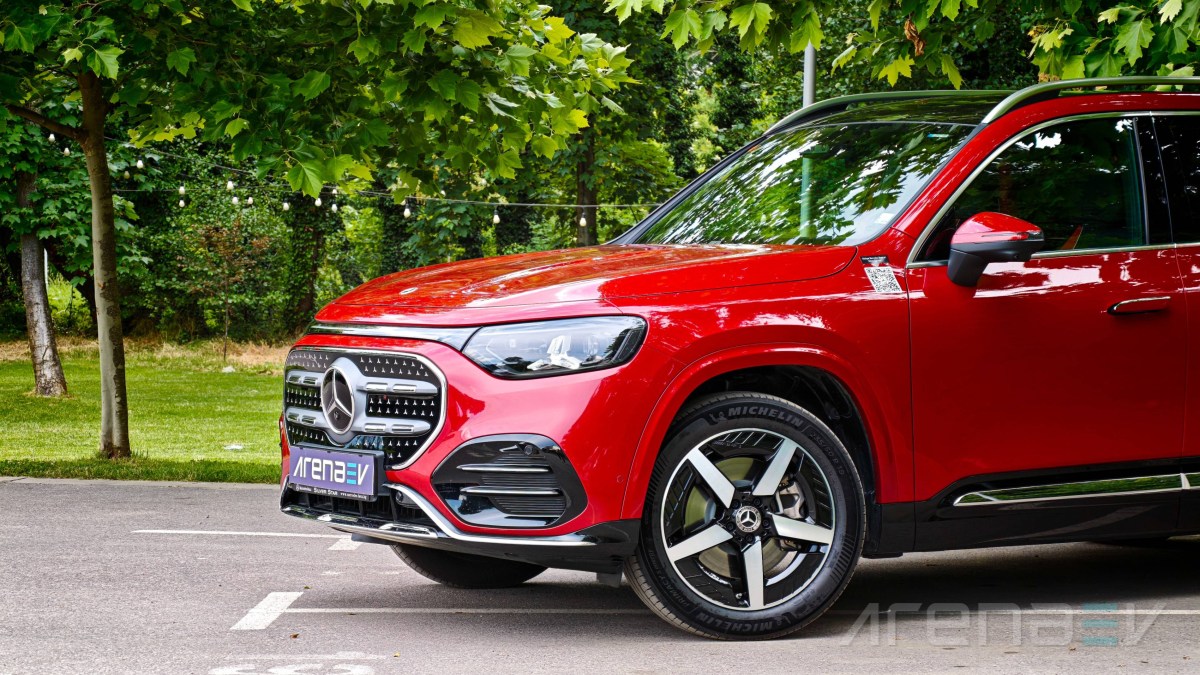
The side profile remains largely unchanged from previous generations, retaining the same proportions. Its upright shape and substantial height gives it a rugged appearance while also maximizing the amount of usable interior space.
Mercedes continues to use flush-fitting door handles, which improve the clean appearance and aerodynamics but can introduce a minor inconvenience in everyday use.
Our test vehicle rides on 19-inch wheels that complement the GLB's proportions nicely. Their design also incorporates subtle aerodynamic optimization, helping reduce energy consumption and maximize driving range.
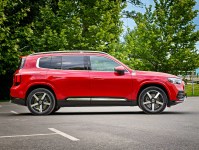
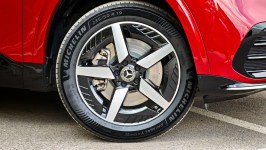
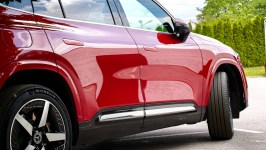
Mercedes GLB side profile
The rear of the Mercedes GLB 350 4Matic introduces the most significant visual change. A thick LED strip stretches across the entire tailgate before bending downward to join the taillights. Once again, Mercedes stars are incorporated into the lighting signature, leaving no doubt about the vehicle's identity.
Black cladding surrounds the lower section of the GLB, reinforcing its rugged appearance while also making these vulnerable areas easier to replace if damaged. More unusual is the imitation exhaust design at the rear, which feels somewhat unnecessary on a fully electric vehicle.
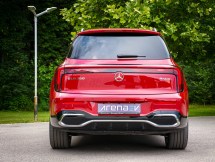
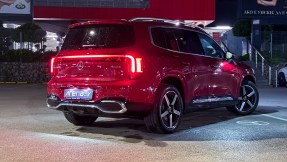
Mercedes GLB rear end
As you open the doors at night, an obscenely large Mercedes logo is projected on the ground below.

Interior
The cabin is arguably the most imrpoved area of the Mercedes GLB. Mercedes combined a modern and luxurious atmosphere with the practicality and usability expected from a family-focused SUV.
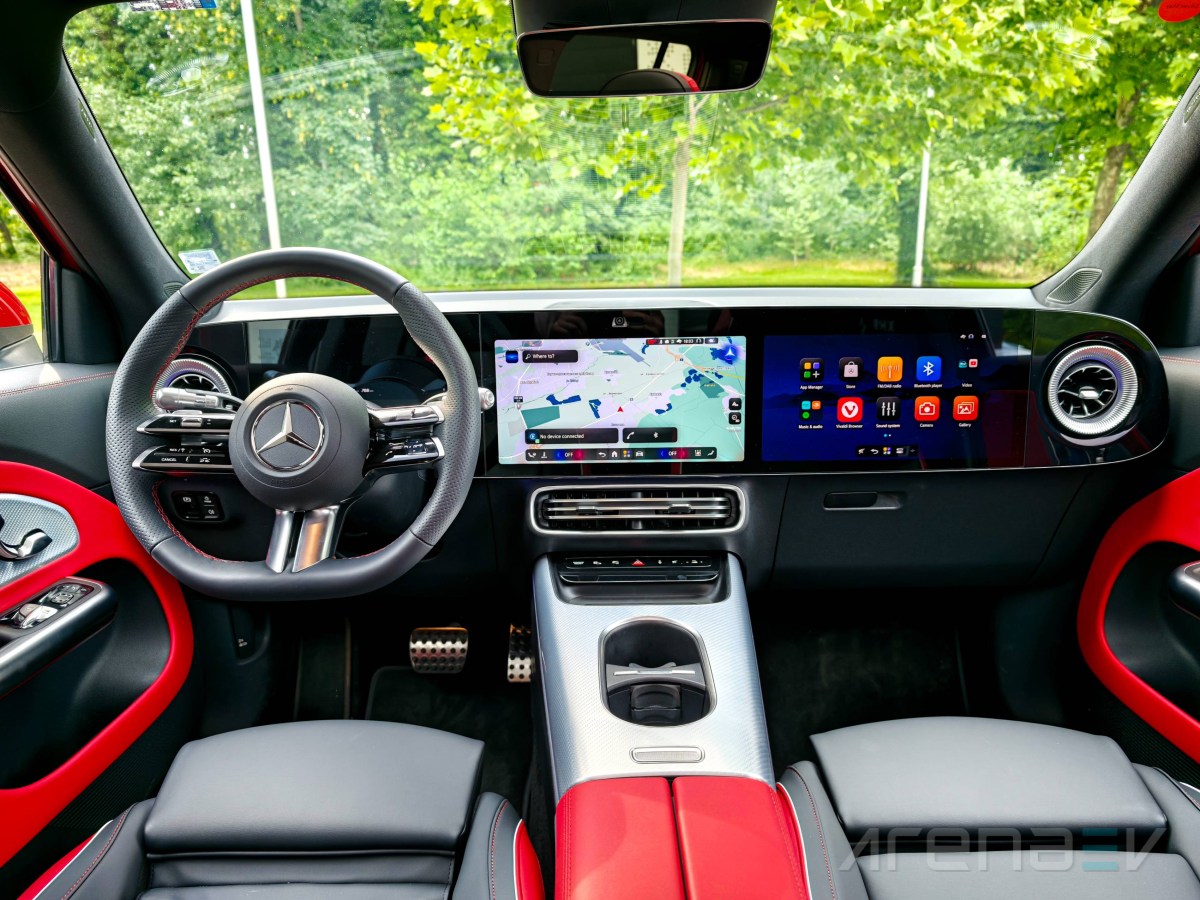
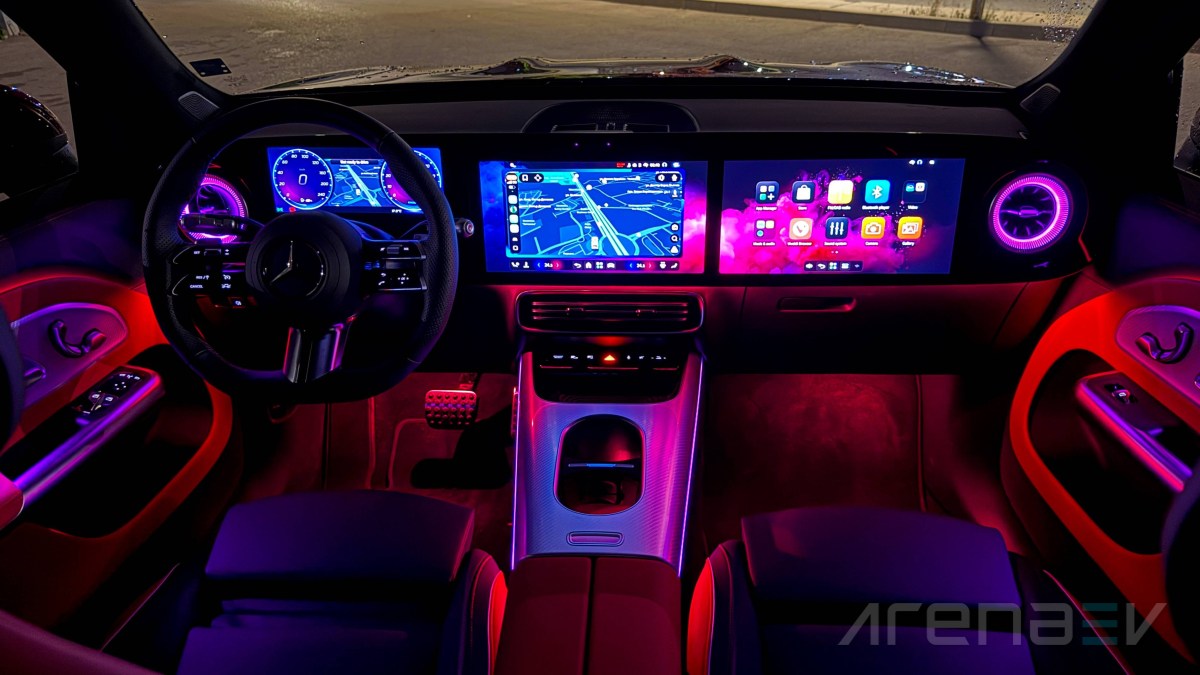
At night, the ambient lighting works its magic and illuminates the interior in a soft, coloful light. It underlines the design accents perfectly and creates a cozy atmosphere for the night drives.
The steering wheel is shared with several other models in the Mercedes lineup, making it immediately familiar to use. Since the same design is also found in considerably more expensive vehicles, it helps give the GLB a more premium feel from behind the wheel.
The stalks follow the same approach, offering satisfying and substantial clicks when operated.
The gear selector is decidedly less premium, feeling light and flimsy compared with the rest of the controls. Also, there's no parking position, which is a nuisance during prolonged stops.
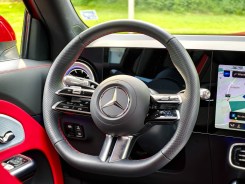
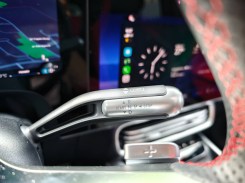
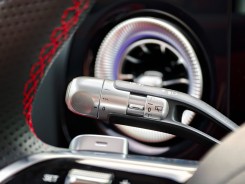
Steering wheel accents in the Mercedes GLB
The dashboard is carried over directly from the Mercedes CLA and its design has already divided opinion. Some will appreciate the technology-focused layout and abundance of screens, while others may find the sheer amount of display area overwhelming.
It starts with the digital instrument cluster, which unfortunately offers less customization than we have come to expect from Mercedes models in recent years.
Next to it sits the 14-inch central infotainment display, which performs exceptionally well and provides access to almost every major function in the GLB.
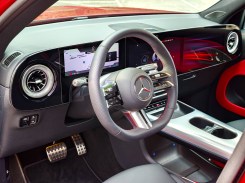
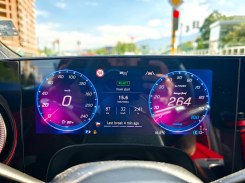
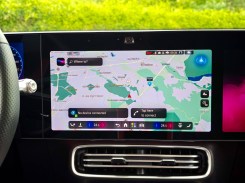
Mercedes GLB dashboard
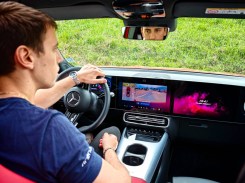
A small camera positioned above the display enables Zoom and Teams meetings while on the move. However, its integration results in unusually thick bezels around the screen, detracting from the premium appearance of an otherwise attractive cabin.
An optional passenger display completes the digital experience, allowing the front passenger to watch movies and other video content without distracting the driver.
Two large illuminated circular air vents sit on either end of the dashboard. At first glance, the whole dash appears to be a single unit, though it is actually formed by separate elements designed to visually flow together.
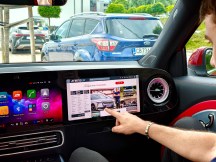
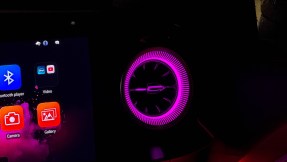
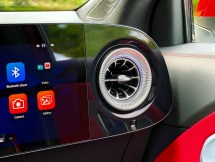
Mercedes GLB passenger display and illuminating vents
Unfortunately, the material and build quality of the dashboard itself falls noticeably short of the rest of the GLB's cabin. Given its prominent position and how frequently occupants interact with it, this is a particularly disappointing weakness in an otherwise well-executed interior.
The center console is a thick piece between the front seats that starts off with a row of buttons to control frequently used features like the drive modes, camera system and the hazard lights, as well as a deep wireless charging pad for a smartphone.
Two large cup holders occupy much of the remaining space, while underneath them you’ll find a large storage area and two USB-C charge ports.
Underneath the armrest is a two-level storage space that goes deep enough to fit large water bottles, adding further to the utility.
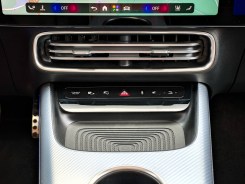
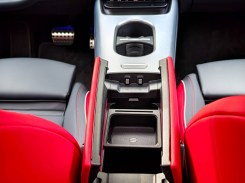
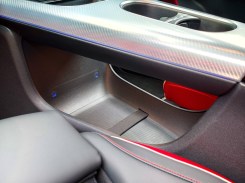
Mercedes GLB center console
The door panels feature the familiar Mercedes seat controls alongside the switches for the mirrors and windows. The same controls operate both the front and rear windows, requiring the driver to select which pair to adjust. This saves space and some manufacturing cost, but adds a bit of of inconvenience.
Three upholstery options are available, including cloth, synthetic leather and leather. Our test vehicle came with the synthetic option, which failed to impress with its texture, while upgrading to real leather comes at a considerable premium. Those less concerned with appearance may find the standard cloth seats a sensible alternative, offering good comfort, durability and improved breathability during warmer weather.
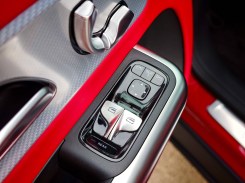
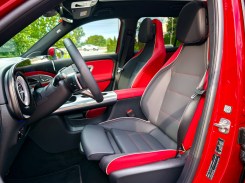
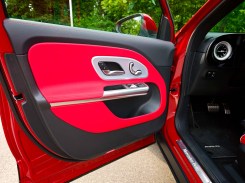
Mercedes GLB trim
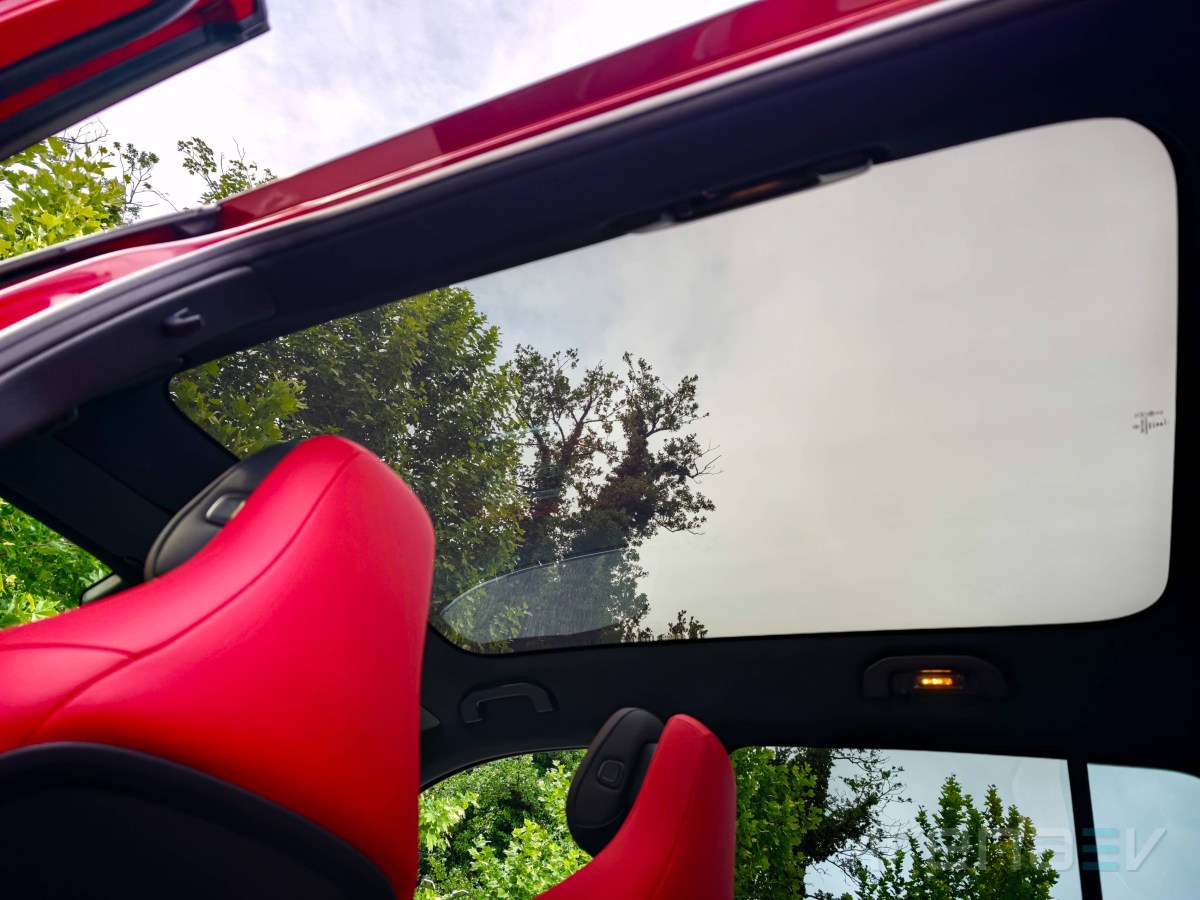
One option we would strongly recommend is the switchable panoramic glass roof. Every GLB comes with a fixed glass roof as standard, but you can opt for the upgraded version that can alternate between transparent and opaque. Our car lacked this and the absence of effective shading became particularly noticeable when driving in hot summer conditions.
The second row of the Mercedes GLB impresses with both space and versatility. The seats offer a lot of travel forwards and backwards, while the backrests can also be adjusted to help passengers find a comfortable seating position.
Our test vehicle was not particularly generously equipped in the rear, but standard air vents, cup holders and charging ports provide all the essential amenities expected in this segment.
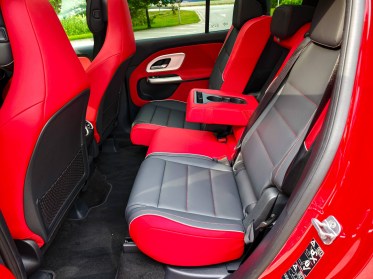
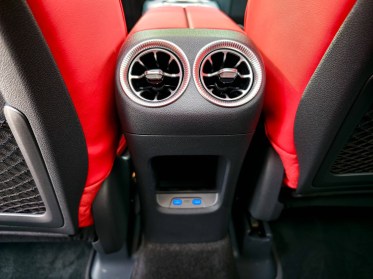
Mercedes GLB rear seat amenities
Our reviewer measures 1.95 m (6’4”) and can comfortably sit behind his own driving position even with the second row pushed all the way forward. The GLB's boxy proportions and nearly flat roofline also provide generous headroom throughout the cabin.
Considering the compact exterior dimensions, it is particularly impressive that our reviewer can fit even in the third row. Legroom is understandably limited, making longer journeys uncomfortable for taller adults, but shorter trips around town remain perfectly manageable.
Third row occupants also receive their own cup holders and armrests, showing that Mercedes has treated the additional seats as genuinely usable rather than simply an occasional backup solution.
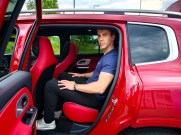

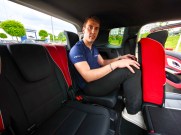
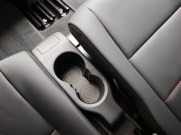
Mercedes GLB second and third row seating space
Choosing the five-seat version brings additional rear legroom and permanently increases cargo capacity. However, buyers sacrifice one of the GLB’s defining strengths, namely the flexibility of having two additional seats available when needed.
Storage & practicalities
Naturally, cargo capacity becomes very limited with all seven seats in use, making longer journeys with a fully occupied GLB more challenging. Passengers will have to pack lightly, although a small compartment beneath the main trunk floor provides some additional storage for smaller items.
Once the third row is folded, cargo capacity expands to 17 ft³, while the five-seat version offers 19.1 ft³ as standard. The resulting flat load floor makes the space easier to use and simplifies loading larger or heavier items.
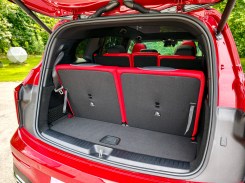
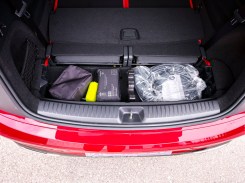
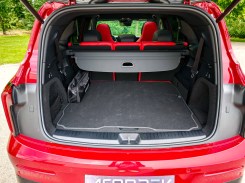
Mercedes GLB cargo space with seven seats
Folding all of the rear seats increases capacity further to 56.7 ft³, or 60.6 ft³ in the five-seat variant. Combined with the GLB's boxy proportions, this creates a highly usable cargo area that can comfortably accommodate bulky objects.
A great addition is the 4.48 ft³ frunk, which provides a substantial amount of additional storage. It becomes particularly valuable when all seven seats are occupied, helping compensate for the limited space available in the rear.
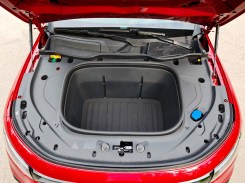
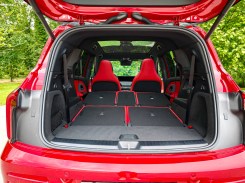
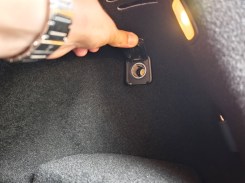
Mercedes GLB storage spaces
Driving experience
Compact SUVs rarely provide the most engaging experience behind the wheel, but the Mercedes GLB 350 4Matic manages to rise above the segment’s usual mediocrity. Its responsive steering makes driving the GLB surprisingly involving.
The suspension remains comfortable over uneven surfaces while keeping body roll relatively low through corners. Combined with the lively electric motors producing over 350 hp and the AWD system, the GLB 350 4Matic delivers a surprisingly nimble driving experience in a segment where driving dynamics are often overlooked.
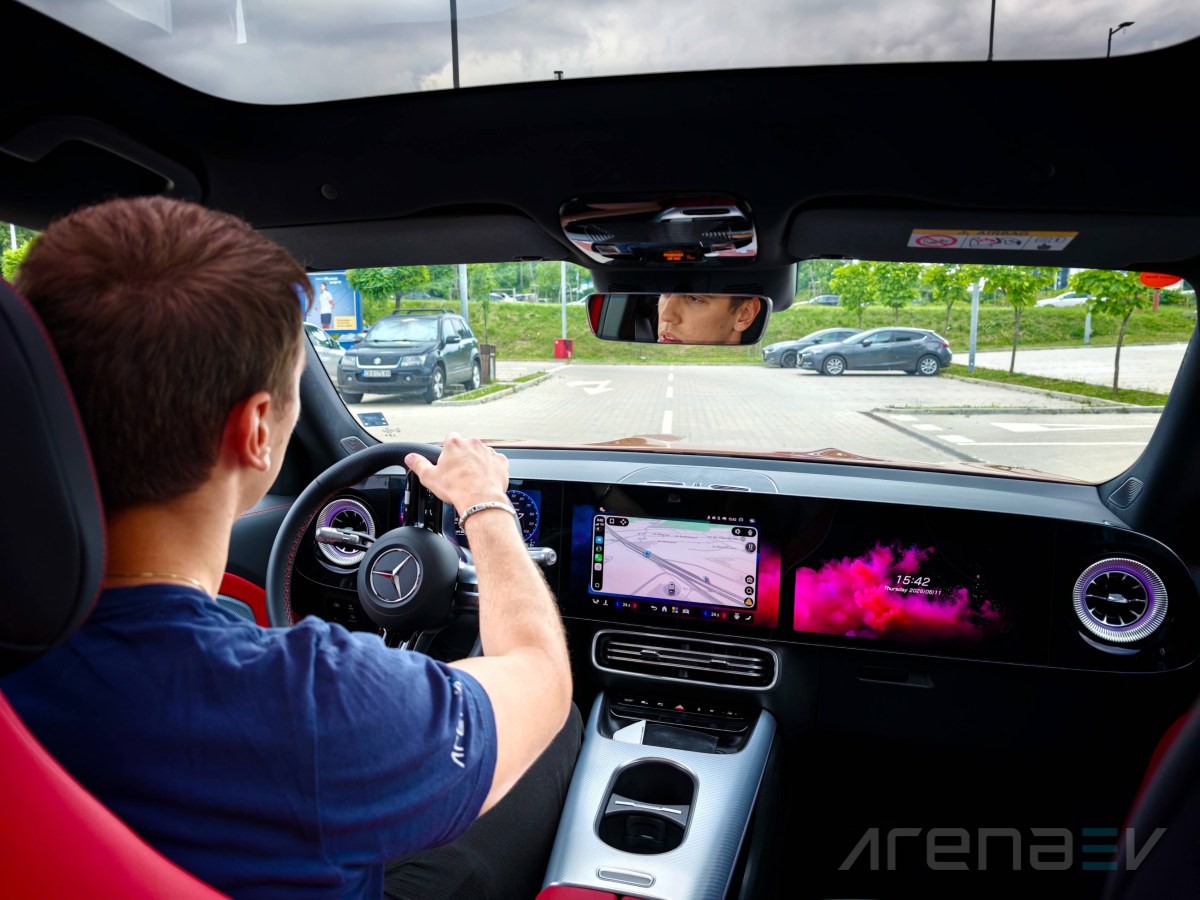
Despite lacking rear-wheel steering, the GLB offers a nicely tight turning radius. This suits its character particularly well, as the compact SUV is primarily designed for urban use, where tight turns and confined spaces are part of everyday driving.
All the different driving modes change how the GLB 350 4Matic drives and responds. Sport is direct and the car feels eager, whereas comfort and eco feel more relaxed and suitable for long journeys.
For the off-road enthusiasts, besides the terrain mode, the GLB offers a wide variety of displays to help when navigating rougher terrains. The AWD system guarantees traction, while the underbody camera makes sure you can clear hidden obstacles you no longer see. Hill descent makes sure no slope proves too steep. The display also shows positioning information and body tilt, which are more of a gimmick than a necessity but are still a cool piece of information.
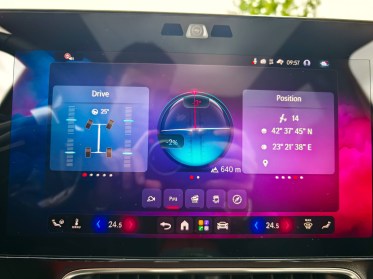
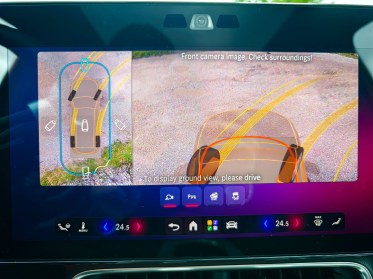
Off-roading displays improve practicality
Turning off the annoying mandatory beeping safety systems is an easy task in the GLB. As with other Mercedes models, there is an icon on the top left part of the center screen that immediately disables the speed limit assist, whereas the lane and attention assists can be switched off from the drop-down menu on the screen.

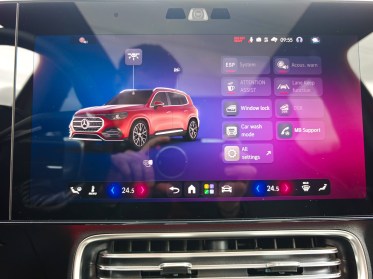
ADAS is easy to turn off
Self-parking is a neat feature that can sometimes be useful in tight situations or when you simply can’t be bothered to pay attention to parking. The system in the GLB draws its own parking spots, lets you choose where to park and then draws an imaginary GLB on the one you choose. Sadly, this feature works well only when the spots or the road are well lit up. In our dim parking lot the system drew over the support columns of the building and parked well outside the boundaries of the spot. We suggest you pay more attention to the system when using it and never relying solely on its capabilities.
Other than that, the camera system in the GLB is on the highest level for today’s standards and leaves no desire for improvement. There are multiple angles available and the image quality is of the highest echelon.
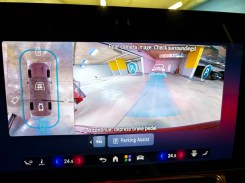
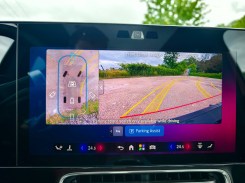
Mercedes GLB camera system
Ride comfort
As we mentioned earlier, the ride of the GLB is comfortable. It is far off the S-class in terms of softness but is a great balance between smoothness over bumps and minimized lean in corners. For regular springs with active damping and no air suspension, the GLB rides much better than most of its rivals.
Tech features
The Mercedes GLB is packed with the brand’s latest technology and feels thoroughly modern throughout.
One of its standout features, especially in the compact segment, is the optional passenger display. It mirrors the apps available on the central screen and can be used to browse the internet, watch videos, play games or access the dashboard camera for photos and video calls. To prevent distractions, the display automatically obscures its content if the driver looks at it while the vehicle is moving.
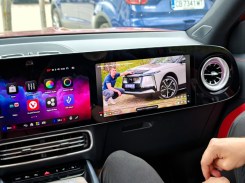
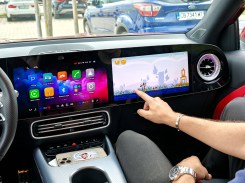
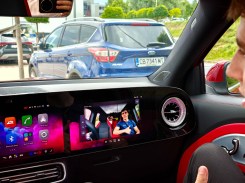
Mercedes GLB with a passenger display
The digital instrument cluster is less customizable than in previous Mercedes models, offering only a handful of layouts with largely unchanged graphics across the different drive modes. More impressive is the integration with Apple CarPlay and Android Auto, which allows navigation maps to be mirrored directly onto the instrument cluster. This leaves the central screen free for other functions without interrupting navigation.
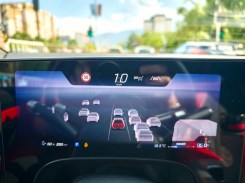
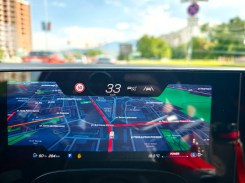
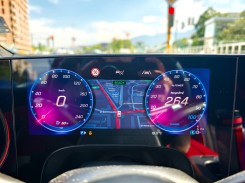
Mercedes GLB instrument panel
The central display defaults to a large map, with a permanent shortcut bar along the bottom providing quick access to temperature adjustment and key menus. Unfortunately, most climate functions require entering a submenu. Seat controls are similarly buried, with features such as massage requiring several additional touches to activate. Vehicle settings are easier to reach thanks to a dedicated shortcut on the bottom bar.
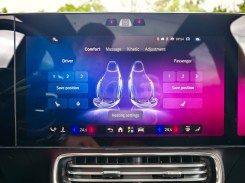
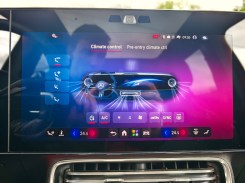
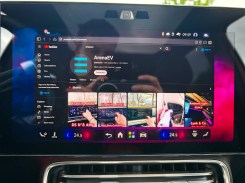
The main menu itself is straightforward, using large icons that are easy to identify at a glance. Built in internet connectivity also enables web browsing and access to supported online services directly through the infotainment system.
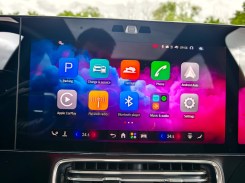
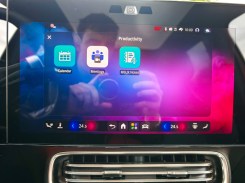
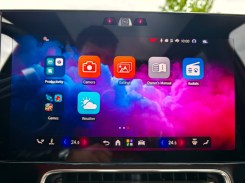
Mercedes GLB main menu
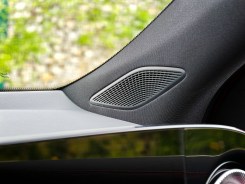
Our test vehicle came with the standard audio system, which proved underwhelming. We would strongly recommend upgrading to the optional Burmester system for a more immersive listening experience.
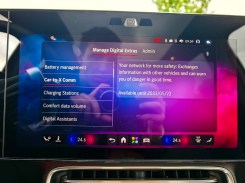
Another useful feature is Car to X Communication, which exchanges information between connected Mercedes vehicles and third-party services. It can warn drivers about hazards, road closures and traffic ahead, while using that information to adjust navigation guidance accordingly. As more vehicles and services contribute data, the system should only become more useful over time.
Cabin noise
The Mercedes GLB is not the best insulated vehicle on the market when driving. Due to its boxy shape and large surface area, a lot of wind noise enters the cabin. Thankfully, as speed progresses there are no ambient sounds to disturb the peace inside dramatically, which is arguably even more important on longer journeys.
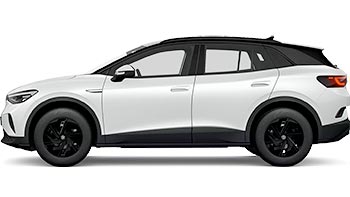
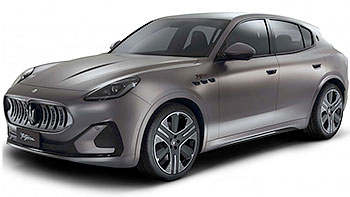
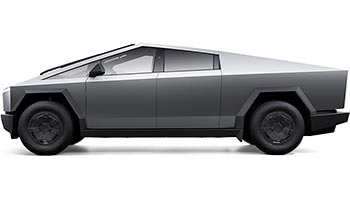
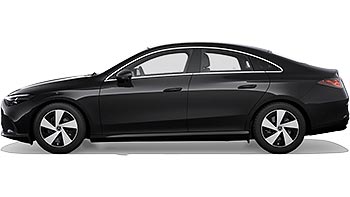
Cabin noise test results
- 37 mph
- 56 mph
- 81 mph
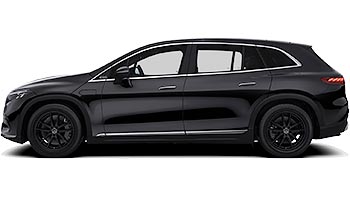 Mercedes-Benz EQS SUV 580 4Matic
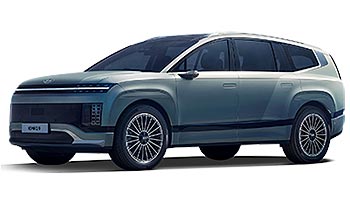 Hyundai Ioniq 9 Performance
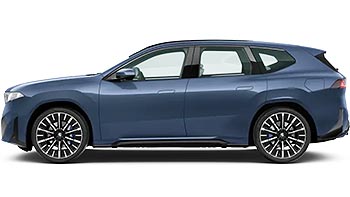 BMW iX3 50 xDrive (Summer tires 21")
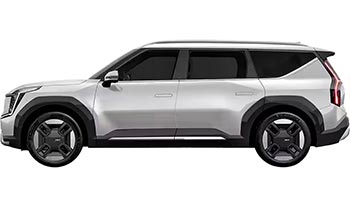 Kia EV9 99.8 kWh AWD
 Mercedes CLA 350 4Matic
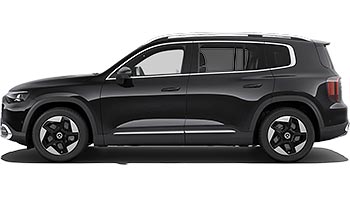 Mercedes-Benz GLB 350 4Matic
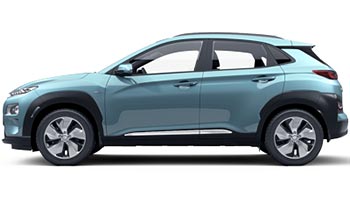
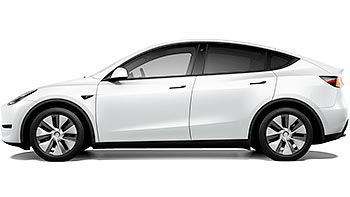 Tesla Model Y Long Range (2023)
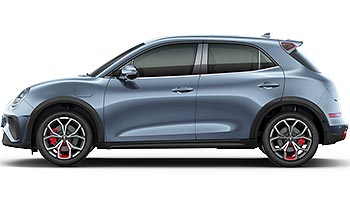
Sound level tests are carried out with a specialized sound level meter placed in the car's cupholders. The test is conducted with air conditioning and radio off and while maintaining a steady speed.
Acceleration and braking
There isn’t an AMG variant of the GLB for this generation yet, so the 350 4Matic is the most potent version available. The acceleration from 0 to 62 mph takes 5.05 seconds, which is half a second quicker than Mercedes states. That is a very solid result for a vehicle of this caliber and breathes confidence into the driver. Further acceleration when overtaking also feels potent and you’re never left wanting for more power.
0-62 mph acceleration test results
Mercedes-Benz EQS SUV 580 4Matic
Mercedes CLA 350 4Matic
BMW iX3 50 xDrive (Summer tires 21")
Hyundai Ioniq 9 Performance
Kia EV9 99.8 kWh AWD
Mercedes-Benz GLB 350 4Matic
Tesla Model Y Long Range (2023)
As for braking, the GLB 350 4Matic stops completely from 62 mph in just 36 m (118’1”). This is a commendable result for the size and especially weight of the GLB and what is even more impressive is that this result was replicated in three consecutive stops.
Braking distance test results
BMW iX3 50 xDrive (Summer tires 21")
Mercedes CLA 350 4Matic
Hyundai Ioniq 9 Performance
Mercedes-Benz GLB 350 4Matic
Tesla Model Y Long Range (2023)
Mercedes-Benz EQS SUV 580 4Matic
Kia EV9 99.8 kWh AWD
Acceleration and deceleration are measured with a RaceBox device inside the car. Testing is done with a single person inside the car, with air conditioning and traction control off.
Consumption
Mercedes has made the GLB 350 4Matic tremendously efficient for what it is. AWD, over two tonnes of weight and a boxy design usually result in compromised range but that is definitely not the case with the GLB. The battery pack is also on the larger side at 85 kWh, which results in wonderful range results for the GLB 350 4Matic. It competes very appropriately with similarly sized rivals and also puts up a fight against much larger competitors, which also have much larger battery packs.
To check out our detailed thoughts on the Mercedes GLB 350 4Matic’s range and efficiency, check out our detailed range test article.
Range test results
- 37 mph
- 56 mph
- 81 mph
BMW iX3 50 xDrive (Summer tires 21")
Mercedes CLA 350 4Matic
Mercedes-Benz EQS SUV 580 4Matic
Mercedes-Benz GLB 350 4Matic
Tesla Model Y Long Range (2023)
Kia EV9 99.8 kWh AWD
Hyundai Ioniq 9 Performance
We measure consumption by driving at constant speeds on an identical test route during the day. Testing is conducted with air conditioning, all safety systems and radio on. The data comes from the vehicle's board computer. Specific testing parameters such as ambient temperature are mentioned in the text on a case by case basis.
We now suggest you use the widget below to find out the Hyundai Ioniq 9 Performance’s range in every combination of speed and temperature you might need. We've used our real world tests and a complex model to provide an estimate that should be as close to the actual performance as possible.
Charging speed
The GLB’s 800V architecture enables impressively quick charging, with a peak rate of 320 kW and a claimed 10 to 80% charging time of just 22 minutes. Our testing showed slightly worse results in the real world but nothing worrying or major.
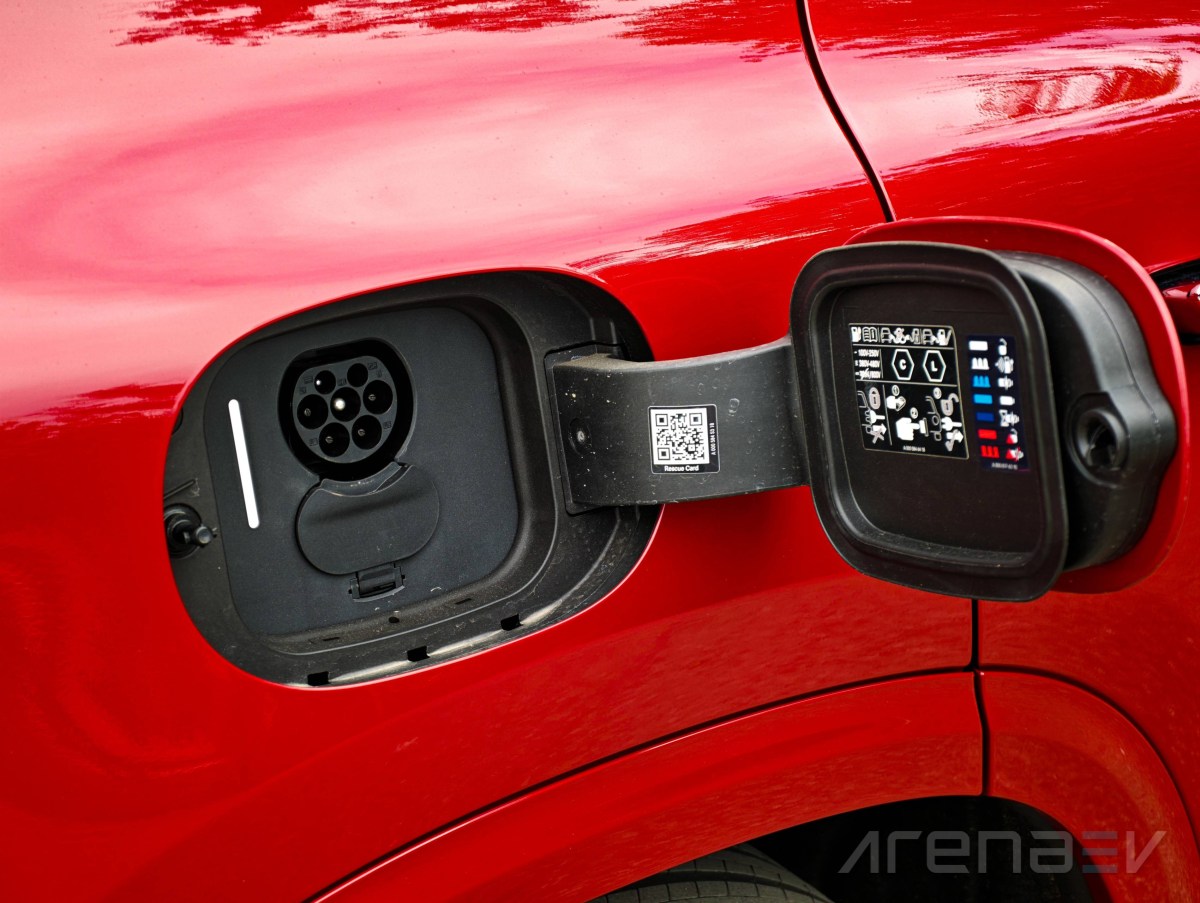
Early versions of the Mercedes CLA using the same battery and charging architecture had one notable limitation, as they were unable to charge at 400V stations. We were unable to verify whether this issue has been resolved with the GLB, although Mercedes assured us that it has.
A great feature more new models offer is V2G (Vehicle to Grid) and V2H (Vehicle to Home) connectivity, which can transform the GLB into a drivable generator.
Competition
When it comes to five-seaters, the Mercedes GLB competes with multiple rivals in that size category but it faces no competition when the third row gets added. That is the biggest ace up the GLB’s sleeve. The technology part is a double-edged sword as it may attract some and repel other potential customers. Overall, the GLB is a fantastic proposition with multiple good virtues in a segment of its own, which automatically makes it the best thing available.
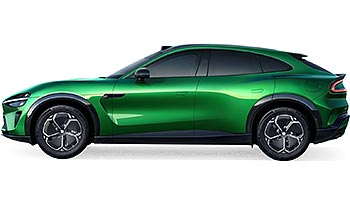
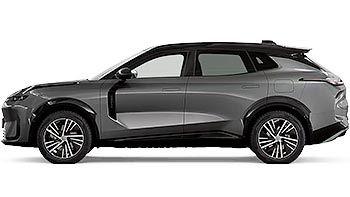
The first rival we chose for the Mercedes GLB is the Zeekr 7X, which is closely priced and sized but doesn’t offer the option for seven seats. The Zeekr has better overall build quality and less polarizing exterior, while offering a much larger battery. The AWD version for the 7X comes only with the most powerful motor, which takes a bit from the range but adds much more enthusiastic appeal.
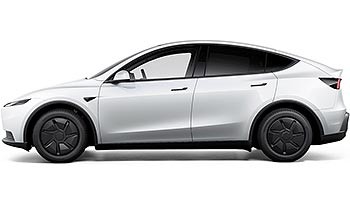
The second rival of the GLB is the Tesla Model Y, which is cheaper to purchase but no longer offers the third row option. Only the Model Y L comes close with its six seats, yet it gets much larger in size and stops appealing to the urban buyers as much. Storage space is much more in the Tesla but the GLB wins on range thanks to its bigger battery pack.
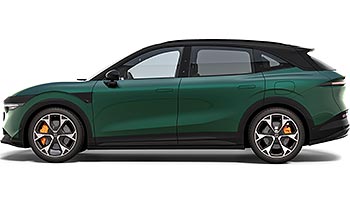
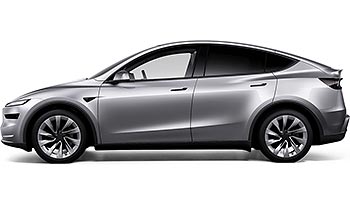
Zeekr 7X Performance AWD 2025 - • Tesla Model Y Premium AWD 2025 -
Verdict
Mercedes once marketed its cars with the slogan “The best or nothing,” and that philosophy would fit the new GLB 350 4Matic surprisingly well. It has a very clear purpose and executes it brilliantly, squeezing an impressive amount of passenger space into a relatively compact footprint. While many modern cars try to be a jack of all trades and master of none, the GLB knows exactly what it wants to be. Better still, it remains above average in almost every other area.
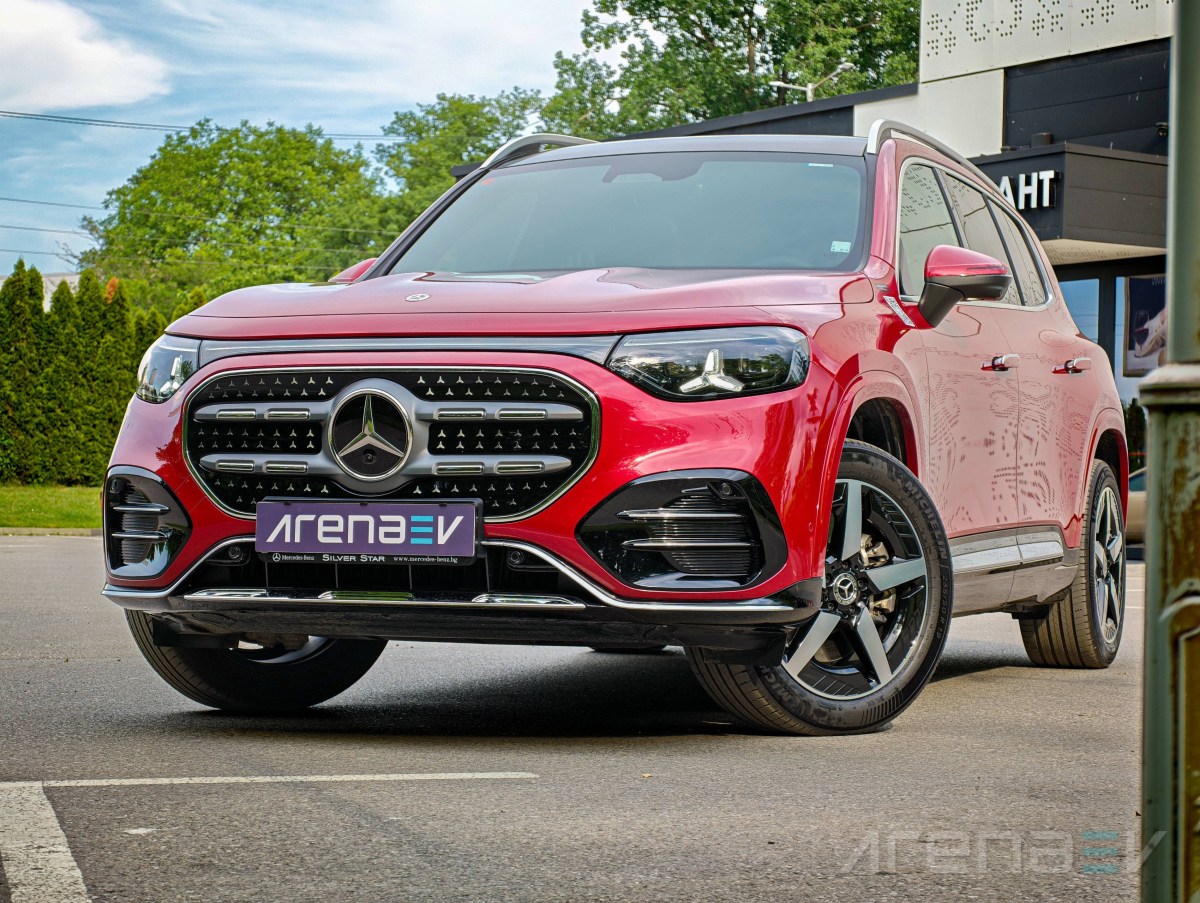
Its rugged appearance is not entirely for show either, as the GLB can handle some light off road duties when required. More surprisingly, the driving experience is considerably better than this segment demands. The steering, suspension and overall refinement make it feel like a more expensive and sophisticated vehicle than its compact dimensions might suggest.
The cabin is packed with technology, and the multiple displays add plenty of functionality, but some of the dashboard materials and build quality fall short of what we expect from a Mercedes badge. Everyday usability also has a few quirks, including the lack of a conventional parking position on the gear selector, which takes some getting used to.
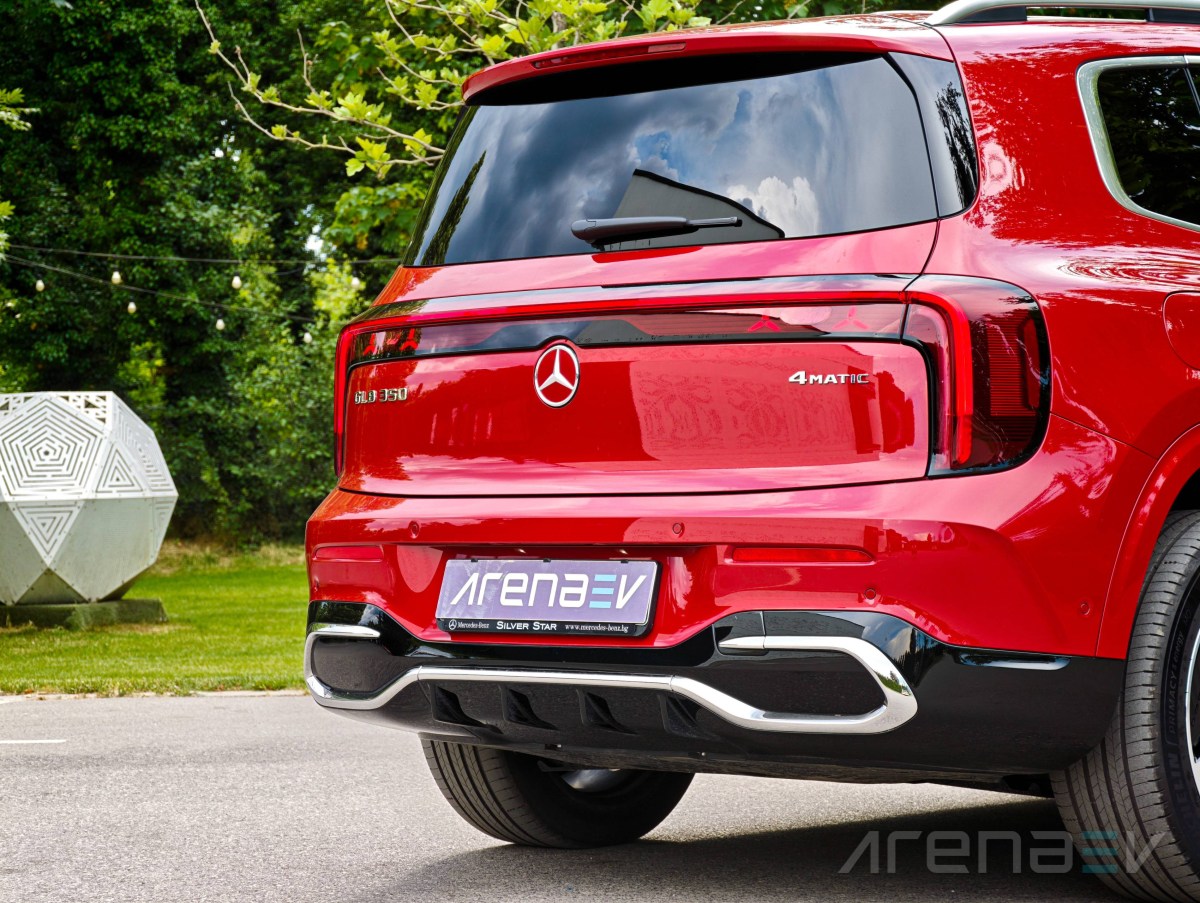
Our overall impression of the Mercedes GLB 350 4Matic is that it is an excellent solution for larger families that cannot, or simply do not want to, live with a huge SUV. The three row version in particular occupies a niche with almost no direct electric competition and solves a problem few manufacturers have even attempted to address.
We strongly suggest trying one for yourself. The bigger question is whether you actually need the extra performance and AWD of the 350 4Matic. If not, the less powerful, rear wheel drive GLB 250+ should retain nearly all of the practicality that makes this model so appealing in the first place.
Pros
- Huge interior space despite the compact size.
- Large frunk (front trunk).
- Better driving experience than rivals.
- Optional third row of seats.
- V2H and V2G.
- Quicker than advertised.
- Good efficiency and range for the size.
- Great value for money.
- True off-road capability, uncommon for the segment.
- Games and connectivity features.
Cons
- Cheap dashboard material and build quality.
- Lack of parking position on the gear lever.
- Less configurable gauge cluster compared to predecessors.
- Panoramic roof shouldn’t be offered without a shading option.
Related

Reader comments
As electric vehicles become more practical and widely adopted, factors such as charging infrastructure, battery efficiency, range, and overall ownership costs will be just as important as performance.
- 27 Aug 2026
- KI1
- Murcedes
Really loved the previous one but I feel they inproved everything with this new one. Gotta test one for my family but besides the hideous displays inside, everything else is perfection👌
- 24 Aug 2026
- B0@
- tehnomind
very ugly car for that price and from Mercedes , that is awful
- 23 Aug 2026
- swp