Autonomous EVs outperform human drivers according to Waymo safety data
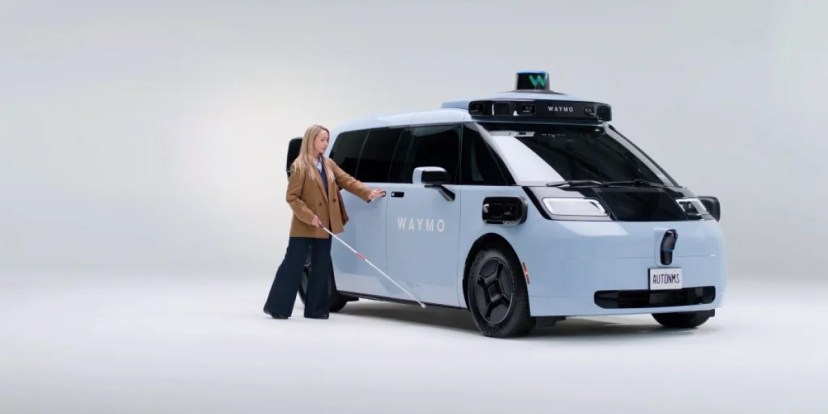
The debate around autonomous electric cars tends to focus on whether computers can handle the chaos of city streets better than humans. Technology company Waymo shared its latest safety data through the end of March 2026 to try and answer this question. The company shared this information with independent researchers and the public to ensure transparency, and the latest numbers show that the autonomous driving system behaves quite a bit safer than the average person behind the wheel.
The new safety analysis is huge in scale. It covers more than 354 million kilometers (220 million miles) of fully autonomous driving - that’s more than 250 human lifetimes of driving experience. The data comes from five different urban areas where Waymo operates its autonomous taxi service. For the first time, the dataset includes driving figures from the city of Atlanta, giving researchers a better look at different traffic patterns.
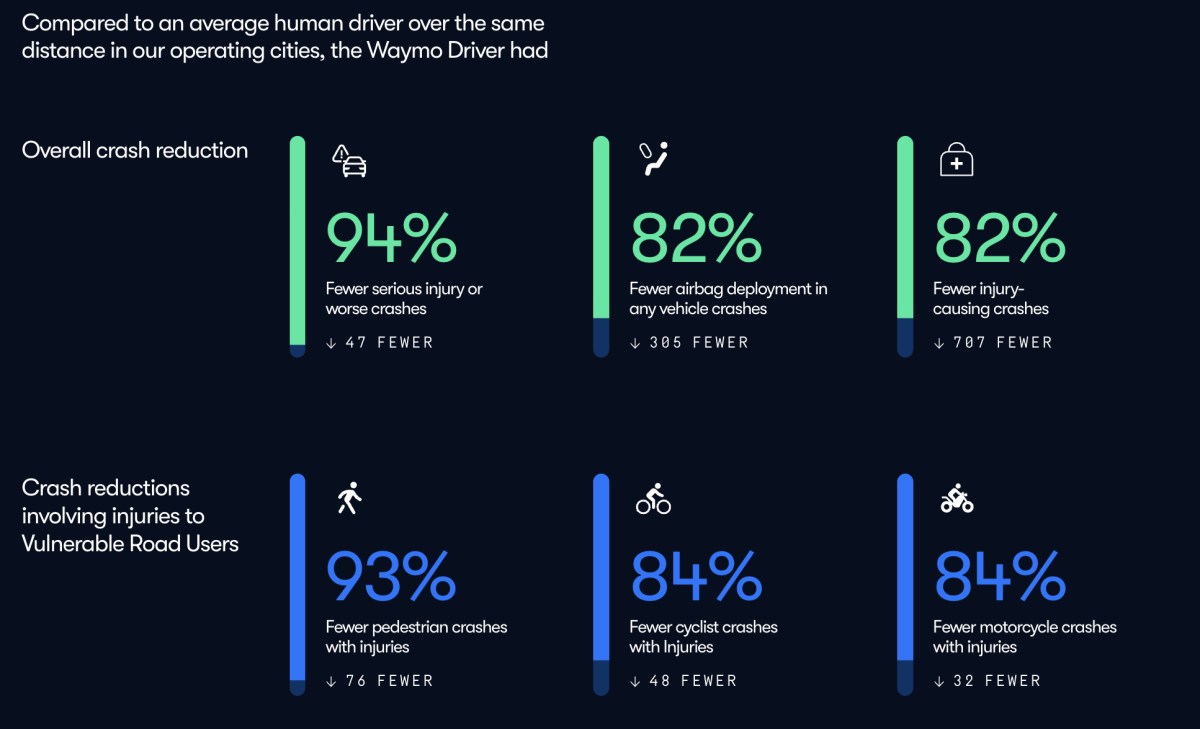
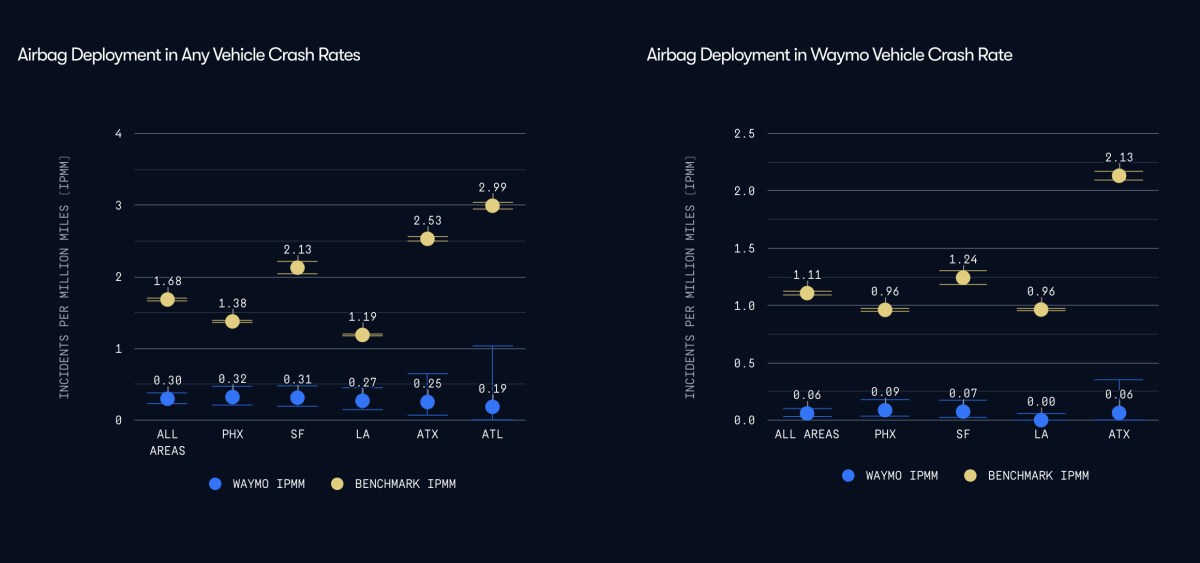
When compared directly to human drivers in the same locations, the Waymo Driver system shows a major reduction in accidents. The autonomous vehicles were involved in 94 percent fewer crashes that caused serious or fatal injuries. The data shows an 82 percent reduction in crashes where an airbag opened, as well as an 82 percent drop in accidents resulting in any reported injury. Waymo calculated these comparisons regardless of which vehicle actually caused the collision.
The safety improvements are also visible for the most vulnerable people sharing the streets. The data shows that the autonomous system had 93 percent fewer injury-causing crashes involving pedestrians. Collisions involving cyclists dropped by 84 percent, and accidents involving motorcyclists decreased by the same 84 percent. These numbers suggest that the sensors and software protect people outside the vehicle effectively.
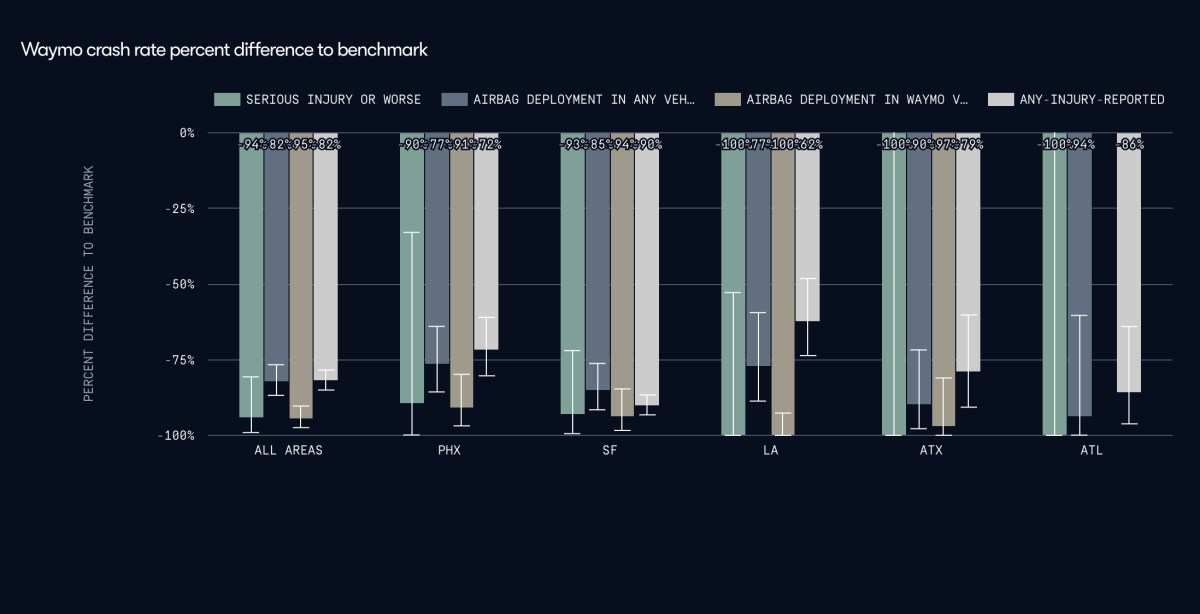
Maintaining high safety levels can become difficult when a company grows, but Waymo reports that its safety performance remained steady even as operations expanded into more complicated environments. The company unified its service area in the San Francisco Bay Area and started driving to local airports. Even with different road layouts and more difficult traffic conditions, the autonomous taxis maintained their strong safety record.
The city of Atlanta is a clear example of how these EVs perform in a new environment. Waymo vehicles traveled more than 8.7 million kilometers (5.4 million miles) in Atlanta. In that distance, the autonomous driver had 94 percent fewer airbag-deployment crashes than human drivers. It also had 86 percent fewer crashes that caused injuries. A typical human driver covering that same distance in Atlanta would likely cause at least one serious or fatal crash - the autonomous fleet recorded zero.
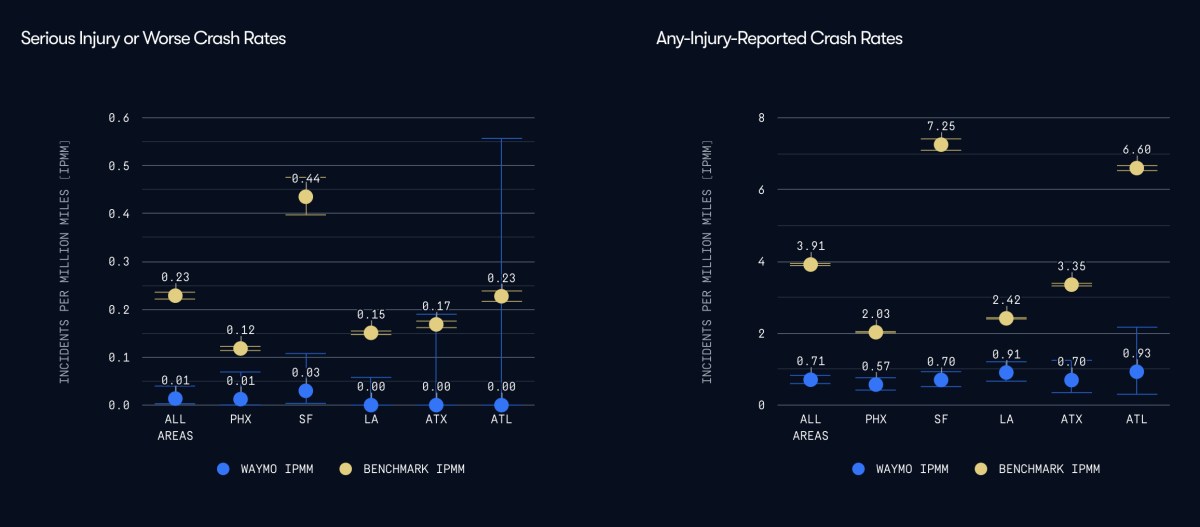
The company now operates its fleet at a very high volume, driving more than 6.4 million kilometers (4 million miles) every single week. This high mileage means the percentage drops create a measurable difference in real life. Waymo estimates that its current weekly driving prevents one serious injury crash every eight days. It also prevents roughly six airbag deployments and 13 injury crashes of any kind every week.
Over the entire history of its commercial operations, these safety benefits continue to add up for local communities. The company estimates that its fleet has avoided roughly 47 crashes that would cause serious or fatal injuries if humans were driving. The autonomous cars also avoided 305 crashes that would deploy airbags and 707 crashes that would cause minor injuries. As the fleet drives more kilometers, these prevented accidents will grow.
Outside experts find the volume of data impressive. Carol Flannagan, a professor at the University of Michigan Transportation Research Institute, stated that the company has driven enough kilometers to make accurate, direct comparisons to human crash rates. Flannagan noted that consistent results across different cities strengthen the conclusions. She specifically praised the positive results at intersections, which remain highly dangerous for cyclists and pedestrians.
These numbers look excellent, but a small amount of healthy skepticism is useful. Waymo compares its autonomous electric cars to the average human driver. This average benchmark includes very old vehicles that lack any modern safety technology. The statistics would be even more valuable if researchers compared robotaxis to new, human-driven cars that feature modern advanced driver assistance systems. That comparison would show exactly how much the autonomous driver improves upon modern consumer vehicles.
Related


Reader comments
- bad math
An LLM or AI that nominally exceeds 50% of people is just a dice roll. Autonomous EVs should outperform by a couple standard deviations.
- 26 Jul 2026
- kmq
- glim
Its same data point comparison as Tesla. Yet booohoohoo when Tesla says it,Yaay for Waymo
- 26 Jun 2026
- U@m