Citroen e-C3 44 kWh review
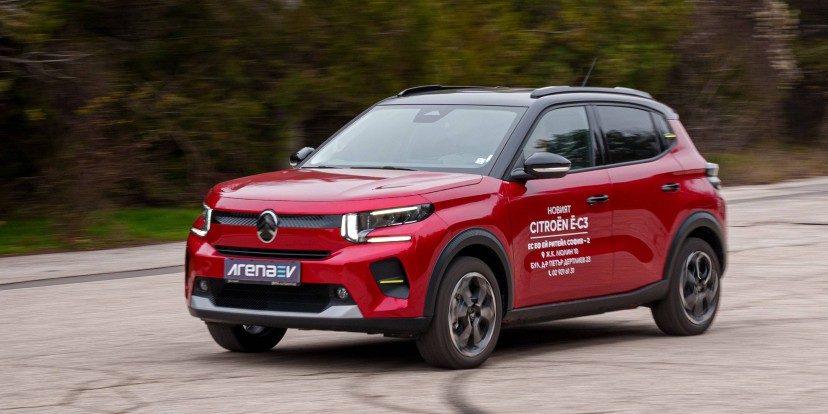
Citroen has made some of the best small city-focused vehicles through the years and never really stopped developing that segment. The C3 has been in production for over 22 years and is currently in its fourth generation, solidifying its position as a favorite in the supermini segment.
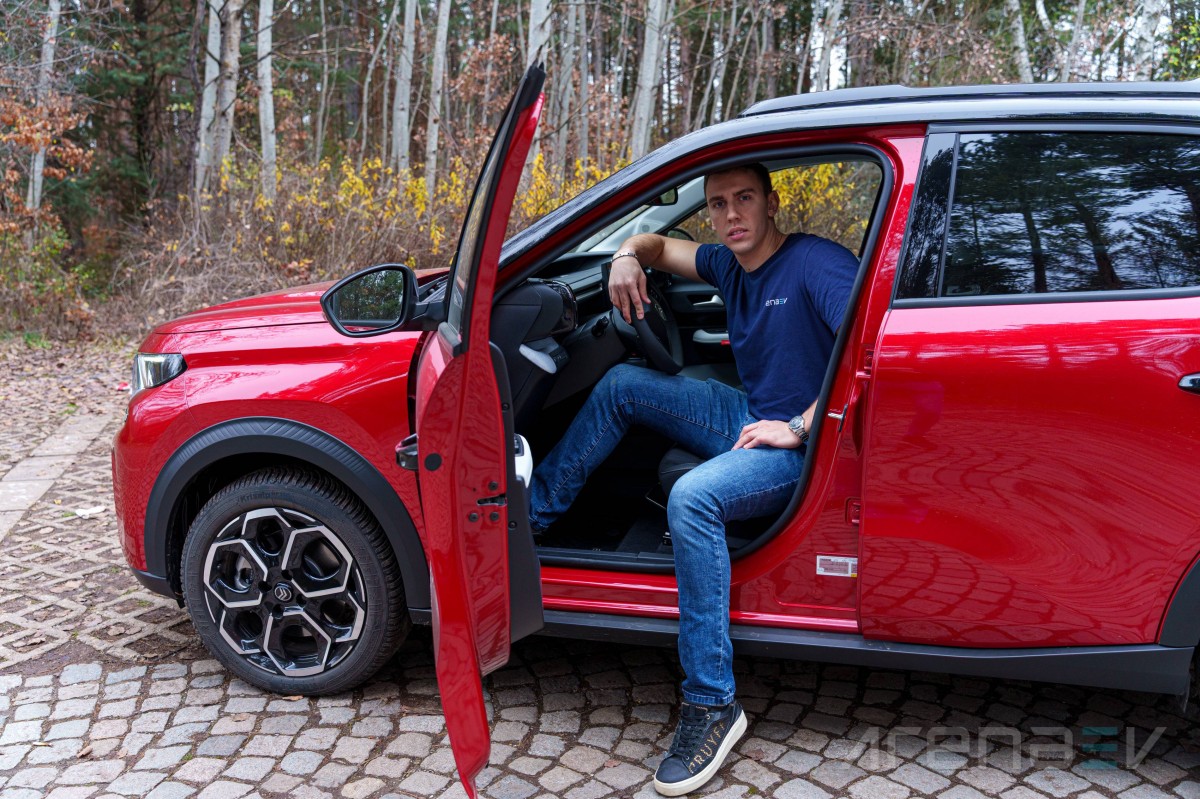
Table of Contents:
- Exterior
- Interior
- Storage & practicalities
- Driving experience
- Ride comfort
- Tech features
- Cabin noise
- Acceleration and braking
- Consumption
- Charging speed
- Competition
- Verdict
Despite appearing much larger than the first-gen C3, the newest e-C3 is only about 6.3 inches longer and 2.76 inches taller, which still classifies it as a compact car. Citroen avoids SUV and crossover classifications and rightfully so - it is a hatchback that just happens to sit a bit higher above the road.
The exact version we're reviewing today is the Citroen e-C3 44 kWh. It comes with 113 hp and 89 lb-ft sent to the front wheels. The 44 kWh is the total capacity of the battery pack and its WLTP rating is 199 miles. There are also petrol and petrol-hybrid versions of the C3 on sale with the same body.
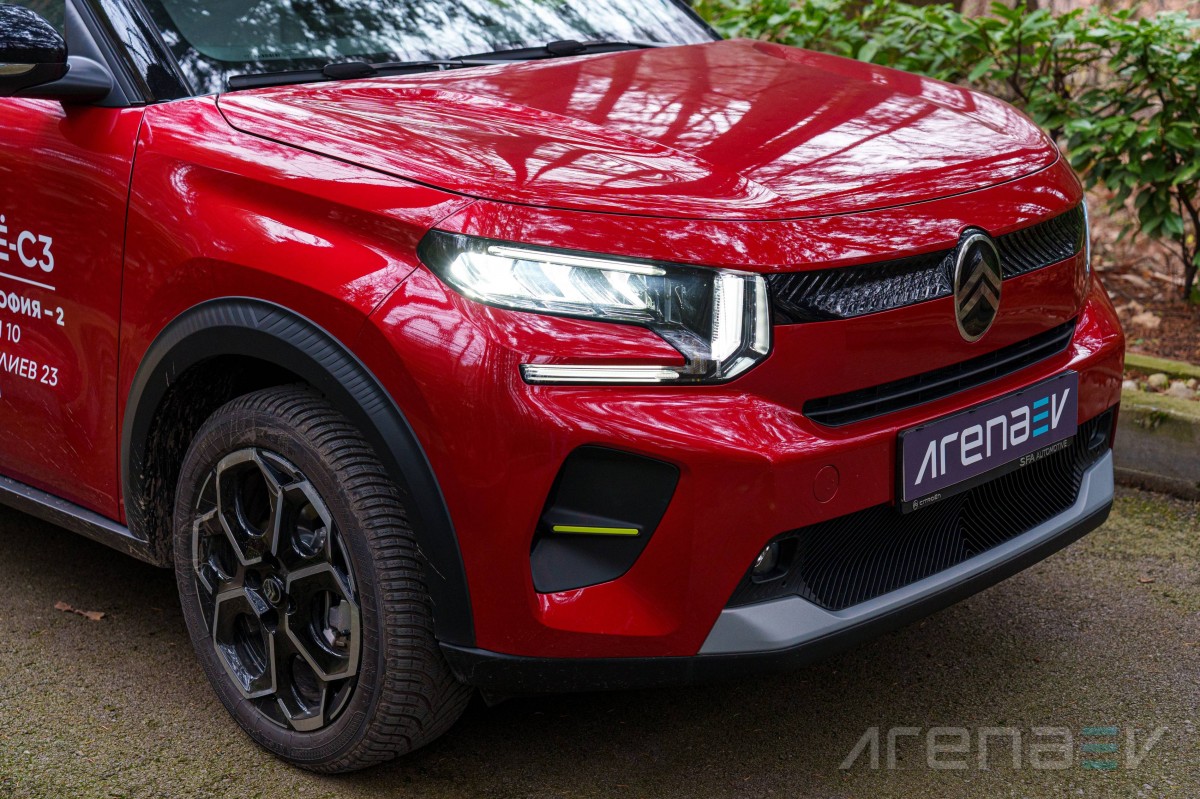
The e-C3 shares a lot with the Fiat Grande Panda we already reviewed. However, the e-C3 is significantly cheaper than the Panda, with some markets having a 15% price difference. We'll highlight the differences as we go through this review so you can decide which of the two is better value for money.
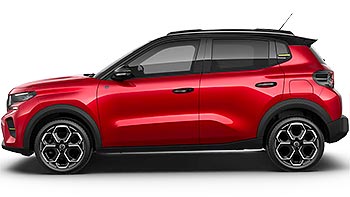
Citroen e-C3 44kWh 2023 -
- Dimensions: 158.1 inches x 69.1 inches x 61.7 inches, 100 inches wheelbase.
- Drivetrain tested: 44 kWh - FWD 83 kW (113 hp), 89 lb-ft, 44 kWh total battery capacity
- Charging: 100 kW CCS
- Range: 199 miles WLTP
- Weight: 3,128 lb unladen, 4,211 lb gross
- Other features: Wireless Apple CarPlay and Android Auto, OTA updates.
Exterior
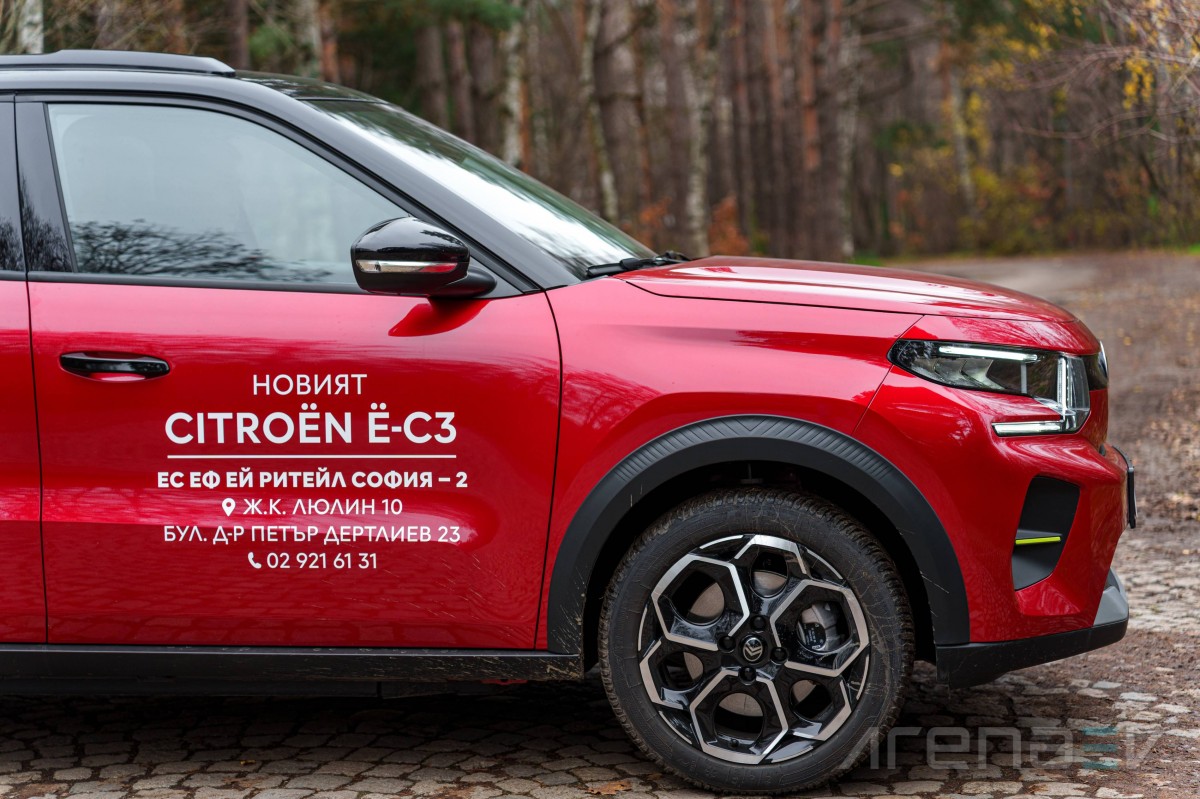
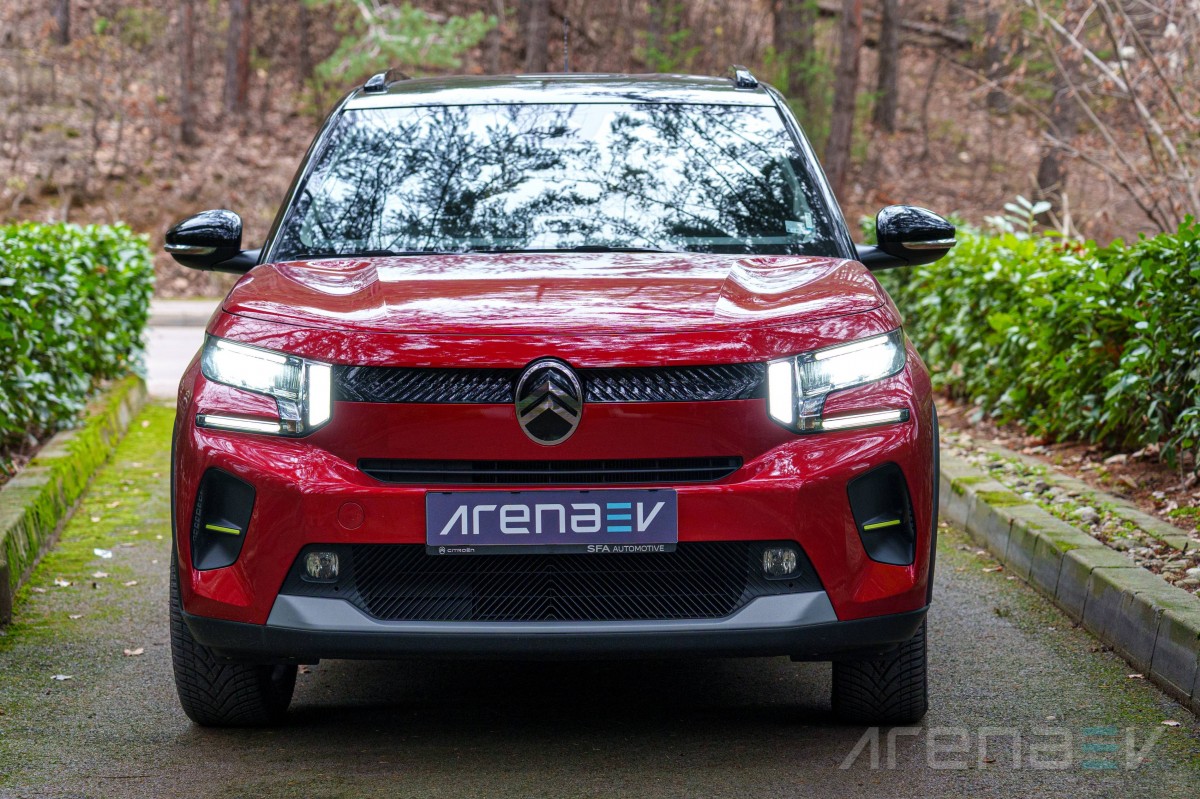
In typical Citroen fashion, the exterior of the e-C3 is busy with a bunch of different shapes, angles and accents. It looks more rugged with an upright front end, boxier shape and black underlining all around.
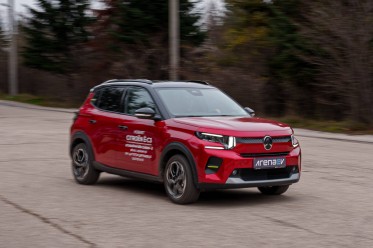
From the front, the e-C3 looks more sophisticated than previous models that bet on a goofier design with round details all over. The front is very high and sits upright due to the pedestrian safety standards but that also allows for more aggressive styling and more significant road presence.
The Citroen logo is huge and sits prominently in the center of the grille. The LED headlights are C-shaped and provide good illumination at night.
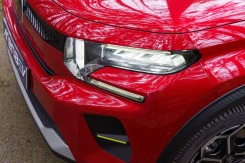
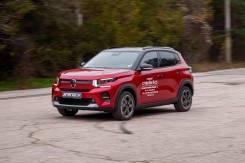
The front of the Citroen e-C3
From the side, the e-C3 looks compact and rather cute. It sits higher than any of its predecessors with 6.4 inches of ground clearance.
The side is characterized by a complete lack of quirkiness and originality. It's not necessarily a bad thing as many manufacturers try too hard to make a recognizable profile, sacrificing user experience in the process.
The optional 17-inch wheels we got on the test vehicle look great. Despite being the bigger size option, they still have plenty of rubber on them for a comfortable ride.
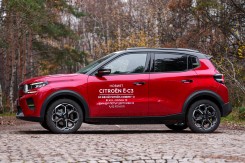
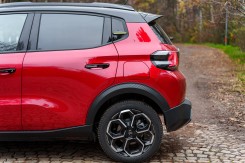
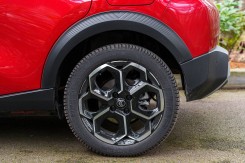
The side has little accents to stand out in traffic.
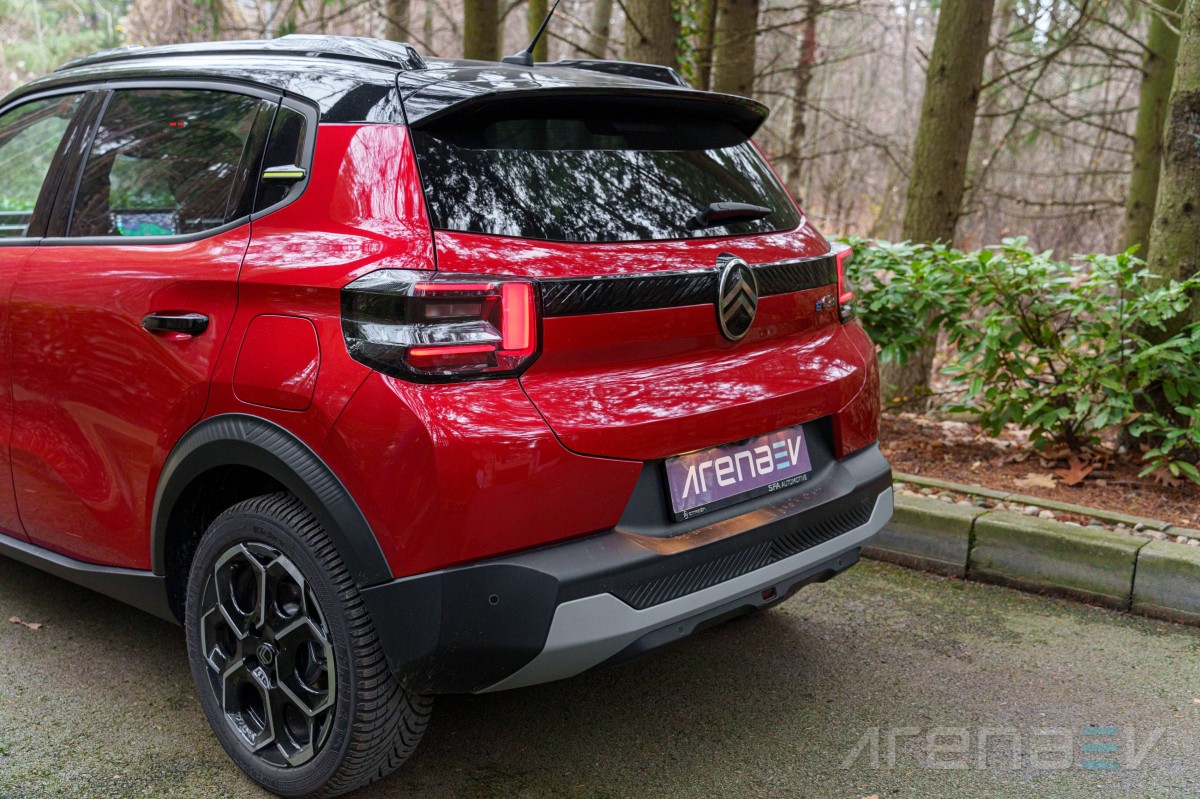
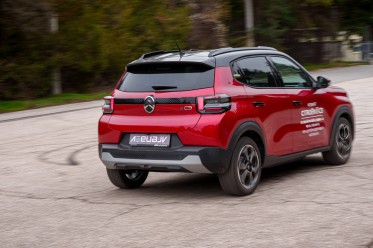
The rear end of the new C3 once again looks somewhat imposing with massive tail lights and a giant logo alongside a number of smaller accents.
Overall, the e-C3 is regonizable, but stylish enough. Unlike the Fiat Grande Panda, the Citroen e-C3 doesn't go out of its way to project ruggedness and we think it ends up the more stylish of the two.
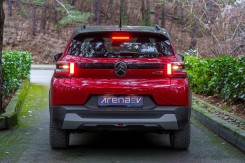
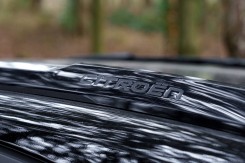
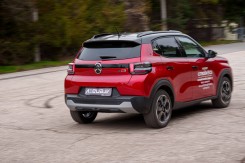
The rear of the e-C3 is stylish.
Interior
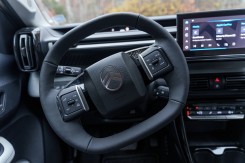
Inside, the Citroen e-C3 is wonderfully simplistic. All buttons are big and easy to figure out. Unlike the Grande Panda, the interior of the e-C3 has soft surfaces in all the areas you frequently touch and feels nice to sit in and use. Especially given the price point, the interior of the e-C3 is great and is better than what the majority of cars in this price range offer.
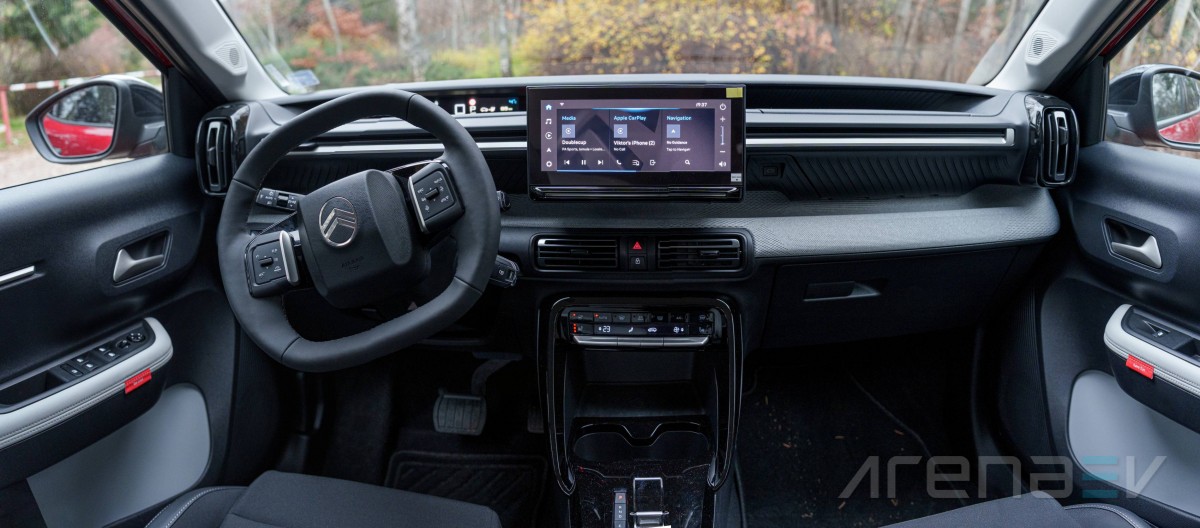
Every door has a different message written on its sill in a bold red color. This is a neat touch to break up the otherwise sterile look inside.

The steering wheel is oval with the top and bottom parts of it flattening noticeably. It is a bit weird at first, but you get used to it quite quickly. It features buttons on either side to control the cruise control and stereo.
The driver display is actually a projection like a head-up display, just not on the windscreen itself. It looks good and is pretty similar to what the newest BMW iX3 Neue Klasse offers, just in a much smaller size.
As great as the display might be, it has a critical flaw that is shared with the Fiat Grande Panda - it isn't configurable, so much in fact that it cannot even show consumption data. This is unacceptable in a modern vehicle, especially an electric one where consumption is arguably the most important reading.
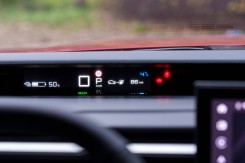
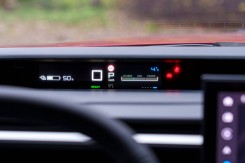
The driver's display could offer more information.
The center display is a 10.25" touchscreen unit, which works well, has great image quality and quick response times. Shared with many Stellantis models, its only downside is the palm rest underneath it. It doesn't stick out enough to actually be useful and is therefore just an annoying hindrance.
Below the center display is a small indented area with cloth finish that can be used for storage. It isn't fancy but comes practical for small items.
In the middle of the lower part of the dashboard are the climate control buttons. They are nice and simple, not integrated into the screen, which is always welcome. Depending on the trim, you get heated seats and steering wheel, as well as heated windscreen, which used to be extras reserved for the most luxurious vehicles just a few years ago.
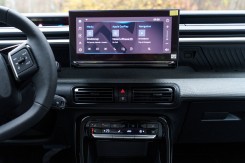
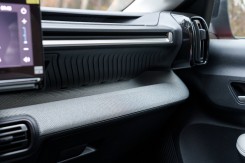
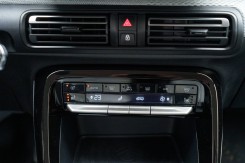
The dashboard is simple but useful
The center console starts with a massive wireless charging pad, followed by two big cupholders.
In the middle you find the gear selector, which is identical to a plethora of Stellantis vehicles. In the same vicinity is another storage pocket.
The armrest is not huge, but certain cars in this segment don't even have one, so we're happy with it.
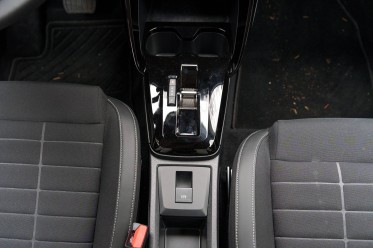
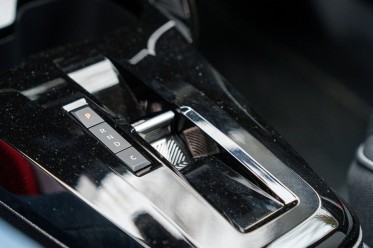
The center console comes with a lot of plastic.
In the rear you'll barely find any funcional elements. There are two USB-C outlets and that’s pretty much it. Sadly, there's no armrest in the middle.
The backs of the front seats have two storage pockets. One small one on the top side for a smartphone and a bigger one on the lower side for documents and small objects.
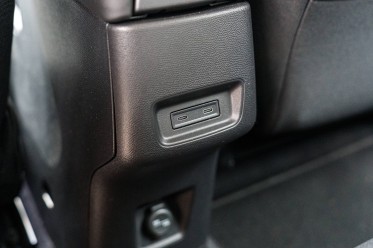
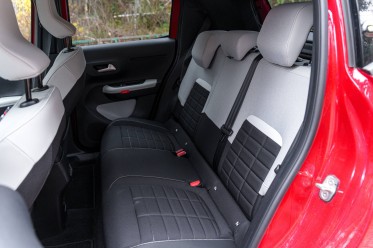
No frills around the back.
Despite being a compact vehicle, the Citroen e-C3 can fit 4 adults in reasonable comfort. Our reviewer's 1.95 m (6'4") tall and can fit behind his own seat. Granted, things are a bit cramped in terms of legroom, but headroom is sufficient. For kids or smaller adults the backseats are completely fine for all kinds of journeys.
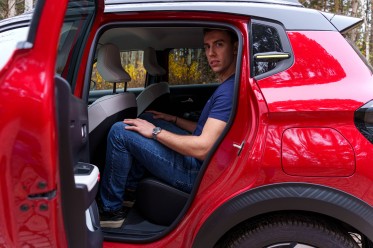
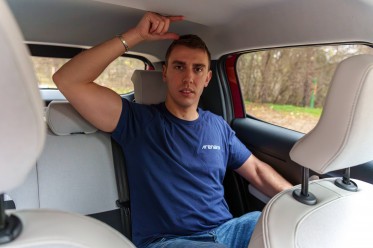
The rear seats fit even taller adults.
Storage & practicalities
The trunk of the Citroen e-C3 is average for the segment. The 10.9 ft³ volume is larger than most rivals in the class, yet it limits its own practicality by providing no secondary trunk flooring for storing smaller items.
Also the rear seats don’t fold flat. This makes loading bulky items challenging and robs some space in certain situations. Overall the storage space in the e-C3 is plentiful for the size of the car and it can prove really practical in most situations.
Sadly, there isn't a frunk (front trunk) to store some smaller items like charging cables and not have them bounce around the trunk.

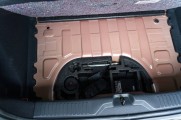
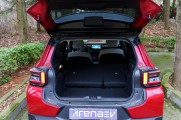
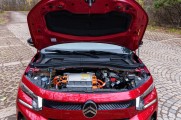
Storage is adequate for the segment.
Driving experience
Sitting behind the wheel of the Citroen e-C3 you feels nice from the start. The seats are comfy and big, enabling easy access and good travel comfort. All of the controls are where you'd expect them to be with no surprises whatsoever.
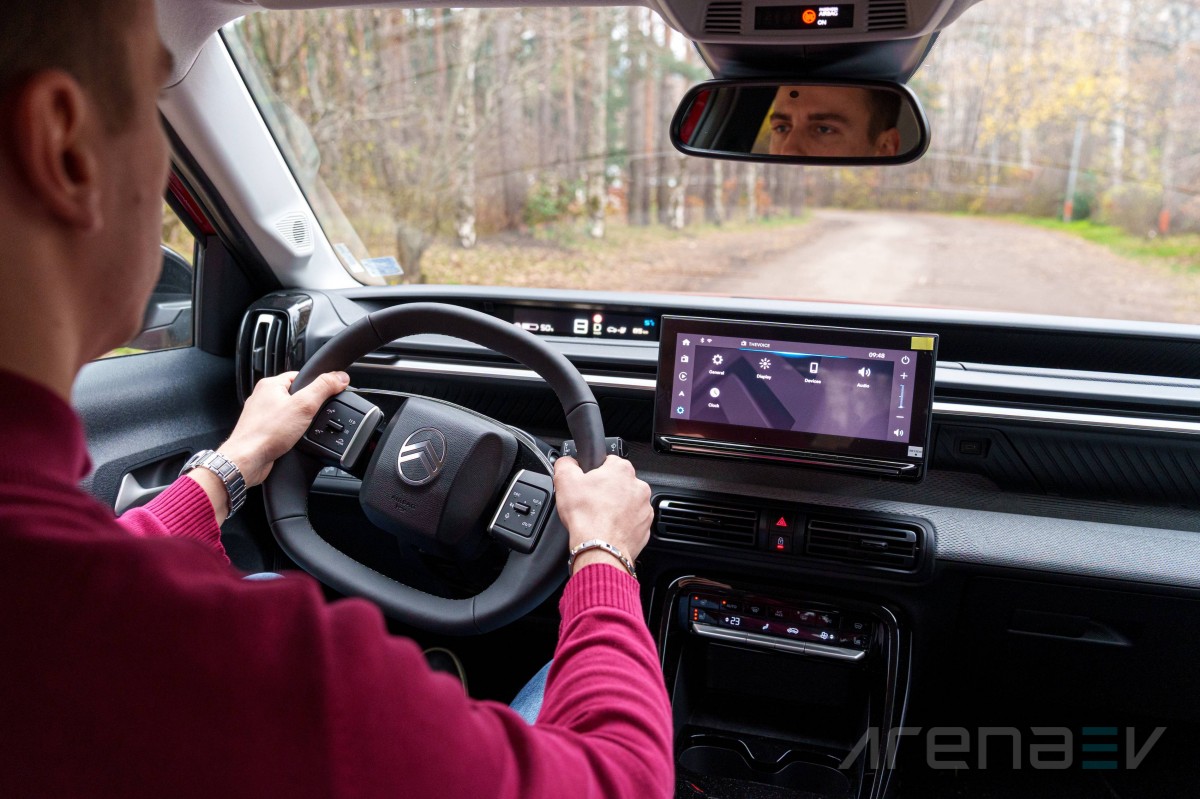
Slightly disappointing is that the e-C3 cannot be optioned with a keyless system, therefore requiring you to enter it like in the olden days. It would've been nice at least the top trim to get this extra.
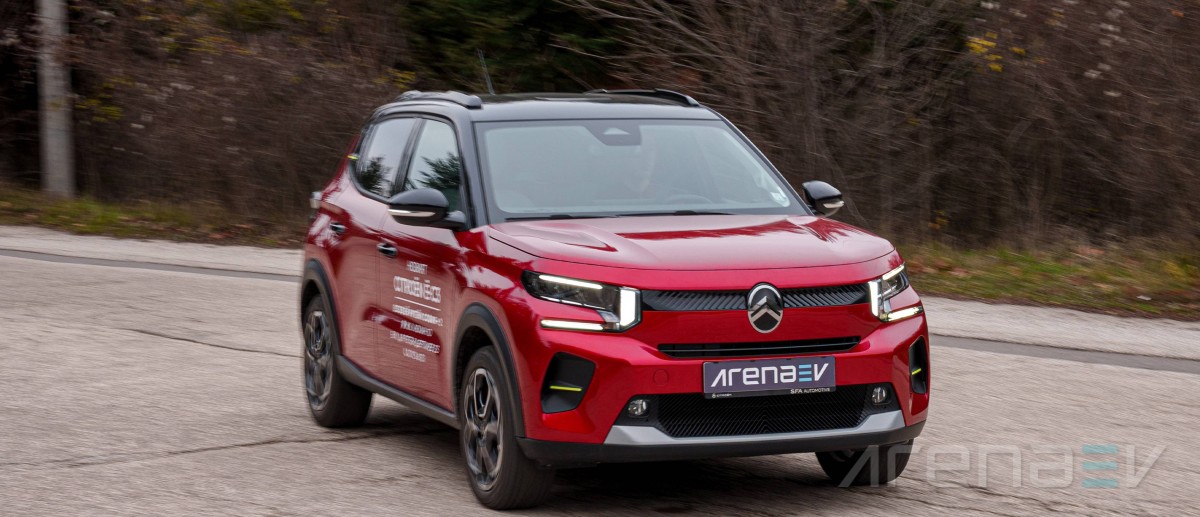
The driving experience is normal for a compact vehicle. Power is sufficient but not impressive, steering feedback is minimal and the suspension bounces around in hopes to not carry over the road's imperfections.
It isn't a driver-focused car, but the e-C3 handles all sorts of daily commutes well and can be your non-intrusive companion. This is just what a car in this segment needs to do and for the price point there is nothing to complain about.
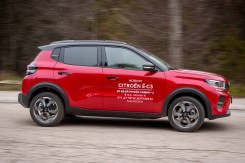
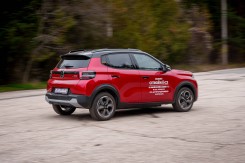
The e-C3 in motion
Although they are largely the same vehicle, the e-C3 and the Grande Panda differ vastly at high speeds. While the Panda shakes and rattles at its limit at 84 mph, the e-C3 feels planted and capable of much higher speeds. You get much better feedback from the steering wheel and the car inspires more confidence. We can't see either of those cars using a highway very often, but it’s good to know the e-C3 is capable and comfortable doing it.
One thing we didn't like is the lack of one-pedal driving. You get some recuperation as standard, but you often find yourself needing to press on the brake pedal. Stopping completely from low speeds definitely requires braking with the pedal.
On a positive note, it is very easy to disable the annoying driver aids. Despite not having any driving settings whatsoever, the e-C3 has quick buttons to disable the lane keeping assist and traffic sign warning. We have explained why they're mandatory but how Citroen lets you disable them is applaudable. Instead of burying the controls deep in some menus, you just press and hold two buttons to the left of the steering wheel and you’re done. Until the next time you climb inside and have to repeat the procedure that is.
Overall, the entire experience of driving the Citroen e-C3 is relaxing and unengaging. It is a vehicle that gets you smoothly from point A to point B without issues or excitement. A city-oriented compact vehicle in its purest form.
Ride comfort
The Citroen e-C3 benefits from Citroen’s Advanced comfort suspension with progressive hydraulic cushions. This suspension offers a way more comfortable ride than the Panda in most situations. Uneven road surfaces and small potholes are a breeze. However, speedbumps and bigger bumps make the passengers jump around the entire interior. This is likely due to the short wheelbase.
Tech features
Technology is really minimal in the Citroen e-C3. You get just the basics with nothing more. The driver display we mentioned before offers just a few readouts and not even consumption figures. It is impressive technologically, but a disaster in terms of usability.
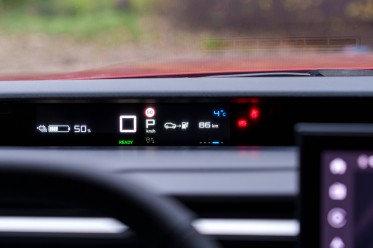
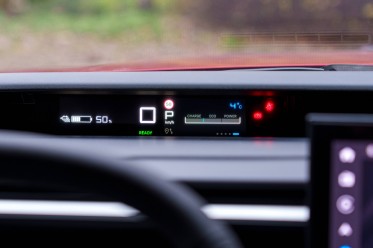
The gauge cluster is disappointing.
The center screen also has a basic set of features. But that's not a bad thing as it makes the car simple and tremendously easy to use. You get a map with GPS that works alright.
Most importantly, you get wireless Apple CarPlay and Android Auto. Even some premium manufacturers charge extra for these features, yet Citroen offers them as standard.
The home menu gives you quick access to your phone connection, media and navigation, which are virtually all the functions the infotainment offers. There is no lag and the buttons are big and easy to read.
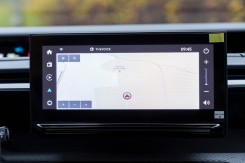
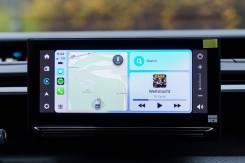
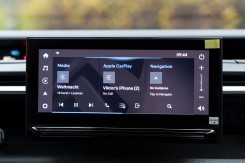
All you get as infotainment.
In the settings menu you cannot change almost anything. You can only change the operating language, do a factory reset or install updates. That’s it!
You get a backup camera with subpar quality. It eases parking but the fact you get parking sensors only around the back and not in front is strange for a modern vehicle, even a relatively cheap one.
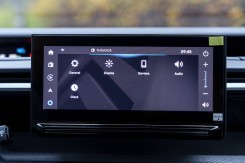
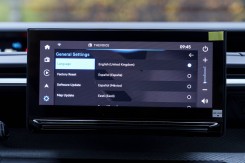
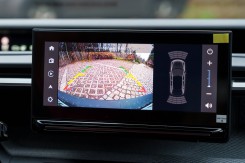
Scarce settings and subpar camera quality.
Cabin noise
The interior of the e-C3 is quiet for the segment. It filters out ambient sounds well but tire and wind noise are highly noticeable, especially at higher speeds. Despite being louder than some rivals, there aren't any bothering sounds or rattles, which make it appear subjectively quieter.
Cabin noise test results
- 37 mph
- 56 mph
- 81 mph
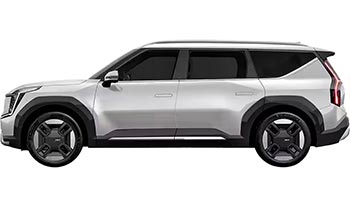
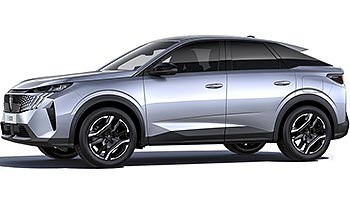
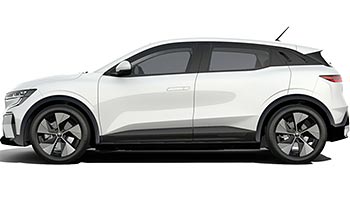
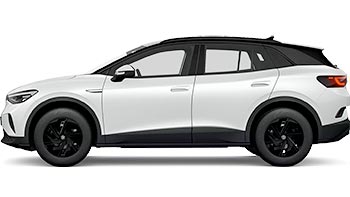
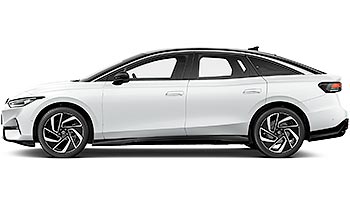
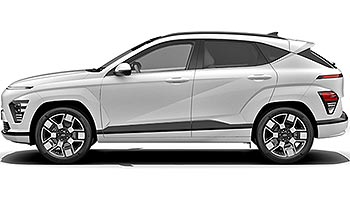
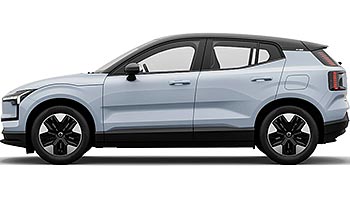
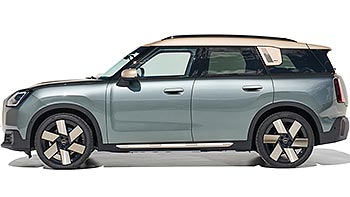
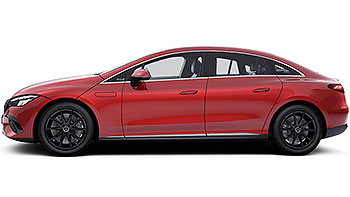
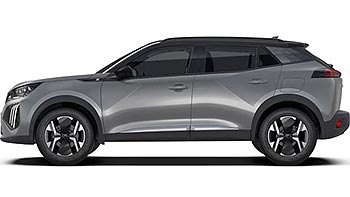 Peugeot e-2008
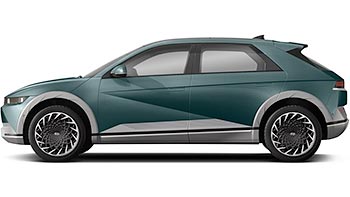
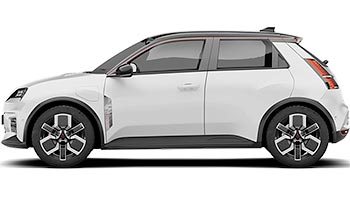 Renault 5 E-Tech
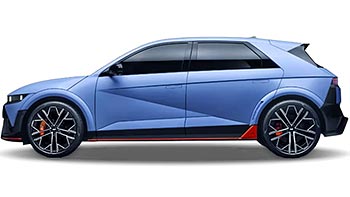
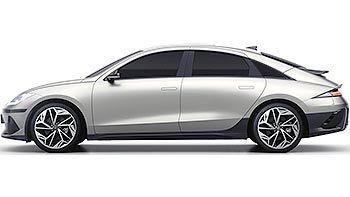
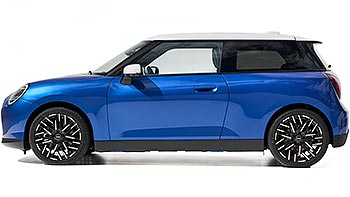
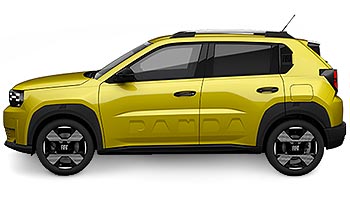 Fiat Grande Panda BEV
 Hyundai Inster Long Range
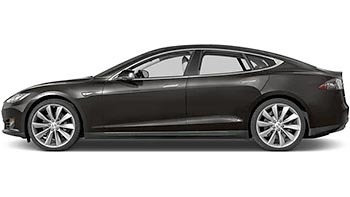 Citroen e-C3
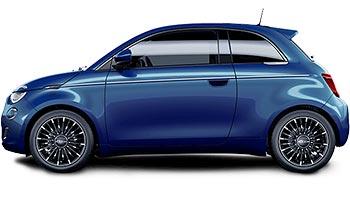
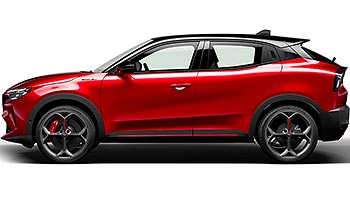
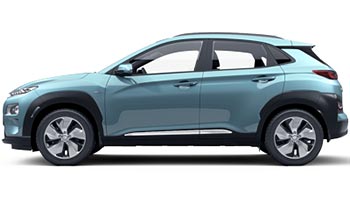 Hyundai Kona Electric 64kWh
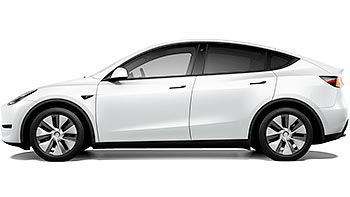
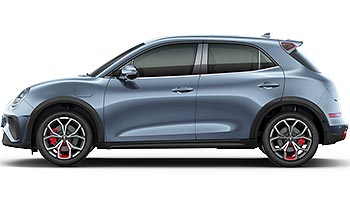 Ora Funky Cat
Sound level tests are carried out with a specialized sound level meter placed in the car's cupholders. The test is conducted with air conditioning and radio off and while maintaining a steady speed.
Acceleration and braking
113 hp do not exactly spell outstanding acceleration. The advertised 11 seconds for 0 to 62 mph were slightly improved upon in our testing, where the e-C3 managed to get there in 10.8 seconds. Still, in the real world and especially in congested city traffic you're rarely left wanting for more power.
0-62 mph acceleration test results
Ora Funky Cat
Hyundai Kona Electric 64kWh
Renault 5 E-Tech
Peugeot e-2008
Hyundai Inster Long Range
Fiat Grande Panda BEV
Citroen e-C3
Braking, on the other hand, is impressive. The e-C3 took just 34 m (111'7") to brake from 62 mph to 0. Better yet, the e-C3 can replicate its results multiple times in quick succession. It should also be noted that the winter tires and slightly wet surface should account for a longer braking distance, compared to the ideal conditions we usually have.
Braking distance test results
Citroen e-C3
Fiat Grande Panda BEV
Peugeot e-2008
Renault 5 E-Tech
Ora Funky Cat
Hyundai Inster Long Range
Hyundai Kona Electric 64kWh
Acceleration and deceleration are measured with a RaceBox device inside the car. Testing is done with a single person inside the car, with air conditioning and traction control off.
Consumption
We couldn't perform our usual range test on the Citroen e-C3 as there are no such readouts inside. We drove the test vehicle for a little under 124 miles and it had just under 10% battery left.
Cars like the Renault 5 and Hyundai Inster achieve much higher mileage from only slightly bigger batteries. The Citroen e-C3 doesn’t have a great range on a single charge and if take frequent long trips it won't really work for you.
Charging speed
Charging speeds are good, though. You don’t get the built-in cable from the Fiat Grande Panda but all charging parameters are the same. Ideally, you get 100 kW CCS charging and 11 kW AC charging.

Sadly, during our testing the weather outside was cold and even though we used a 150 kW charger, we only managed to get 35 kW peak charging power. That is very far off the advertised value and a point of concern if you live in a colder climate.
Competition
The world of compact electric urban vehicles is finally expanding and new models emerge almost weekly. The Citroen e-C3 stands its ground with low pricing, good interior quality and easy operation. It is a compelling product with minimal downsides and great benefits, especially for the segment.
The first and closest rival to the e-C3 is the Fiat Grande Panda we mentioned multiple times throughout this review. The two are identical in many aspects, yet different enough to consider one over the other. The Panda has fancier styling, more quirks inside and out and a built-in charging cable that leaves you more storage space in the back. The e-C3 features nicer materials inside and handles better, especially at higher speeds.
The second rival we chose is the Hyundai Inster. It is slightly smaller in size and sits lower to the ground. The Inster offers more customization and infotainment features, making it a more modern vehicle. Despite the smaller body, the inside of the Inster is more spacious. Material quality once again is on the side of the e-C3, simplicity and price as well.
Fiat Grande Panda 2024 - • Hyundai Inster Standard Range 2024 -
Verdict
Citroen knows how to make compact cars! Its long lineage of compact models over the years has taught it how to make a vehicle that is focused on usability and simplicity. The Citroen e-C3 isn't the best in any category, yet it isn't bad at anything, either. And that is what is key for that segment.

The e-C3 sells well in Europe and is becoming a common sight. It offers great value for money even if it could benefit from a more advanced infotainment and some optional comfort extras. A bigger battery option may have broadened its appeal, although it may have come at too high a price.
So we should appreciate the Citroen e-C3 for what it is - an urban traveller that requires minimal efforts from your side. It is a more compelling product than the Dacia Spring but still affordable enough to be considered a bargain.
Pros
- Simple to use.
- Safe braking.
- Easy to disable driver aids.
- Comfortable ride.
- Great material and build quality for the segment.
- Usable rear seats.
- Stable at all speeds.
Cons
- No consumption readout.
- Slow charging in cold weather.
- Too simple infotainment.
- No one-pedal driving.
- No flat-folding rear seats.
- No battery size options.
- Small battery and low range.
Related


Reader comments
- Frici
Pro: LFP battery what is thermally more stable, less chance to runaway fire. Con: Thirsty little bastard, short range, flaws in software.
- 30 Dec 2025
- n}e
- Pino
If I didn't have other things to save for at the moment, I definitely would have traded my Zoe in for this model.
- 28 Dec 2025
- m2B