Europe drives global EV growth as China doubles export volume

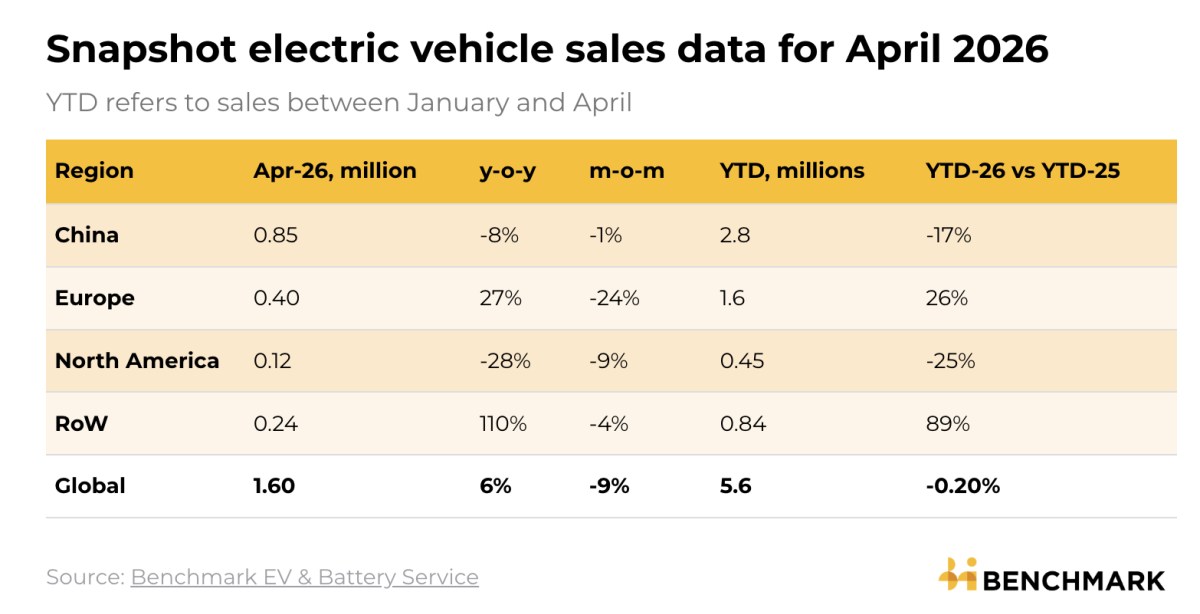
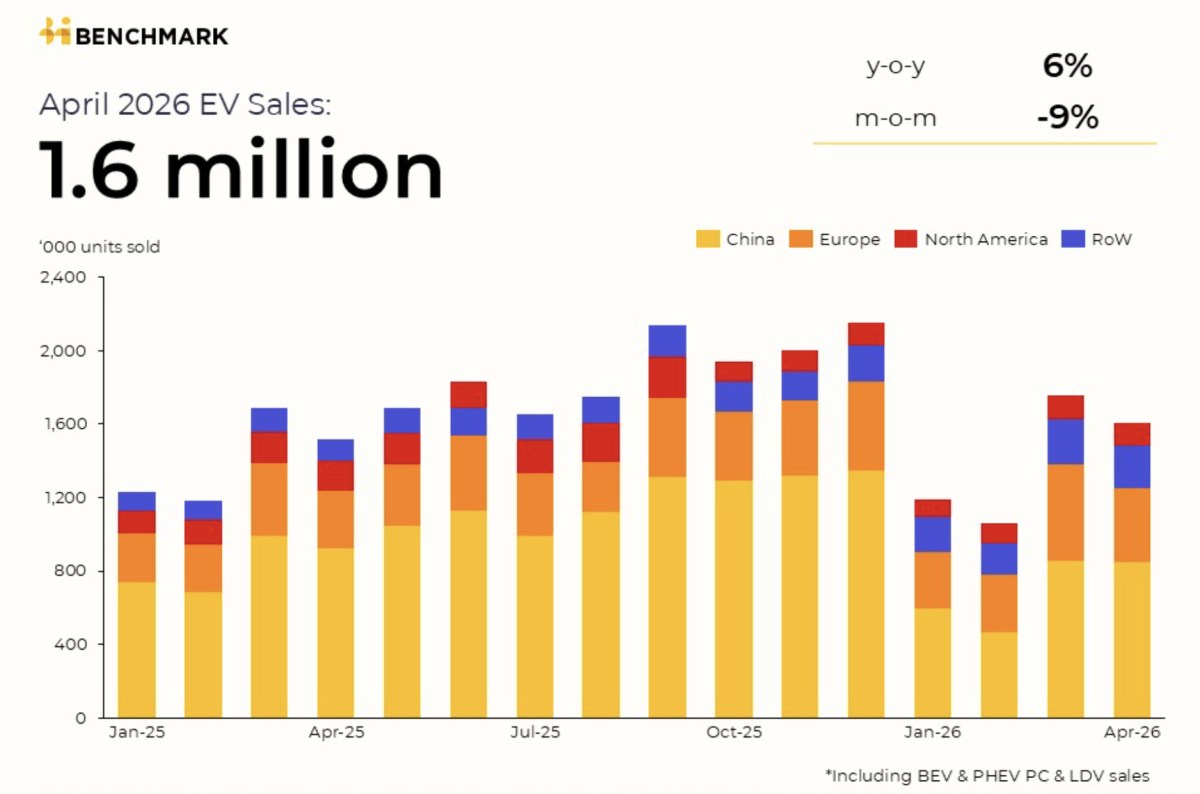
Sales of electric cars reached 1.6 million units in April 2026 globally, bringing the total number of EVs sold so far this year to 5.6 million. According to data from Benchmark Mineral Intelligence, the market grew 6% compared to April last year - though it did drop 9% from a very busy March. The industry looks like a patchwork quilt at the moment - some regions are moving fast, and some are slowing down.
Europe is the main growth engine for the global market. Other regions seem to struggle, but European buyers continue to embrace electric cars in record numbers. In April alone, sales in the region jumped 27% compared to the last year, totaling over 400,000 units. High gasoline prices, caused by ongoing conflicts in the Middle East, make traditional cars more expensive to run and force buyers to look at electric options. Additionally, generous government incentives and a surge of new models from Chinese manufacturers give customers more reasons to switch to EVs.
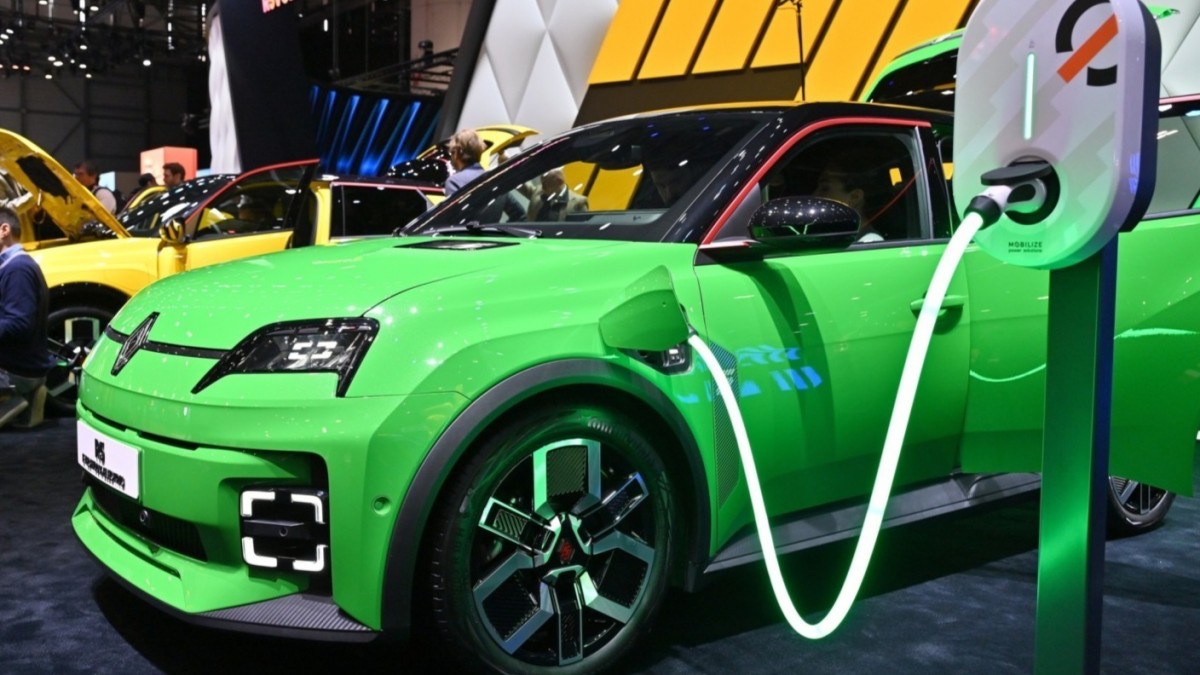
The growth within specific European countries is even more impressive. France saw its sales of electric cars rise 36% since the start of the year. Germany followed closely with a 33% increase. Italy took the spotlight by nearly doubling its market size, thanks to new government subsidies. It seems Italian drivers are finally trading their espresso-fueled city cars for battery power, with Chinese brands grabbing a large portion of those new sales.
Chinese automakers are no longer relying on only sending ships full of EVs to European ports - they are moving in. In 2025, Chinese-built vehicles made up 19% of the European market. That number has already climbed to 22% in 2026. To avoid trade tensions, many companies are building local factories. Stellantis and Leapmotor announced they will build the Leapmotor B10 electric SUV at a plant in Zaragoza, Spain, with production possibly starting as early as Q4 2026. Even Volkswagen CEO Oliver Blume suggested that sharing empty factory space with Chinese rivals might be a "clever solution" to help his company manage costs.
 Source: Benchmark Minerals
Europe thrives, but the North American market is facing a cold snap. EV sales across the United States and Canada fell 25% during the first four months of the year, with the exception of Mexico. Its market grew by nearly 50% because Chinese companies rushed thousands of electric cars into Mexico before the government introduced a 50% import tariff on countries without free trade deals.
Canada is trying to fix its 7% sales slump with a new Electric Vehicle Affordability Program. This plan offers buyers up to CAD 5,000 (roughly $3,650) for qualifying electric cars. To get the full rebate, the vehicle must cost less than $36,500, though Canadian-made cars do not have a price limit. Canada also set a dedicated quota that allows 49,000 Chinese EVs to enter the country without facing a 100% tariff, showing that the government still wants affordable options on the road.
 Source: Benchmark Minerals
In the United States, manufacturers are focusing on future production. Rivian has officially started building the Rivian R2 at its factory in Normal, Illinois. The company is betting big on the R2 and plans to expand its future Georgia plant to handle 300,000 vehicles a year instead of the original 200,000. Meanwhile, Tesla CEO Elon Musk confirmed that production has begun for the Tesla Cybercab. Do not expect to see many of them on the street yet - high-volume production of the Cybercab will not happen until late 2026.
China's domestic market paints a confusing picture - local sales dropped 17% this year, mainly because the government changed subsidies for small, cheap electric cars. Without those discounts, buyers are playing a wait-and-see game, but Chinese factories are not sitting idle. They exported 400,000 EVs in April alone. In the first four months of 2026, China shipped 1.4 million EVs overseas - twice as many as the same time last year.
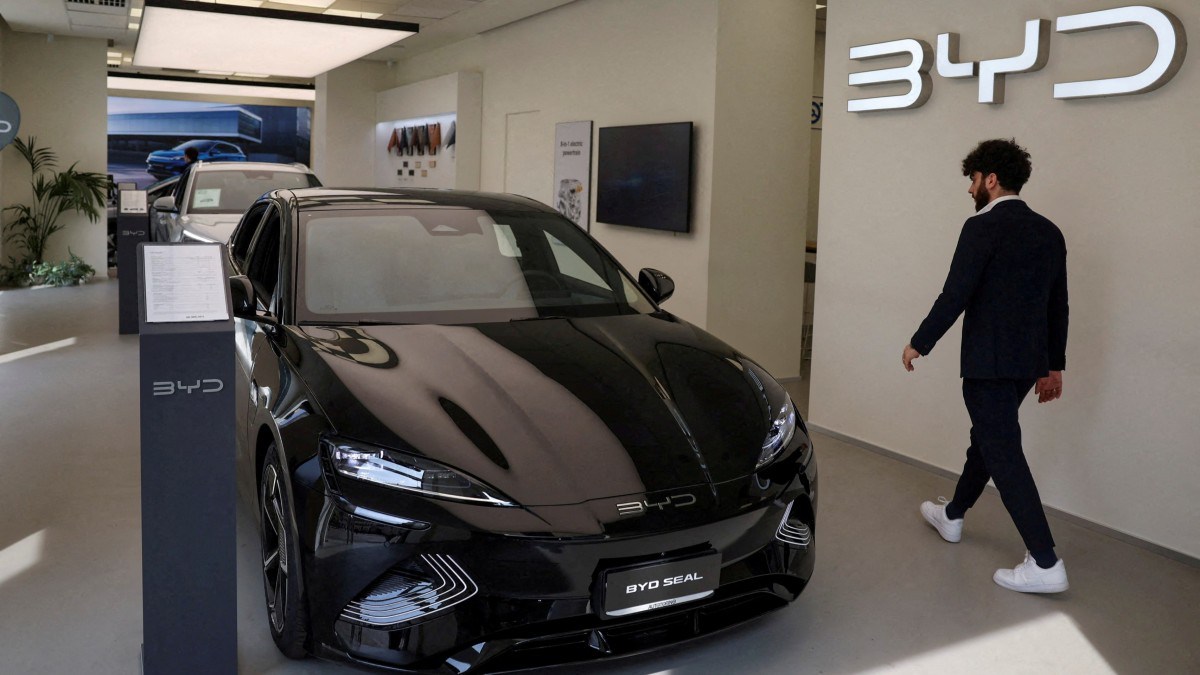
The global shift toward electric cars is far from a straight line. North American buyers are hesitating, Chinese domestic demand is shifting, and Europe is picking up the slack. The industry is becoming a game of local manufacturing and clever partnerships. As more brands like XPeng begin building models like the P7+ in Austria, the map of the automotive world continues to change every month.
Related


Reader comments
Nothing yet. Be the first to comment.