Samsung and Hyundai announce “One Team” partnership
It's no secret that carmakers are brilliant at bending metal and tuning chassis, but painfully bad at writing computer code. The companies that build our phones and the companies that build our cars have treated each other with cautious suspicion for many years - nowhere was that frostier than in South Korea. Samsung and the Hyundai Motor Group used to operate in parallel universes for generations, competing for talent and national prestige, and carefully avoiding deep entanglement. That corporate standoff has officially ended at a training center in Seocheon, where the two industrial giants declared themselves a single team.
The HMG Appreciation Day looked on paper like a corporate mixer. One hundred and seventy-seven executives and spouses watched a seventy-minute orchestral performance with cellist Han Jae-min and traded compliments about three generations of shared industrial history. But look past all the nostalgic video montages, and the guest list tells you what is actually happening.
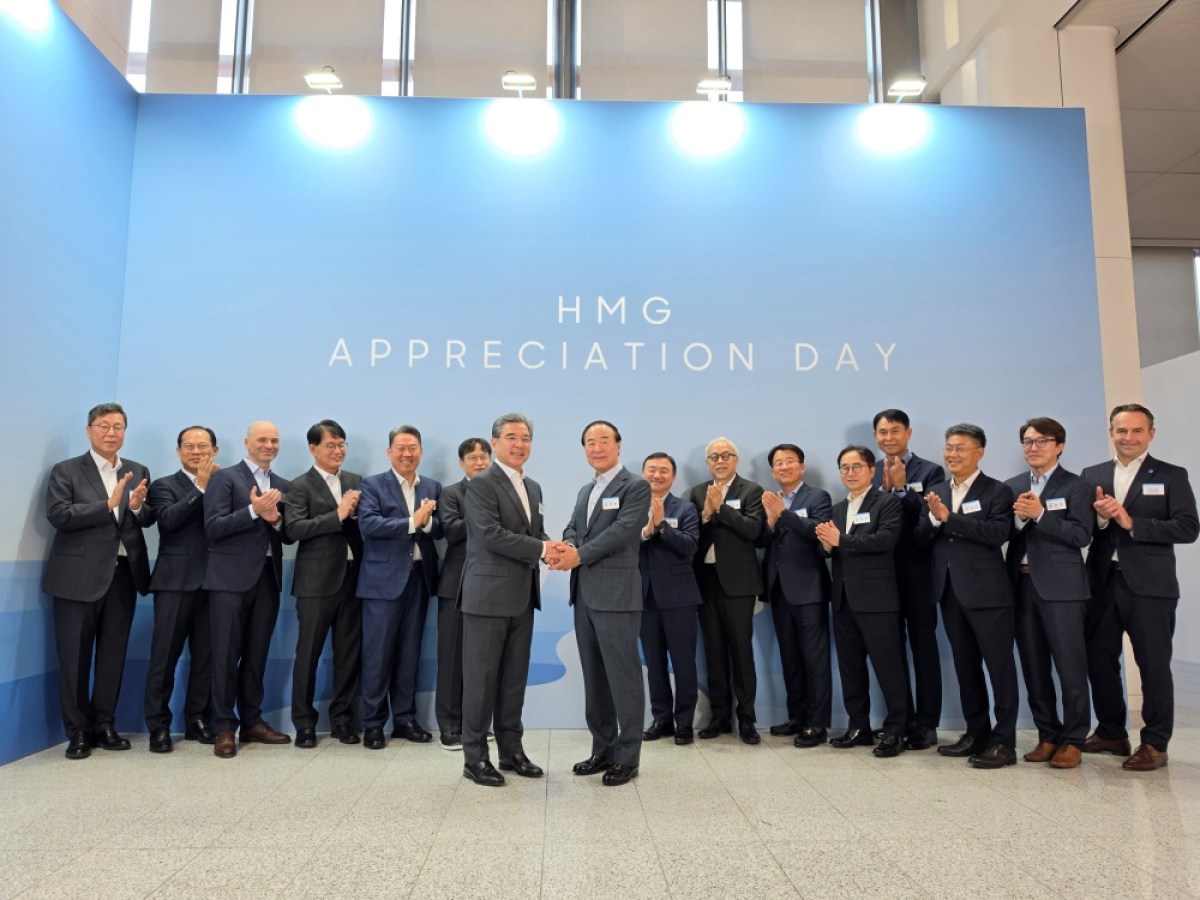
Hyundai sent its heavy hitters, including Vice Chairman Jang Jae-hoon and R&D boss Manfred Harrer - the former Porsche and Apple engineer now steering Hyundai and Kia chassis and vehicle development. The heads of Samsung SDI, Samsung Display, Harman, and the semiconductor foundry division were also present. You do not put top battery chemists, silicon architects, and vehicle dynamics engineers in the same room to listen to classical music.
Let's look at the "family history" to understand the importance of this event. Back in November 1985, an ailing Samsung founder, Lee Byung-chul, showed up at the seventieth birthday party of Hyundai founder Chung Ju-yung with a white porcelain vase. It was a rare gesture of warmth between fierce rivals, followed sixteen years later by a quiet meeting between their sons in 2001. Yet Samsung still tried to build its own cars in the late nineties - an expensive adventure that ended with Renault buying the operation - and Hyundai always guarded its supply chain fiercely, preferring to split its battery orders between LG Energy Solution and SK On. When third-generation leaders Lee Jae-yong and Chung Eui-sun met at the Samsung SDI plant in Cheonan and the Namyang R&D center in 2020, the ice finally did break, and the two companies signed their first battery supply contract (first batteries arrived in 2023).
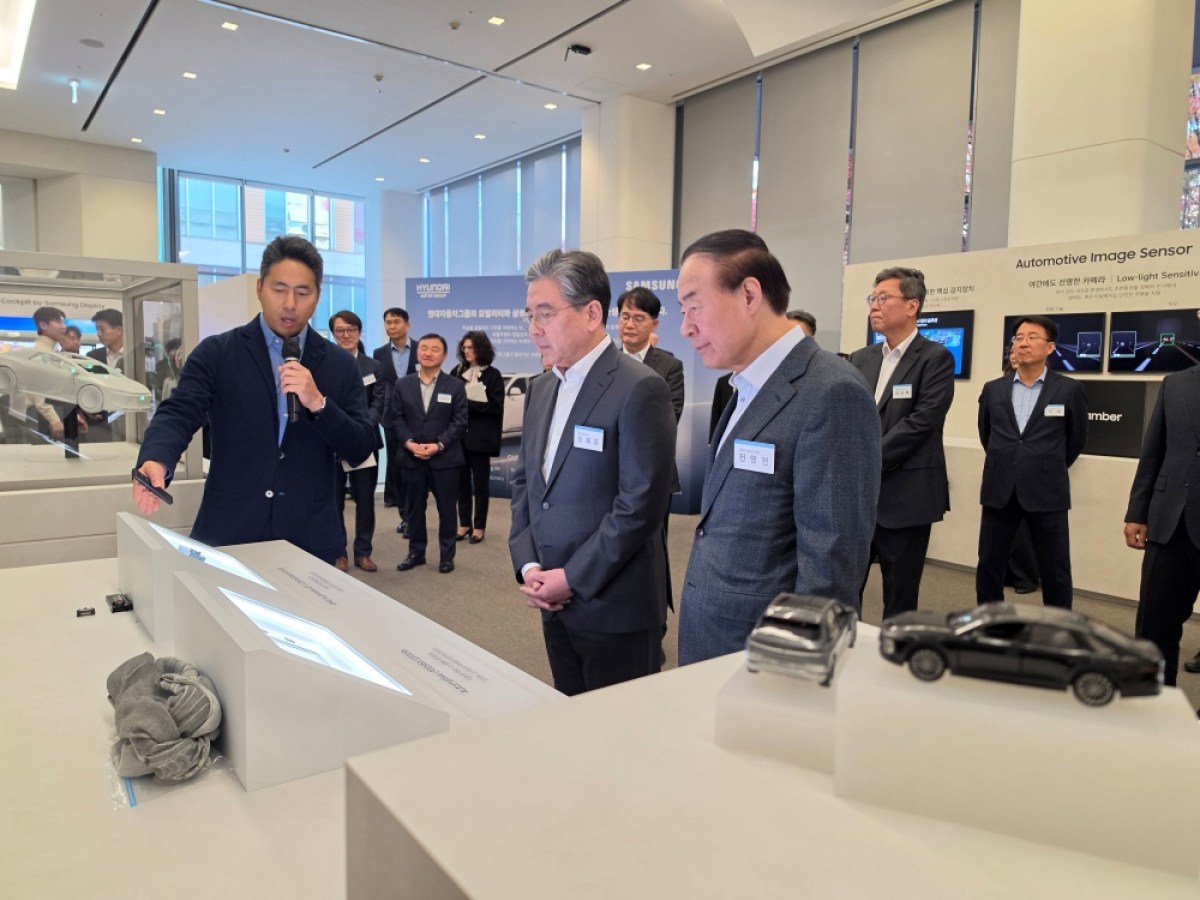
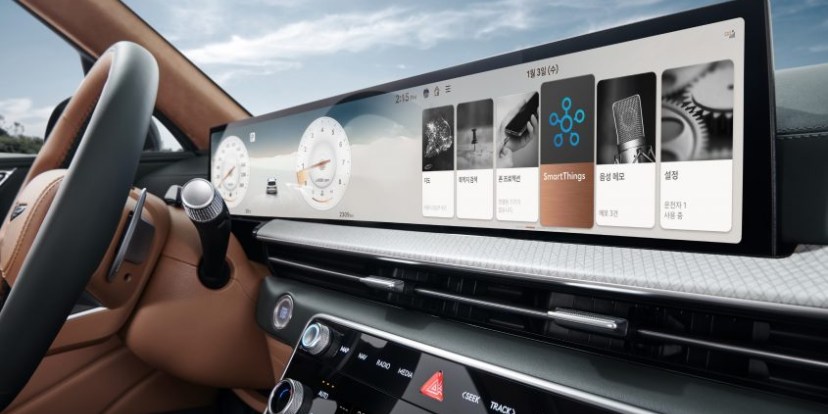
That component deal has now turned into a full marriage of hardware and software. Behind closed doors at Seocheon, Samsung laid out its entire automotive parts bin for Hyundai's engineering brass. There were next-gen automotive semiconductors, Central Control Units, Telecomms Control Units built with Harman, and tiny multilayer ceramic capacitors from Samsung Electro-Mechanics that keep high-voltage radar and camera feeds clean - modern EVs are nothing more than server racks on wheels. By letting Samsung handle the silicon, the OLED screens, and the telecommunications backbone, Hyundai avoids the multi-billion-dollar software pitfalls that Western rivals had to deal with - we only need to look at Volkswagen's Cariad division to understand what's at stake here.
At the Samsung SDI exhibition booth in Seocheon, solid-state battery cells took center stage alongside prismatic and cylindrical modules. We have all heard automakers promise solid-state miracles for the last decade, usually accompanied by timelines that conveniently slide backward every two years, but the physics are worth chasing, and we are finally getting there - apparently. Replacing the liquid electrolyte in an 84 kWh pack with a solid separator cuts fire risk and could easily shave 331 lb to 441 lb off a family crossover. Taking that much mass out of the floor pan does more than extend highway range in winter weather - it means softer springs and improved ride comfort without sloppy body roll in corners.
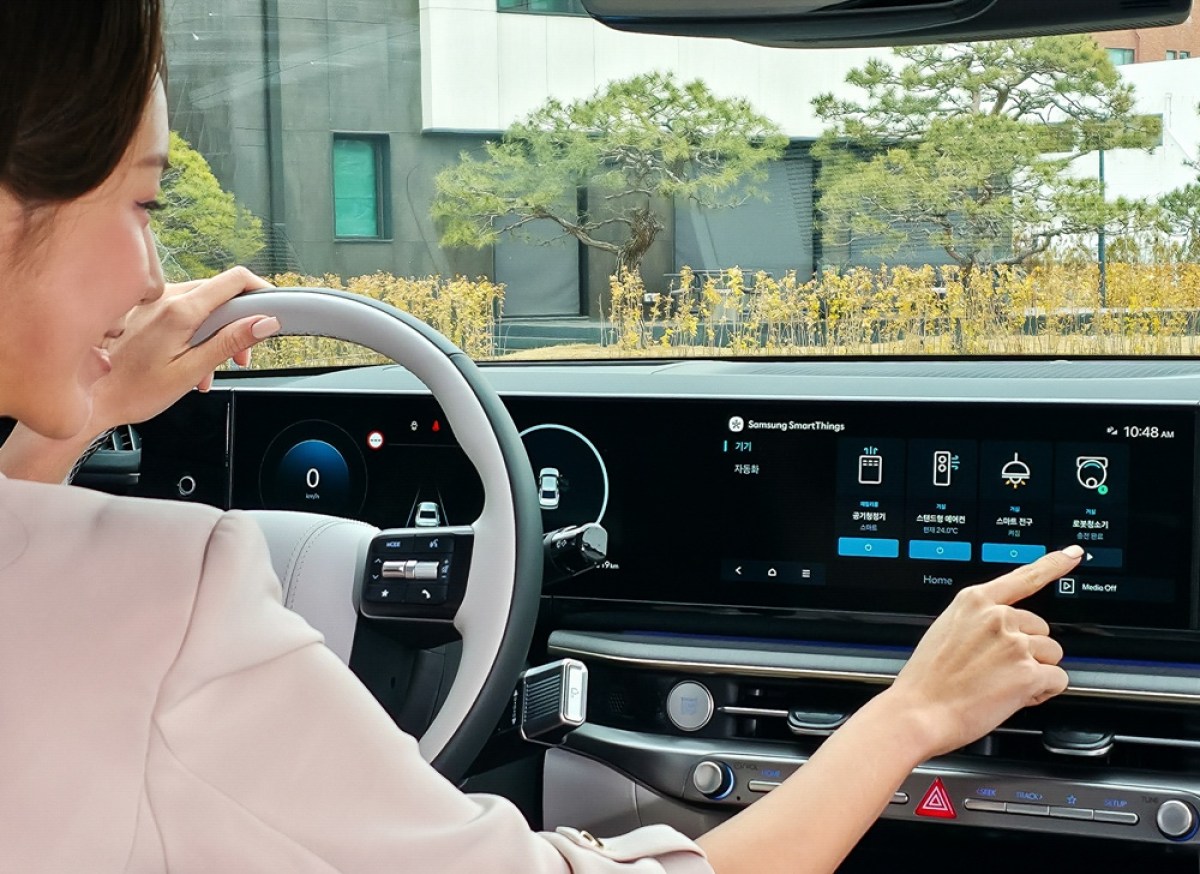
The executives at the event also spent plenty of time talking about "physical AI" and robotics, and in Hyundai's case, there is real iron behind the talk. Hyundai owns Boston Dynamics, and combining its mechanical actuators with Samsung's foundry chips and vision sensors has an obvious first home: the car factory floor. Before a robot ever folds laundry in your living room, automated systems running on Samsung silicon will be routing wiring harnesses and inspecting battery welds inside Hyundai's assembly plants, driving down manufacturing costs by 15% to 20% over the next product cycle.
For legacy automakers in Detroit, Munich, and Paris, the sight of Korea's two largest conglomerates locking arms should be sobering. European and American brands are scrambling to stitch together patchwork alliances with software startups and foreign cell suppliers, resulting in delayed launches and buggy dashboards. Hyundai and Kia have secured direct access to top-tier foundry chips, displays, and battery chemistry by turning a decades-old domestic rivalry into a single vertically integrated supply chain. Right in their backyard.
Related

Reader comments
Nothing yet. Be the first to comment.