Mercedes-Benz rewrites rules with axial flux motors
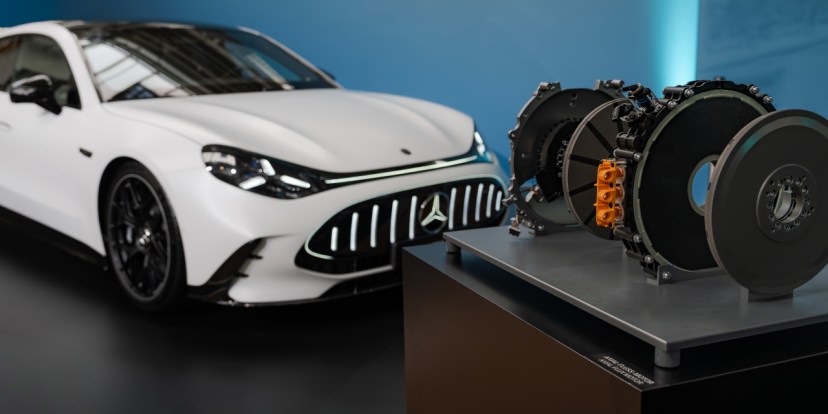
Mainstream conversations about electric cars usually focus on the size of screens, software speeds, or battery capacity, but the true engineering revolution happens deep within the chassis. Mercedes-Benz wants to prove its mechanical dominance by starting large-scale production of a highly unusual electric motor. The German automaker chose its historic Berlin-Marienfelde facility to construct this new drive system. Established back in 1902, this site is the oldest factory in the long history of the brand. Instead of closing it down, management transformed it into a high-tech center for premium electric cars and advanced propulsion technology.
Most common EVs on the road today rely on conventional radial flux motors. In those setups, the magnetic forces push outward like the spokes on a bicycle wheel. Mercedes is moving away from that industry standard by betting heavily on axial flux technology. In an axial flux design, the electromagnetic force flows parallel to the rotating axle rather than radiating outward. This change allows the internal parts to sit in a flat, disc-shaped layout.
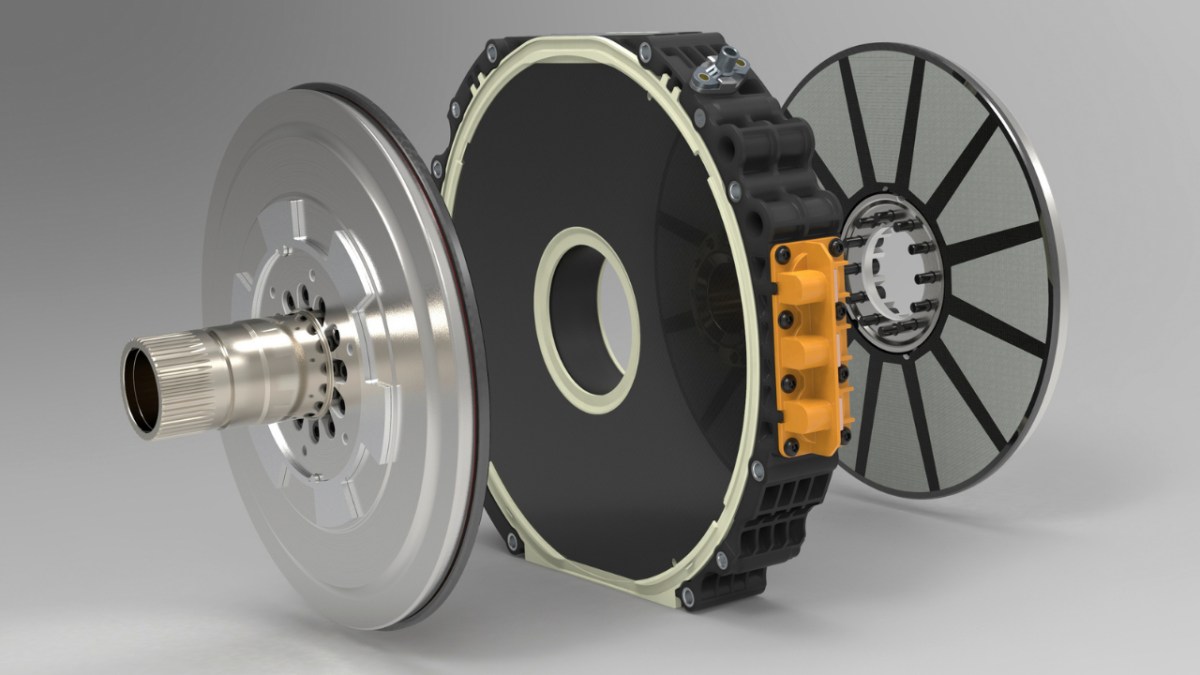
As seen in the image above, two magnetic rotors sandwich a single central stator from the left and right. This clever mechanical arrangement allows engineers to shrink the overall size of the motor significantly and increase its power output at the same time.
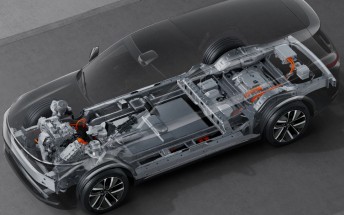
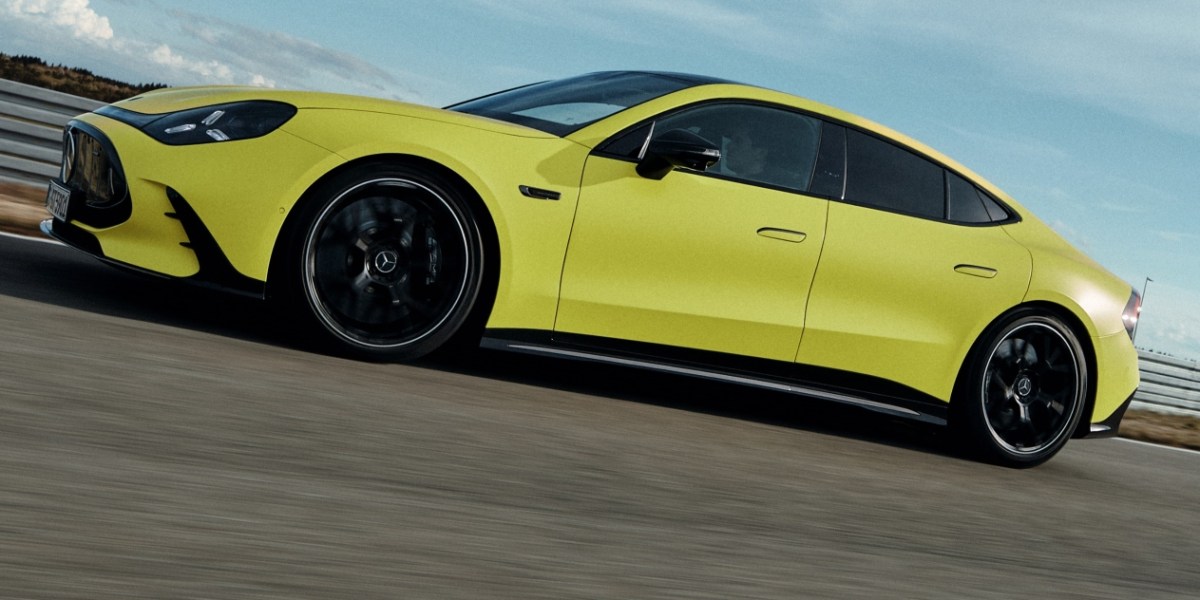
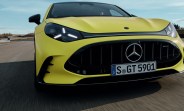
The new motor makes its official market debut inside the high-performance Mercedes-AMG GT 4-door Coupe. Because the axial flux architecture remains remarkably thin, the electric motor mounted on the front axle measures just under 9 cm in width. The two electric motors driving the rear wheels are even smaller, with each measuring roughly 8 cm wide. Engineers tuck these slim powerplants directly into a compact High Performance Electric Drive Unit. This unit bundles the thin motors together with a small planetary gearbox to save valuable space.
Drivers should not confuse the small physical size of these motors with a lack of performance. The front-axle motor spins at rapid speeds exceeding 15,000 revolutions per minute. When working together inside the all-electric Mercedes-AMG GT 4-door Coupe, the unique powertrain layout creates intense acceleration - the heavy performance vehicle launches from a standstill to 62 mph in 2.1 seconds. For buyers who choose the optional Driver's Package, it keeps accelerating until it reaches a maximum top speed of 186 mph.
A British company YASA created the early prototypes that Mercedes engineers used as a starting point. The German manufacturer saw enough potential in the technology to purchase YASA completely in 2021. To test the durability of the design before beginning mass assembly, the company built the CONCEPT AMG GT XX. This technology demonstrator completed an endurance test at the Nardo track in Italy, where it drove continuously for 7 days and 13 hours. The car covered more than 24,900 miles during the run and established 25 distinct long-distance speed records for EVs.

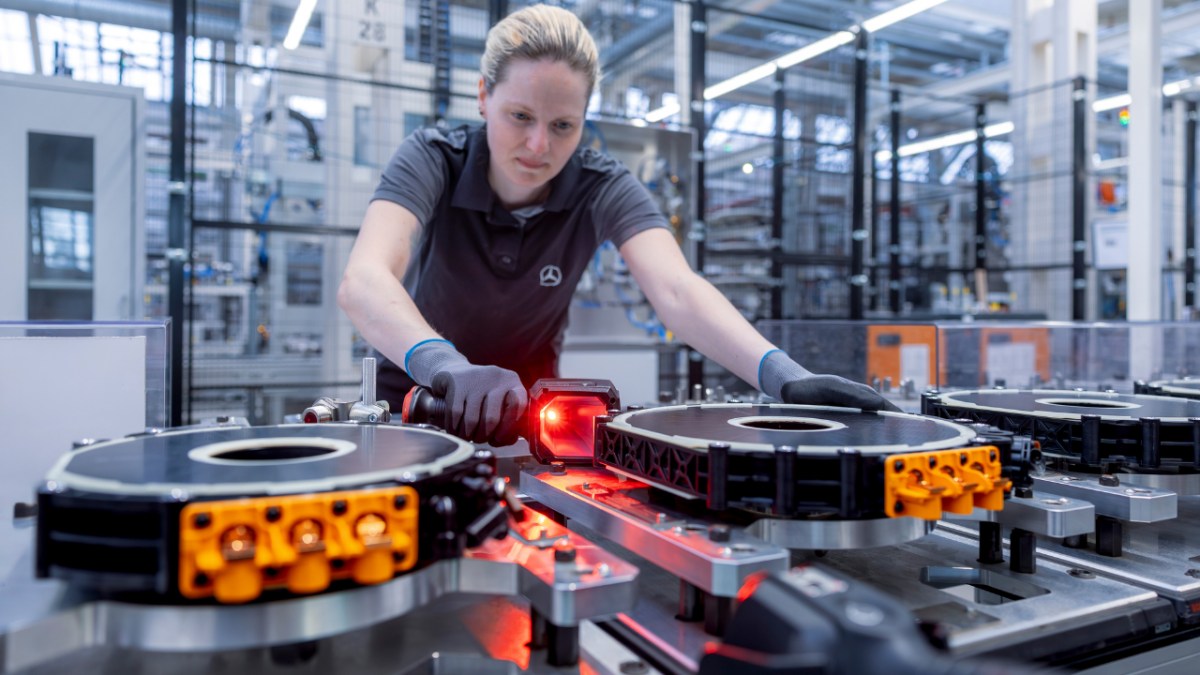
Moving from a prototype to a mass assembly line is a notorious headache in the automotive industry. To accomplish this, the Berlin factory dedicated 30,000 square meters of floor space to the project, spreading the machinery across three massive halls and seven production lines. Workers must manage a complex assembly process that involves 98 separate steps. The engineering team had to design 65 of these manufacturing steps specifically for the brand, and 35 of the processes are completely new to the global manufacturing industry, which in the end resulted in more than 30 new patent applications.
The unique shape of the motor creates severe manufacturing problems for the production team. The factory has to use flat, rectangular copper wire to form the internal coils instead of common round wire. The square shape allows the factory to pack more copper into the tiny frame, but bending thick copper wire at high speeds around sharp corners without tearing the protective insulation layer is incredibly difficult. Assembly workers use automated lasers to weld the delicate wire ends inside a cramped housing. The laser must apply heat instantly to avoid melting the plastic structures sitting right next to the welding points.
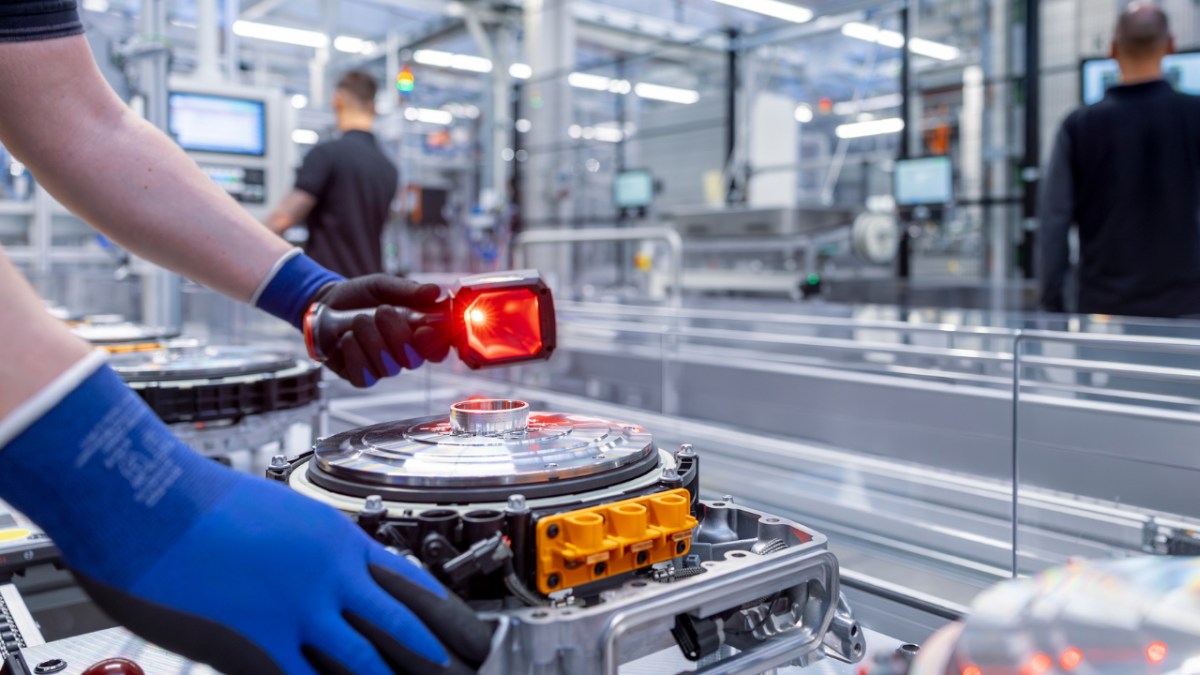
Another complex challenge involves laser transmission welding on the plastic drivetrain parts. This process demands geometric precision to avoid damaging the surrounding parts. To guarantee reliable production, Mercedes-Benz uses optical AI software to check the joints in real time. The AI camera system identifies the exact position of each part, creates virtual safety zones over fragile areas, and guides the laser path. The process creates seals that hold high oil pressure and withstand heavy physical stress.
The most dramatic part of the entire assembly line happens during a step that factory workers call the "wedding." This is where automated arms lower the central stator between the two heavy rotor discs. Because the rotors contain permanent magnets, they pull toward each other with an immense force of 9 kN. This magnetic pull creates a force equal to roughly 1,984 lb. The robotic assembly system must hold the stator perfectly steady in the exact center plane between the magnets, allowing a tiny error tolerance of less than 0.004 inches. A dedicated computer program monitors the alignment and sends high-frequency corrective adjustments during the final 0.5 seconds of the process.
The high-tech assembly lines operate right alongside the Mercedes-Benz Digital Factory Campus. Since 2022, this campus has used the company's MO360 digital network to test out new manufacturing software. The launch of the axial flux motor line comes at an important historical moment for the brand. It is now 2026, marking exactly 140 years since Carl Benz patented his original vehicle in 1886. To celebrate, the automaker is driving three S-Class sedans to 140 locations around the globe on a promotional tour that lasts until October.
Corporate executives will spend the year celebrating historic gasoline vehicles and pushing mainstream electric options like the CLA and GLC, but the real future of the company rests on these complicated electric motors. Competing globally needs high volumes and consistent quality. By risking major capital on 35 untried global assembly processes, the German company is betting that the ultra-thin motors will give its premium electric cars a permanent advantage over international rivals.
Related


Reader comments
Nothing yet. Be the first to comment.