Renault sharpens its brilliant Renault 5 retro-hatch
Small French hatchbacks have always had a knack for punching well above their weight, thumbing their noses at bigger cars while delivering driving joy on a shoestring budget. When Renault resurrected the 5 as a retro-futuristic electric runabout, it felt like someone had finally cracked the code for modern urban motoring. But instead of basking in a flood of design awards, the engineers at Billancourt have already gone back to work, rolling out a fleet-wide technical tune-up that proves small electric cars do not have to settle for second-best status.
To understand why this car matters so much, you have to look at Renault's historical playbook. Back in 1972, the original R5 introduced the world to the idea that a practical, plastic-bumpered supermini could be fashionable, sprightly, and clever. Fast forward through the pioneering decade of the Zoe - a workhorse that shouldered the European mass-market electric transition almost single-handedly - and into Luca de Meo's ambitious Renaulution offensive.
Renault set out to make lightweight, characterful electric city cars financially viable again, and this latest update across the range is proof that the platform is moving fast. The French automaker is refining the powertrain efficiency before most rivals have even managed to get their first ground-up small hatchbacks onto dealer forecourts.
The mechanical refresh comes in a series of aerodynamic improvements and battery management tweaks that nudge real-world range upward. Both lithium-ion battery versions get smoothed underbody airflow and redesigned rearview mirrors that cheat the wind a tiny bit better.
The 40 kWh Urban Range pack - paired with its front-mounted 90 kW (120 hp) motor - stretches its legs to deliver an official WLTP figure of up to 196 miles, up from 194 miles previously. The flagship 52 kWh Comfort Range version, packing a 110 kW (150 hp) motor, sees its range figure jump from 255 miles to 267 miles. Gaining an extra 12 miles of open-road breathing room purely from aero trickery and battery management calibration is proper old-school tuning philosophy applied to modern electrons.
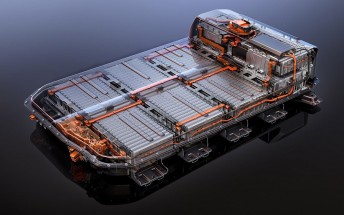
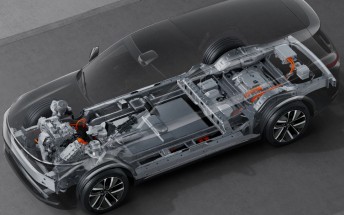
But the most dramatic transformation happens at the very bottom of the ladder. The entry-level "Five" trim is binning its older 95 hp setup in favor of an all-new, compact 80 kW (110 hp) electric motor lifted straight from the new Twingo. The 36.5 kWh lithium iron phosphate (LFP) battery is built with space-saving cell-to-pack architecture.
Ditching traditional modules allows Renault to pack dense energy into an incredibly compact footprint without a crippling weight penalty. The outcome is a WLTP range of up to 190 miles, accompanied by a razor-sharp 0 to 31 mph squirt of 3.5 seconds - precisely the sort of immediate low-end punch you want when darting into a gap on a Parisian roundabout.
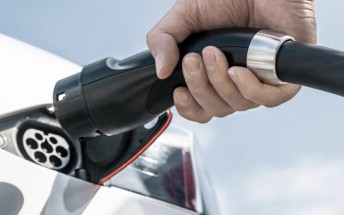
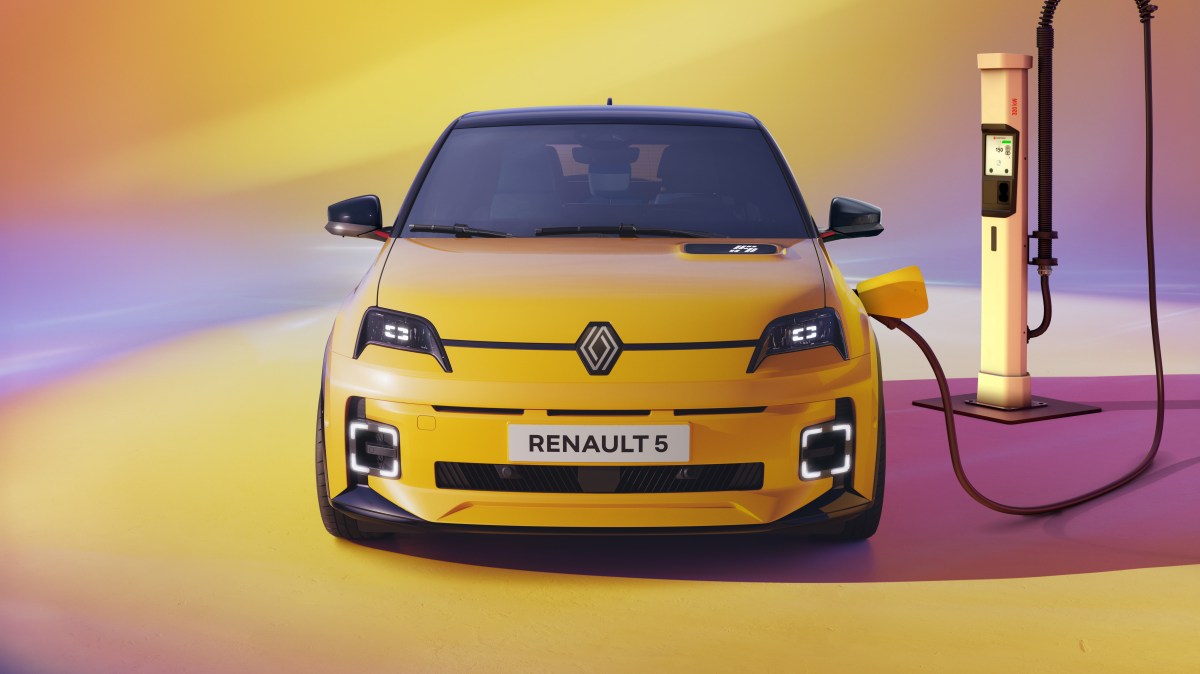
Renault has finally corrected the most unforgivable sin of modern budget hatchbacks by giving the base Five trim proper rapid-charging chops. Alongside its standard 6.6 kW AC onboard unit, the entry car now ships with an 80 kW DC fast charger as standard. Way too many budget-minded electric city cars arrive crippled by sluggish DC speeds, turning an impromptu intercity trip into a charging nightmare. Hooking this featherweight pack up to an 80 kW station means you can replenish energy over a quick espresso break, turning what could have been a purely local city runabout into a genuine cross-country tool.
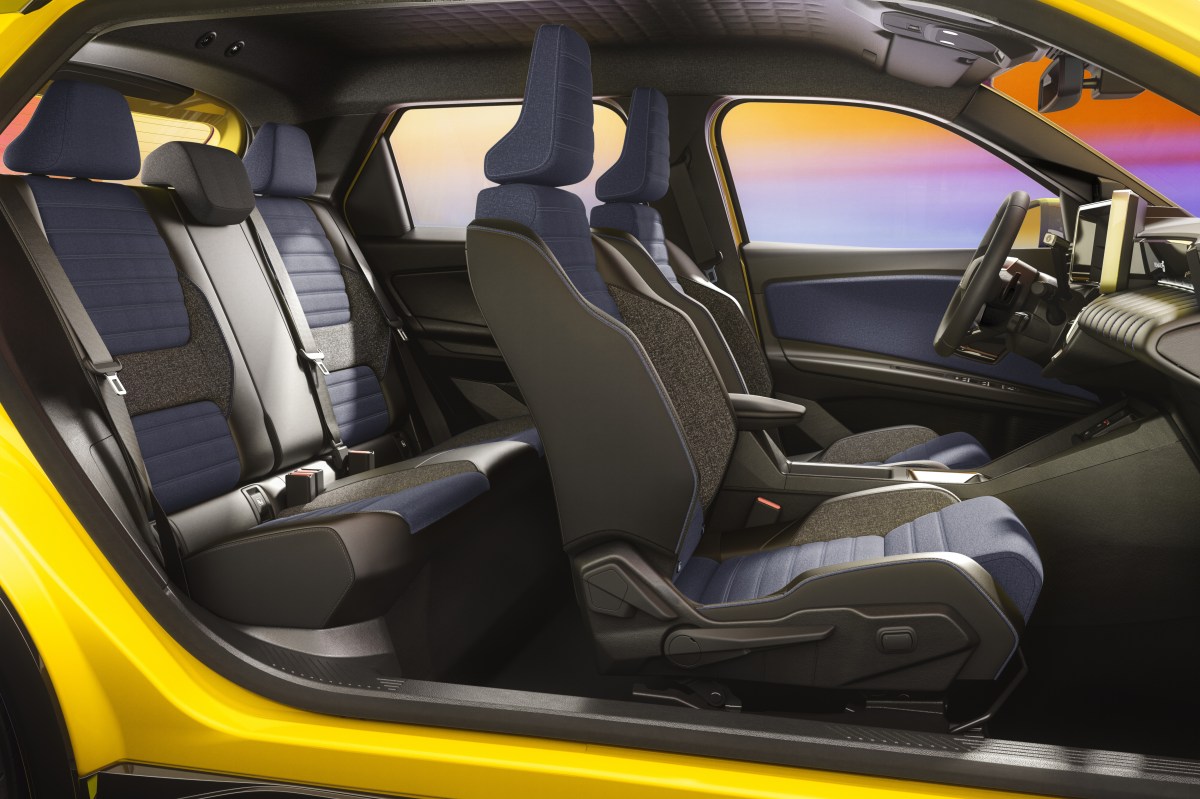
To see just how neatly the R5 threads the urban needle, you only need to compare it against its direct rivals. Measuring 154.4 inches in length, 69.8 inches in width, and 59 inches in height on a 100 inches wheelbase, the Renault 5 is exceptionally compact. It undercuts the Peugeot E-208 (which stretches to 159.6 inches long) and the tall-riding Citroën ë-C3 (at 158.1 inches long), making it easier to drive down tight cobbled alleys.
Despite being 2.52 inches longer than the stubby Mini Cooper Electric (at 151.9 inches), the Renault destroys the British hatch on everyday utility, offering a generous 11.5 ft³ trunk compared to the Mini's cramped 7.4 ft³ cargo hold. On the scales, the R5 keeps its weight in check at 3,197 lb to 3,384 lb depending on battery pack, avoiding the porky bloat of the 3,538 lb Mini while matching the 3,373 lb weight of the larger Peugeot.
In markets like the UK, where pricing kicks off at $31,579, having a stylish, genuinely desirable hatchback with over 186 miles of range and fast-charging capability leaves older, costlier alternatives looking flat-footed. The 5 is finally delivering fun EV experience without forcing buyers to drive a soulless, plastic-clad penalty box.
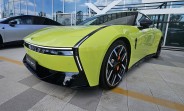
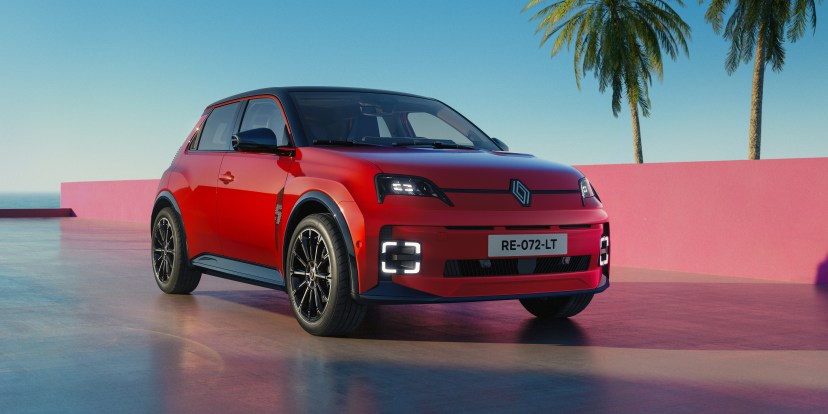
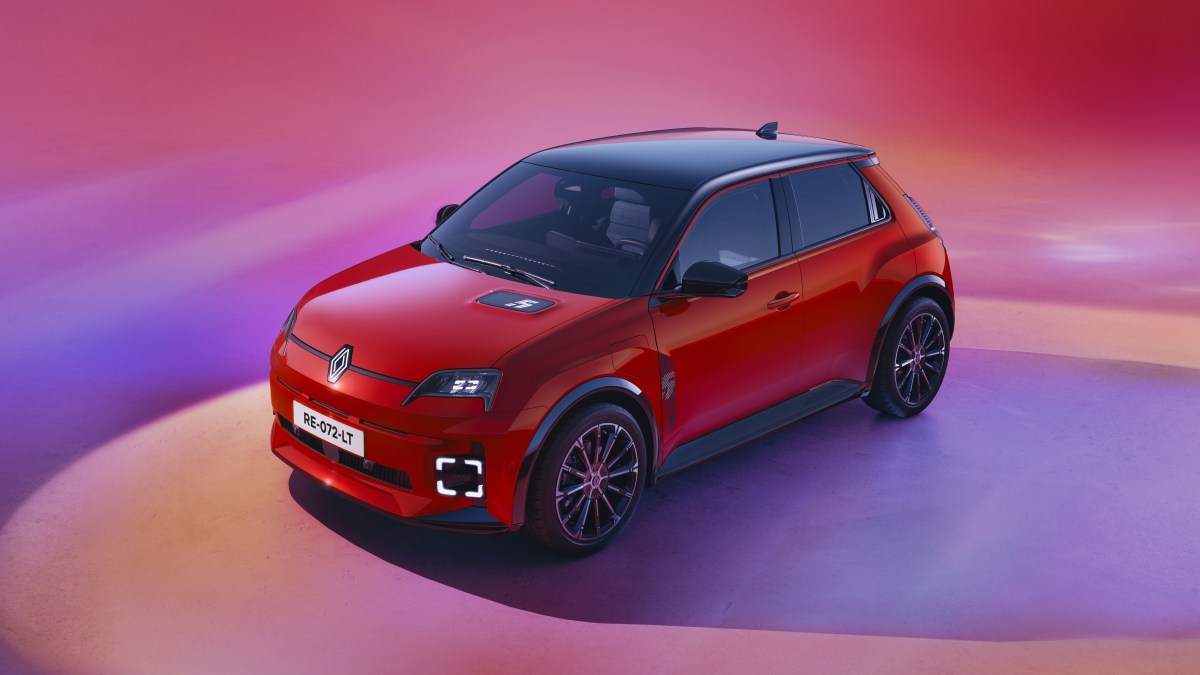
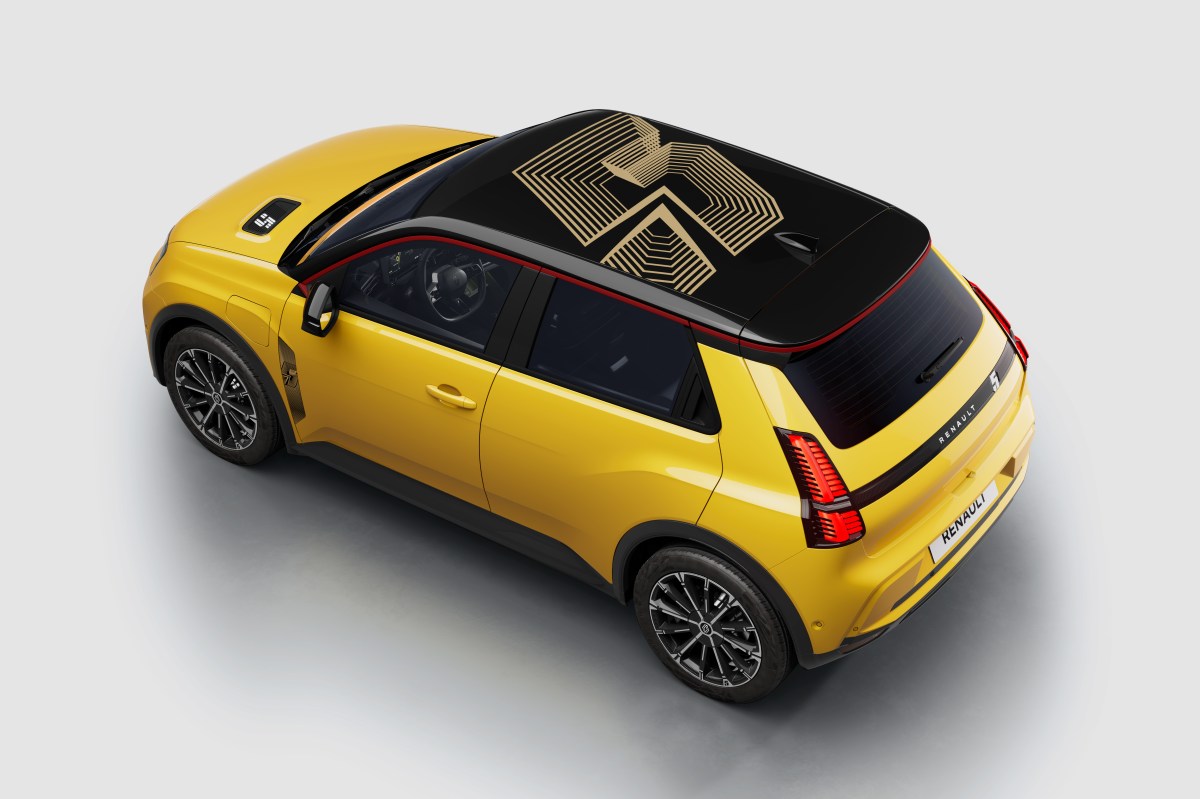
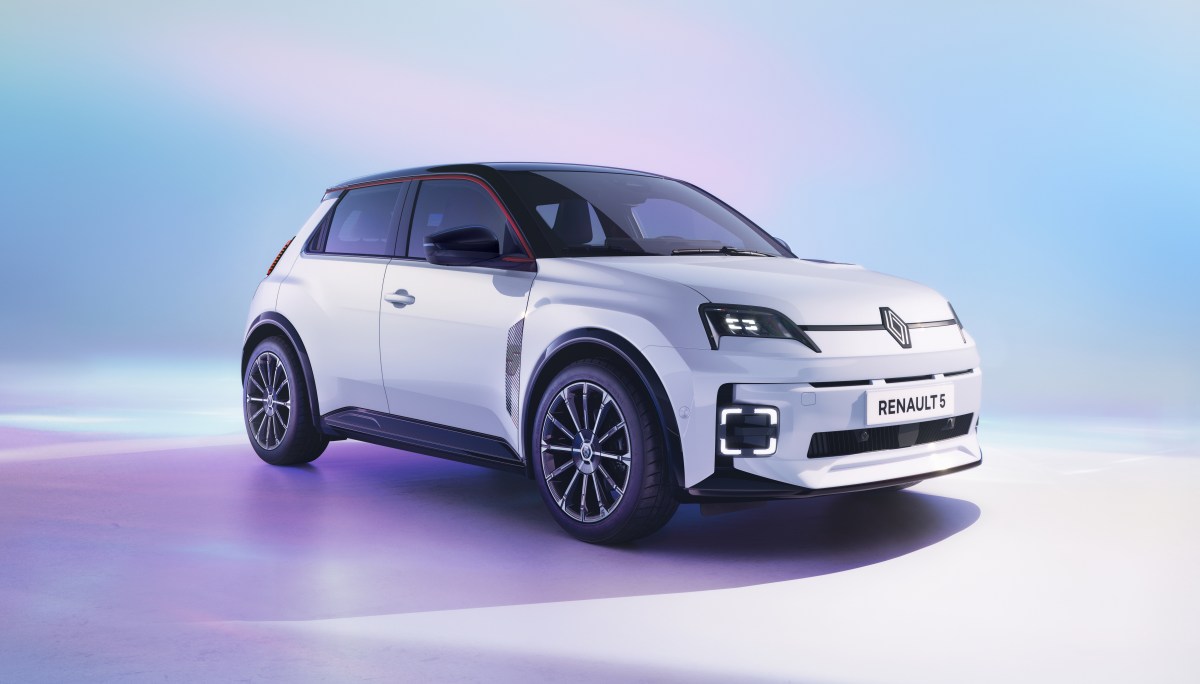
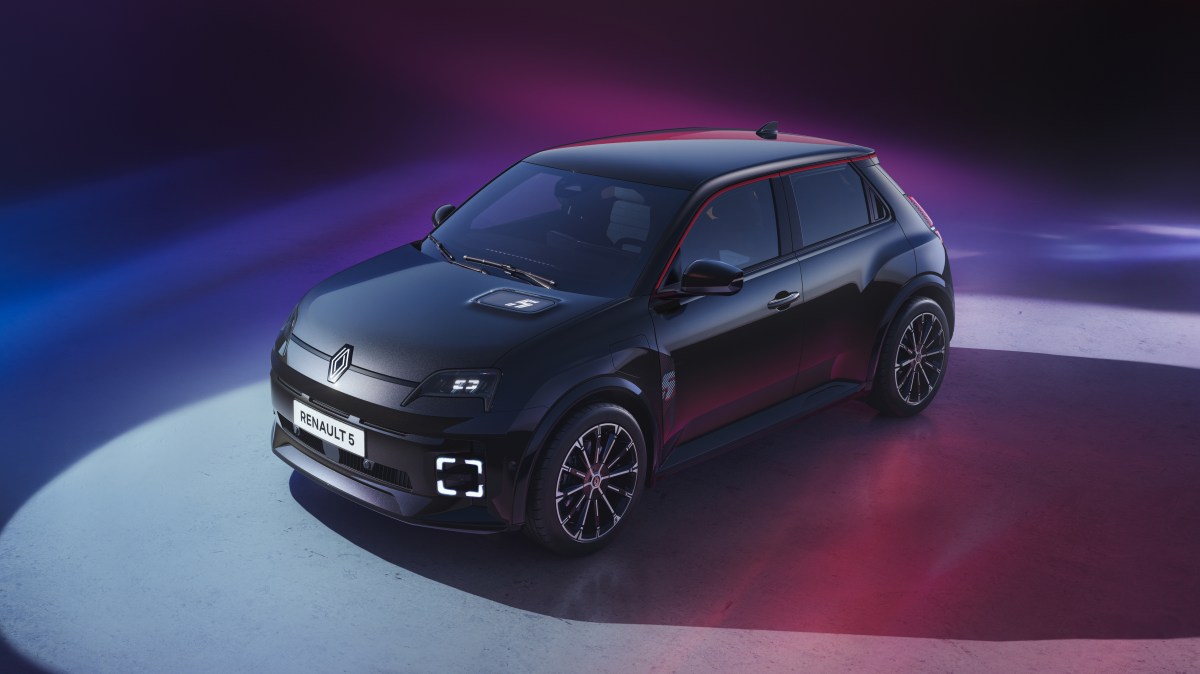
Naturally, a retro-flavored French supermini must look the part, and the visual catalog has expanded accordingly. A new Flame Red paint option joins the palette across almost all trim grades, and upper tiers can be dressed in Metallic Schist Grey. If you fancy turning up the visuals, Renault is offering contrast roof options in Starry Black paired with Red or Warm Titanium rooflines, alongside eye-catching gold finishes for the Techno wheels.
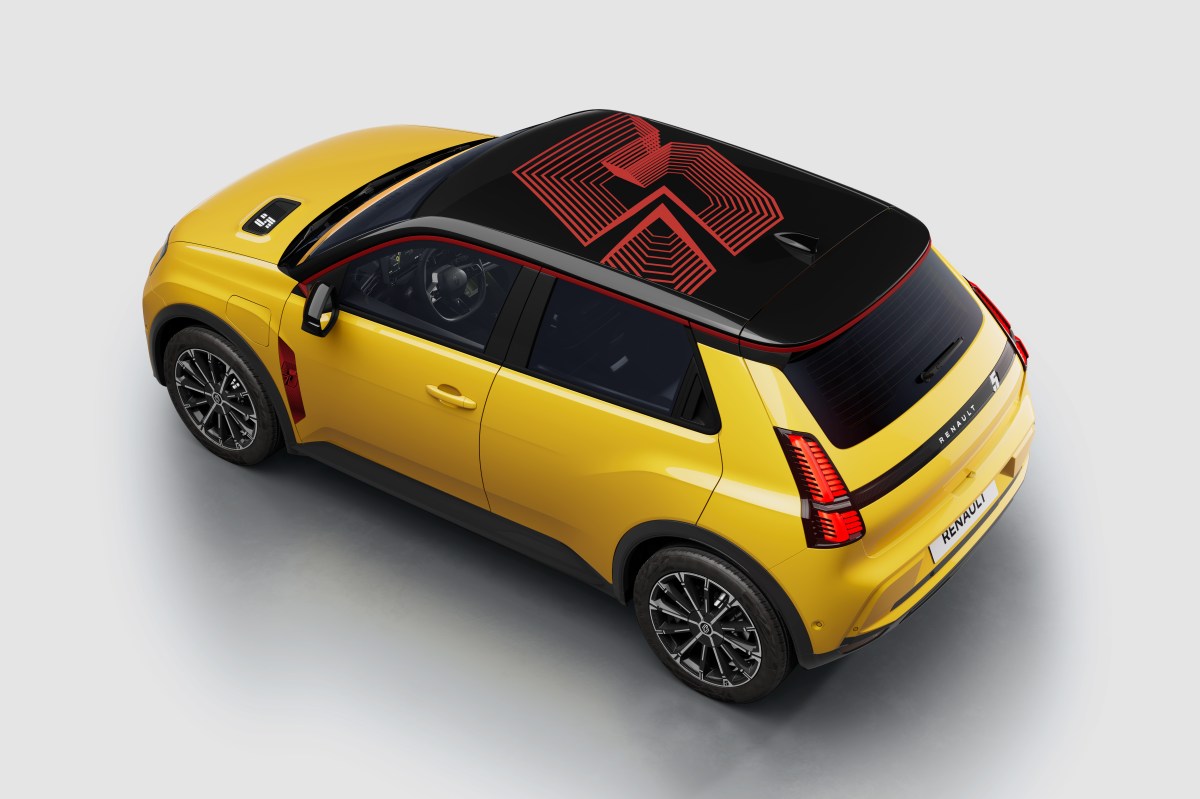
Of course, if you want your hot-hatch cues worn loud and proud on the bodywork, the configurator now includes graphic "Vibrant5" and "Hyper5" roof and flank decals that pay direct homage to the car's rally-bred forebears.
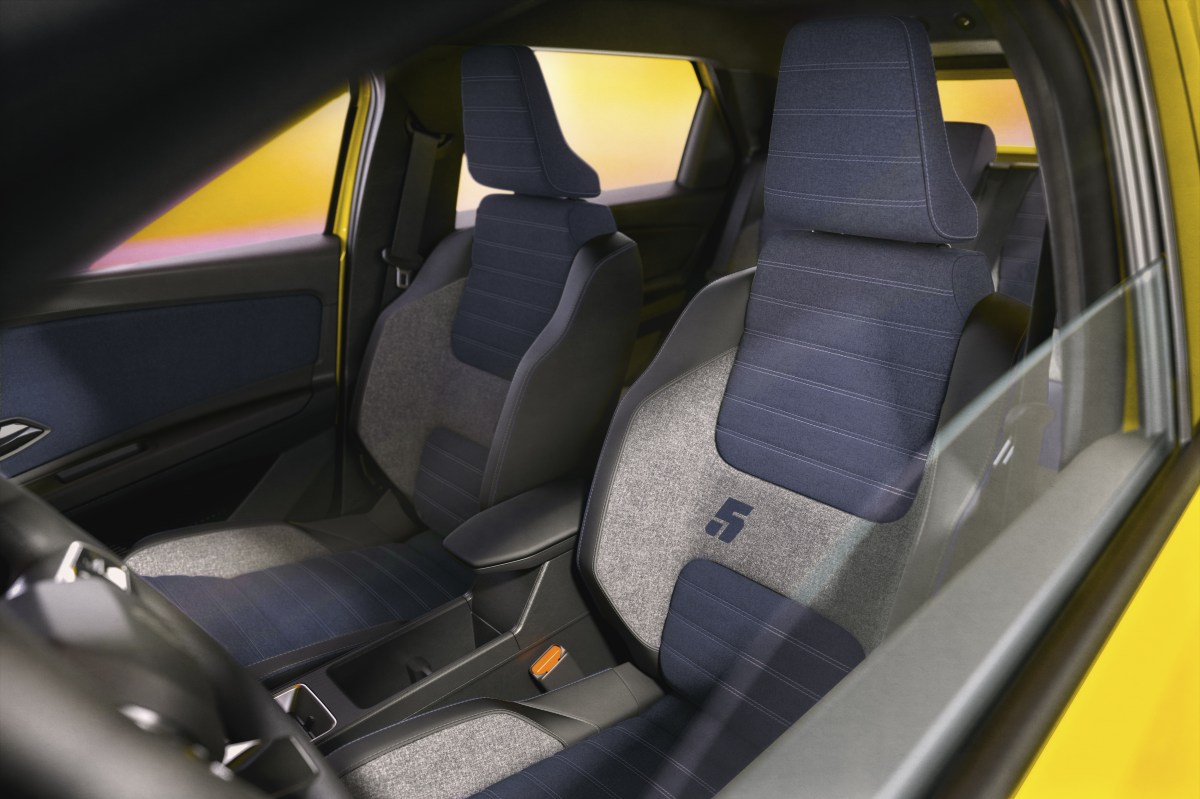
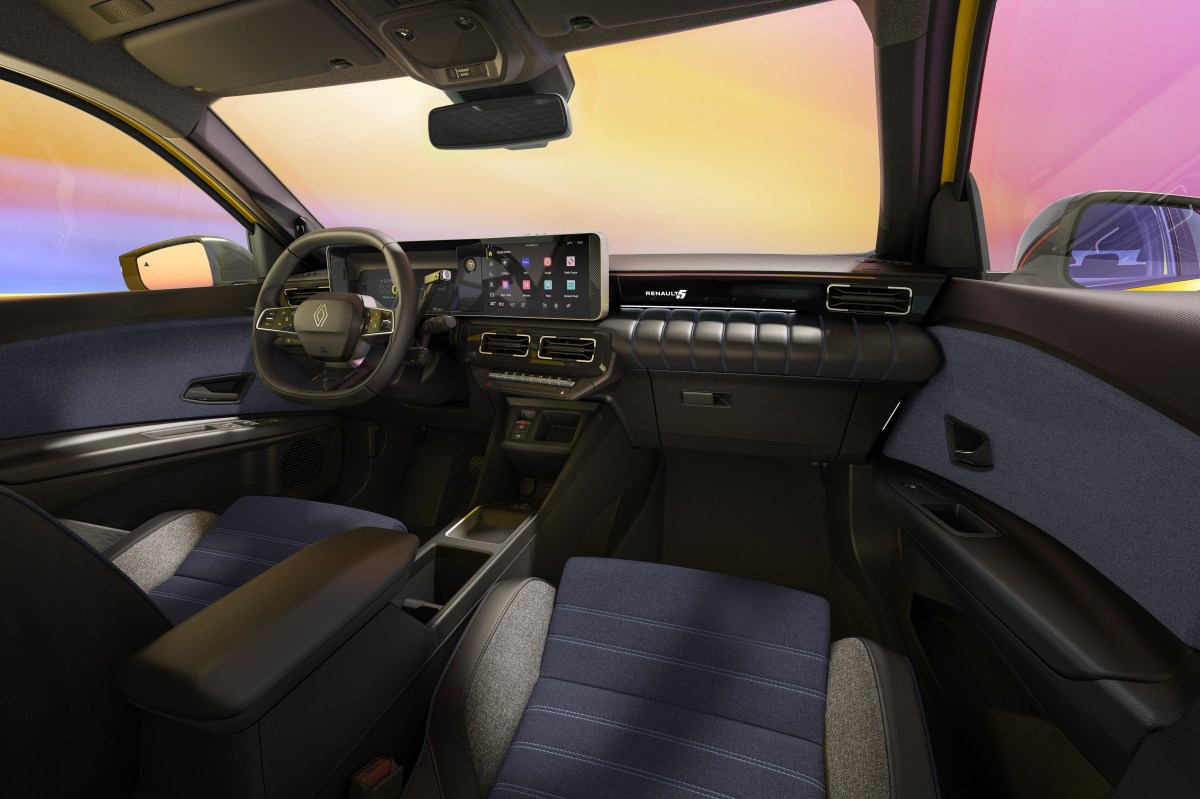
The cabin ambiance gets a welcome refresh with tactile heathered blue upholstery replacing the previous yellow fabric on Iconic Cinq models. Practical technology gets a boost, starting with a 4G-enabled emergency e-call system and a new Qi2-standard wireless smartphone charging pad. Anyone who has used an in-car inductive charger knows the frustration of a roasting hot phone that refuses to take on power; Renault's solution integrates magnetic alignment with active cooling, allowing a device to swallow a 50% charge in one hour without cooking its internals.
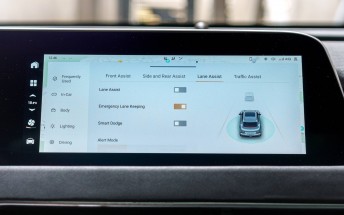
The digital interface has also shed some clutter. The Multi-Sense drive mode button has been removed from the steering wheel, replaced by a Smart driving mode - the same setup found in the latest Clio. The system reads your throttle inputs and surroundings, automatically shifting between Eco, Comfort, and Sport profiles on the fly.
You get instant motor response when squeezing the throttle for an overtake, but the powertrain automatically settles back into energy-sipping recuperation the moment you ease off to trundle through a sleepy village. Manual controls are easily accessible through the crisp OpenR Link touchscreen or simple voice commands.
Renault throws in a three-year connectivity package with 2 GB of monthly data as standard, enough bandwidth for roughly 40 hours of audio streaming or a couple of hours of parked video entertainment. But the biggest leap in daily usability is the arrival of Google's Gemini AI assistant, upgrading the standard voice system into a natural conversational partner.
Instead of barking rigid, robotic syntax to adjust cabin temperatures or map a charging stop, you can talk to the car like a human - interrupting mid-sentence or switching languages on a whim won't break the digital brain's chain of thought.
With the refreshed range ready for a public curtain-raiser at the 2026 Paris Motor Show this October, Renault is making a compelling play. In a market drowning in overweight, overpriced electric crossovers that look like generic jellybeans, the Renault 5 E-Tech is a reminder of what makes small cars brilliant. It has wit, sharp mechanical packaging, genuine everyday range, and just the right amount of Gallic swagger.
Related

Reader comments
- jiu
22kw ac, 200kw dc charging needed
- 13 hours ago
- U@m