Xiaomi drops the camo on the SU7 Xtreme - the Nürburgring lap war escalates
Horsepower is the easiest part when we talk about performance cars - especially the electric ones. You can bolt as much of it as you want into an EV, and it will feel heroic for the first three seconds on a racetrack. Then you arrive at the braking zone, feel two and a half tons of battery and steel pushing the front tires wide, and realize that physics cares very little about marketing. European automakers used to believe that Chinese brands could never figure out the second part of the corner - the actual going through it at speed. But watching Xiaomi SU7 Xtreme testing hard at Nürburgring suggests that those assumptions were completely wrong.
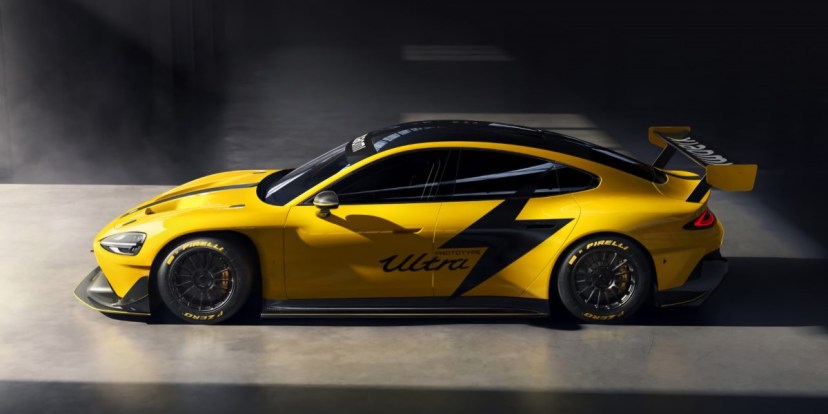
We first saw this hard-edged SU7 variant running laps in Germany back in October, wrapped in the swirly black-and-white camo. Now the disguise is gone, revealing a car that goes much deeper than a badge-and-sticker package. The centerpiece is a huge swan-neck rear wing that looks pulled straight from the Yangwang U9, hanging from the top of the blade where airflow is cleanest. Given how obsessed EV engineers are with reducing drag, I wouldn't be surprised if that rear wing had an active drag-reduction system (DRS) that flattens out when the driver pins it down the Döttinger Höhe straight.
The front aero work is just as serious - Xiaomi fitted a new front bumper with a deep lower splitter and cut a set of open louvers into the front fenders above the wheels. If you've driven fast over the crests of the Nordschleife, you know how air gets trapped inside the wheel wells at high speed. That creates front-end lift right when you need the nose to bite into the turn. Properly scary. Venting that high-pressure air out through the top of the fenders helps to push the front tires back into the tarmac. Finally, to clean up the turbulent air coming off those wide wheels, the front fenders cut sharply inward just ahead of the doors, and the rear arches are scalloped behind the rear wheels, exposing a wide cross-section of sticky track-day rubber wrapped around double-five-spoke alloys.
This bare-knuckle aero package exists because Xiaomi and Porsche are locked in a very public tit-for-tat over the Nürburgring production EV and four-door sedan lap record. Back in June 2025, a standard Xiaomi SU7 Ultra lapped the 12.8 miles circuit in 7:04.957. That single run put a consumer electronics giant 0.3 seconds ahead of the Rimac Nevera hypercar and more than 2.5 seconds clear of the Porsche Taycan Turbo GT. Porsche did not take kindly to a smartphone maker stealing its thunder. In May of this year, the Germans returned to the Eifel mountains with a Taycan Turbo GT modified by its racing partners at Manthey. Fitted with updated aero, lighter wheels, road-legal track tires, and revised software, the Manthey Taycan clocked a 6:55.553 - becoming the first production electric sedan to dip under the seven-minute barrier.
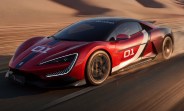
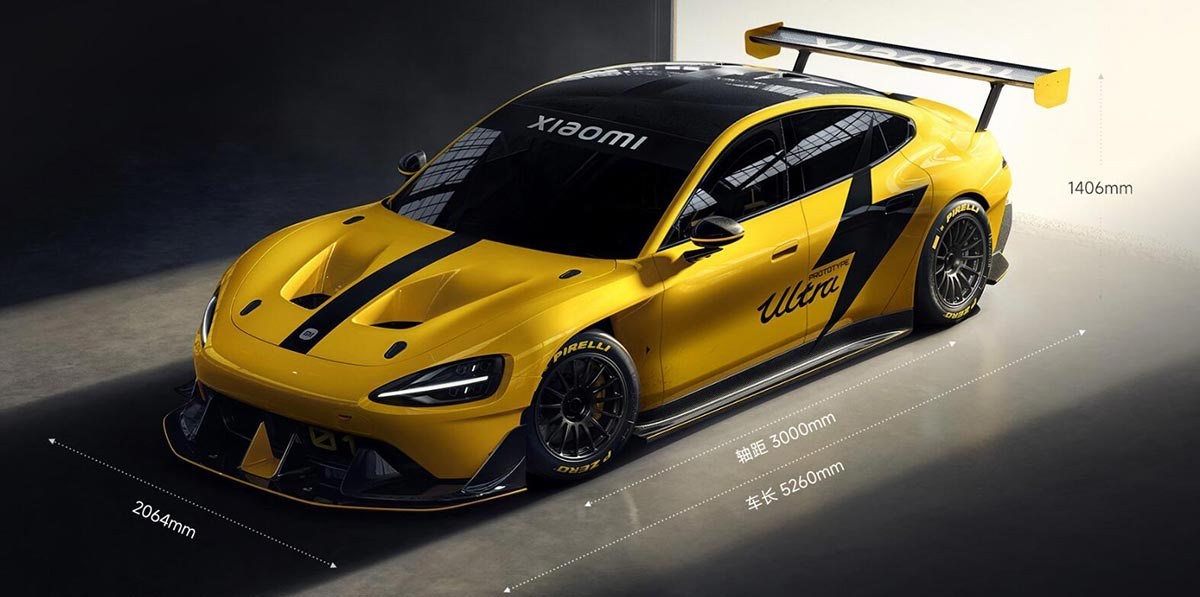 Xiaomi SU7 Ultra Xtreme prototype from 2024
During its first record run, the Xiaomi SU7 Ultra relied on brute force, unleashing 1,526 hp (1,138 kW) and 1,305 lb-ft of torque from its tri-motor setup. By comparison, the standard Taycan Turbo GT makes do with 939 hp (700 kW) in its push-to-pass mode, and even the upgraded Manthey version peaks at 978 hp (730 kW) and 988 lb-ft of torque. On a fast, power-hungry track like the Nürburgring, Xiaomi used a 548 hp advantage to blast out of slow corners and erase the time it lost to the more agile Porsche in the technical sections. By adding serious mechanical grip and high-speed downforce with this new Xtreme aero package, Xiaomi is addressing those areas where the Manthey kit gave Porsche the edge.
There is a possibility that the Xtreme hides an even larger hardware upgrade. Back in 2024, Xiaomi engineers showed an experimental quad-motor powertrain in an SU7 prototype that delivered 2,027 hp (1,511 kW). Putting more than two thousand horsepower into a road car sounds awesome, but trying to put down that much torque through four contact patches no bigger than a man's shoe means serious traction control software. But even if Xiaomi sticks with the tri-motor layout and its 93.7 kWh CATL Qilin 2.0 battery pack, keeping the tires planted over bumps at 186 mph will easily cut few seconds off its previous lap time. No need for extra power with a wing like that.
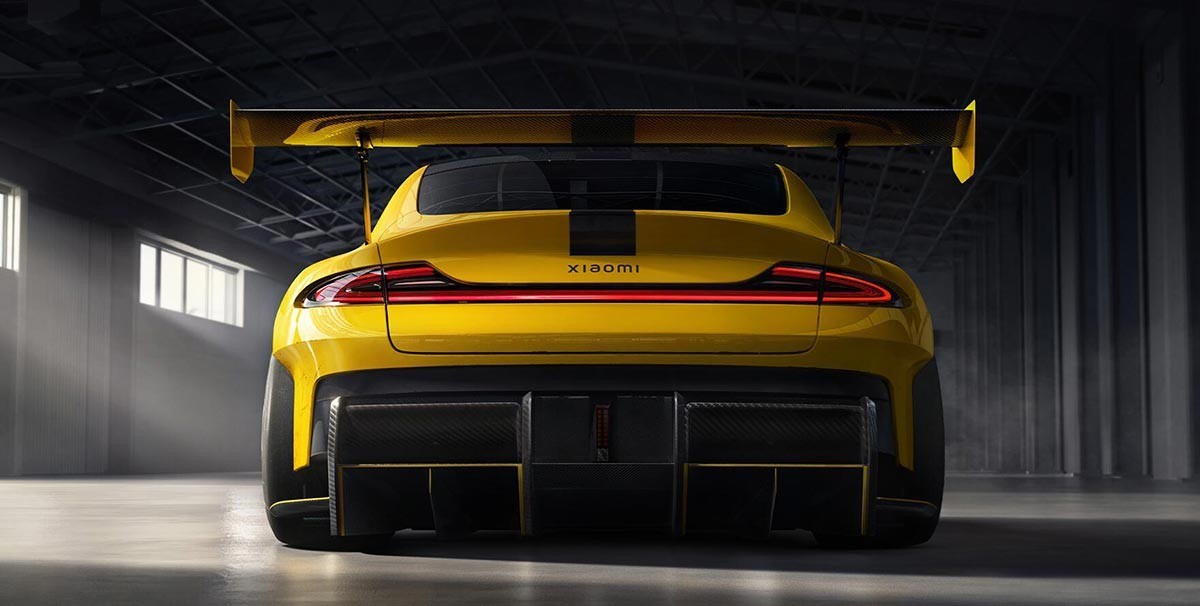 Xiaomi SU7 Ultra Xtreme prototype from 2024
The standard Xiaomi SU7 Ultra starts at RMB 814,900 in China (roughly $123,000). Even if you factor in premium pricing, heavy import tariffs, shipping, and European homologation costs for the Xtreme variant, it will still undercut the Porsche by some margin. A Taycan Turbo GT starts at $281,000 in Europe and $232,000 in the United States before you even pay Manthey for their track upgrades - and that comes in at $127,600. You can argue all day about brand heritage, and I will probably agree with you, but paying double the money only to get passed on a track day is a tough pill for any buyer to swallow.
Xiaomi follows other Chinese manufacturers chasing global performance records. BYD took Yangwang U9 Xtreme to Abu Dhabi last week, and hit 313 mph. Five years ago, Chinese brands were focused on rear-seat legroom, karaoke microphones, and low-cost batteries. And today? Xiaomi, BYD, and XPeng are hiring veteran European chassis engineers and renting out racetracks for months at a time. A lot has changed in five years.
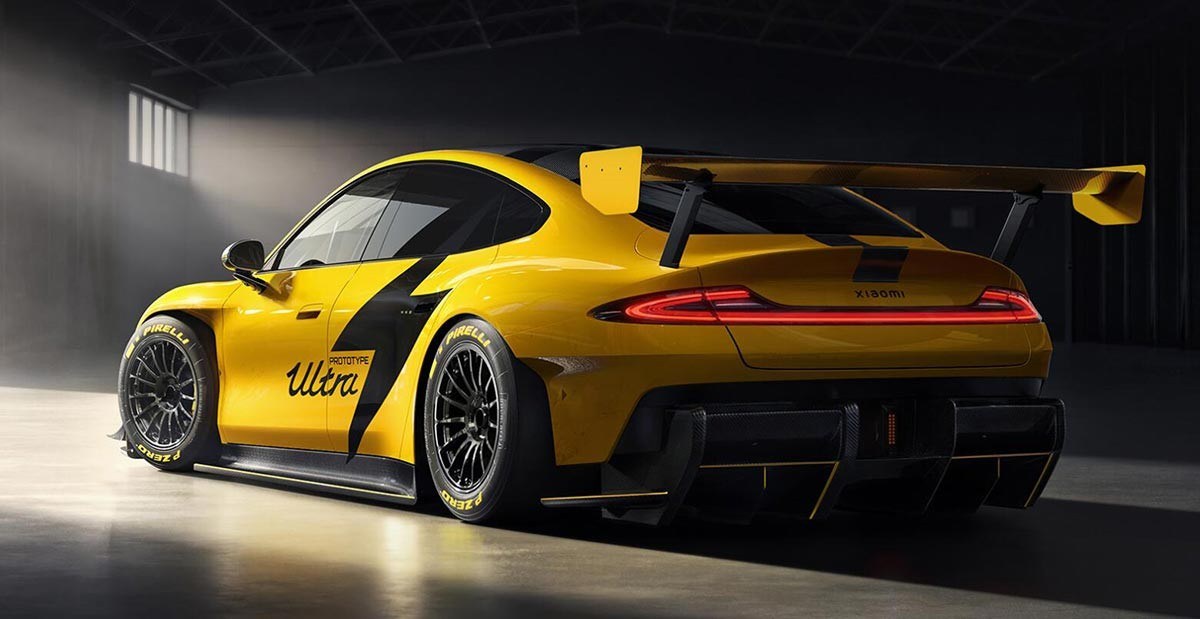 Xiaomi SU7 Ultra Xtreme prototype from 2024
Of course - nobody buys an electric saloon to commute at three-digit speeds through the Carousel. In reality, track records are designed to sell base-model EVs. Carbon splitters and fender louvers are great for scraping on speed bumps and collecting gravel in daily driving. Or clearing snow off a driveway. But the engineering needed to make a 5,203 lb EV run under seven minutes at the Nürburgring? That eventually trickles down into better cooling, sharper body control, and safer handling for regular cars. We do not have an official time for the SU7 Xtreme - yet. But judging by how composed it looks - I'd say Porsche's engineers have a very good reason to be nervous.
Related


Reader comments
Nothing yet. Be the first to comment.