Slippery new EV concept from VW - too little too late?
In 2013, the late Ferdinand Piëch gave the motoring world the Volkswagen XL1 - a carbon-tubbed, scissor-doored oddity powered by a microscopic two-cylinder turbodiesel that sipped less fuel than a humming scooter and came with an eye-watering price tag of $129,000. It was built during an era when Wolfsburg genuinely believed it held the keys to the kingdom and clean diesel was the eternal gospel.
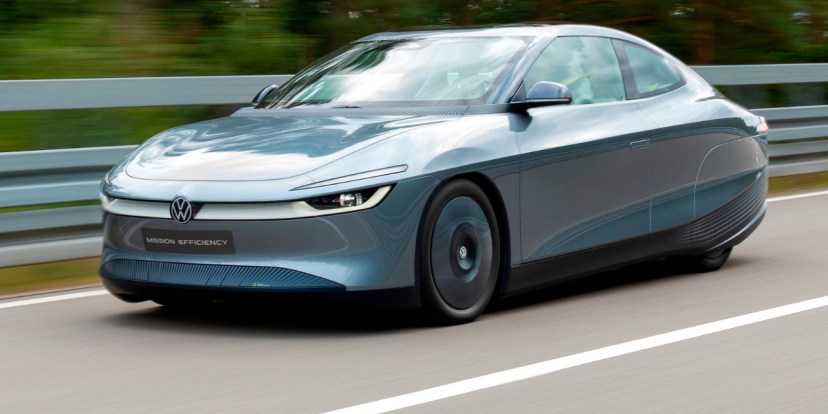
Thirteen long years, one emissions catastrophe, and a few boardroom purges later, Volkswagen has finally summoned that spirit back from the grave. The Mission Efficiency is an all-electric spiritual successor that looks as though someone took an XL1, ironed out its quirks, stretched it into a four-seat tourer, and sent it to Europe to answer a question that the market never quite asked.
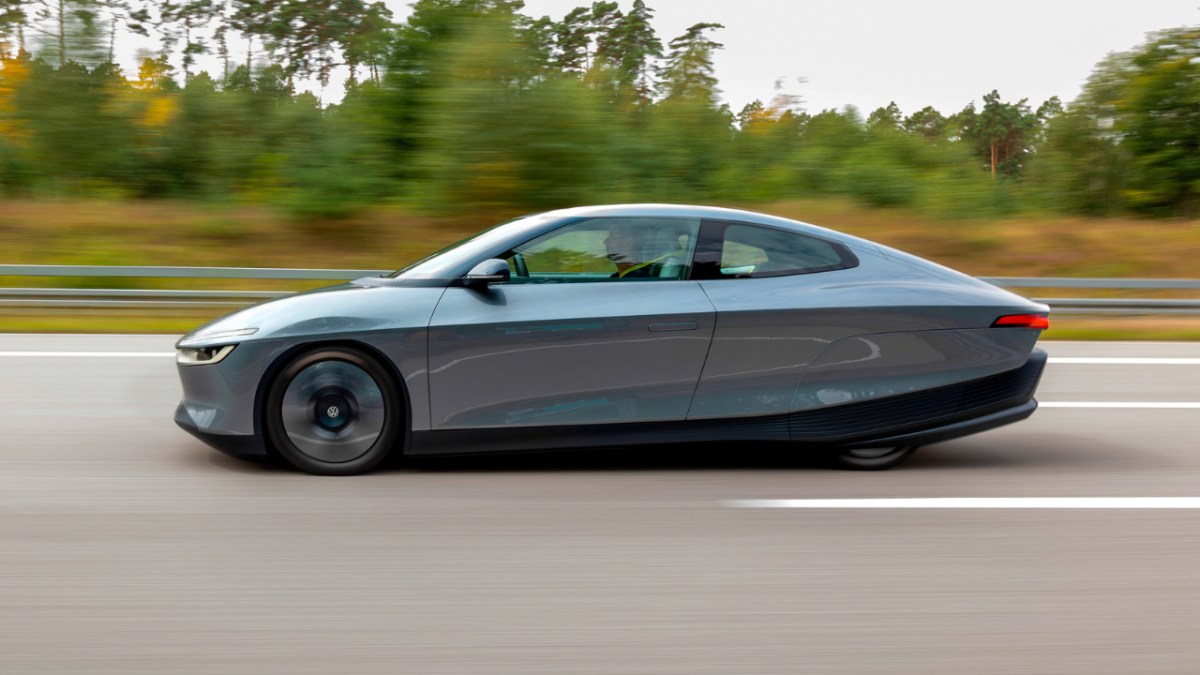
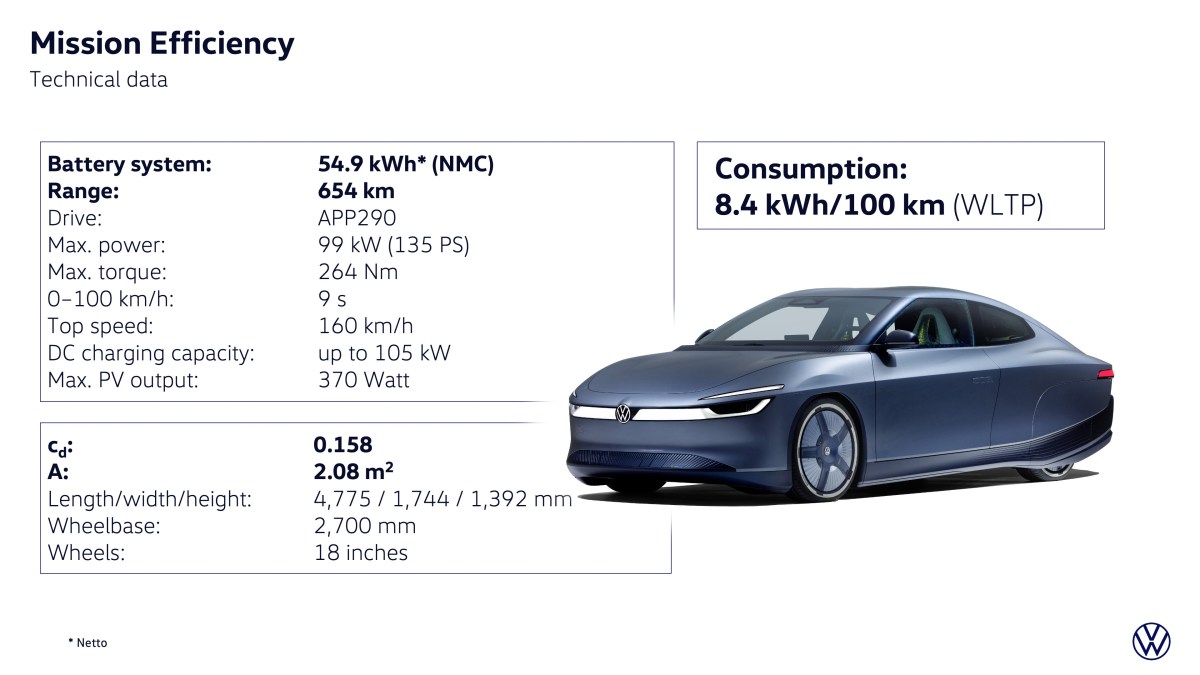
To prove the concept's real-world mettle, Volkswagen's development team unleashed the prototype on an officially documented 794.33 miles marathon. Starting from the mothership in Wolfsburg, the car glided through Poznań and Olomouc before rolling quietly into Vienna. It pulled up having stopped to charge exactly once, registering an average consumption of 6.89 kWh/62 miles at the cells - or 7.51 kWh/62 miles once you factor in charging losses - with 102 miles of reserve range still glowing on the dash.
Cynics will naturally point out that the journey was completed at an average speed of 42.08 mph, another exercise in hypermiling rather than a wild run down the Autobahn, even if it did briefly touch 86 mph along the way. Still, the physics demand respect: at a constant-speed of 42 mph without climate control running, the car recorded 6.48 kWh/62 miles - roughly equivalent to running three hairdryers for an hour.
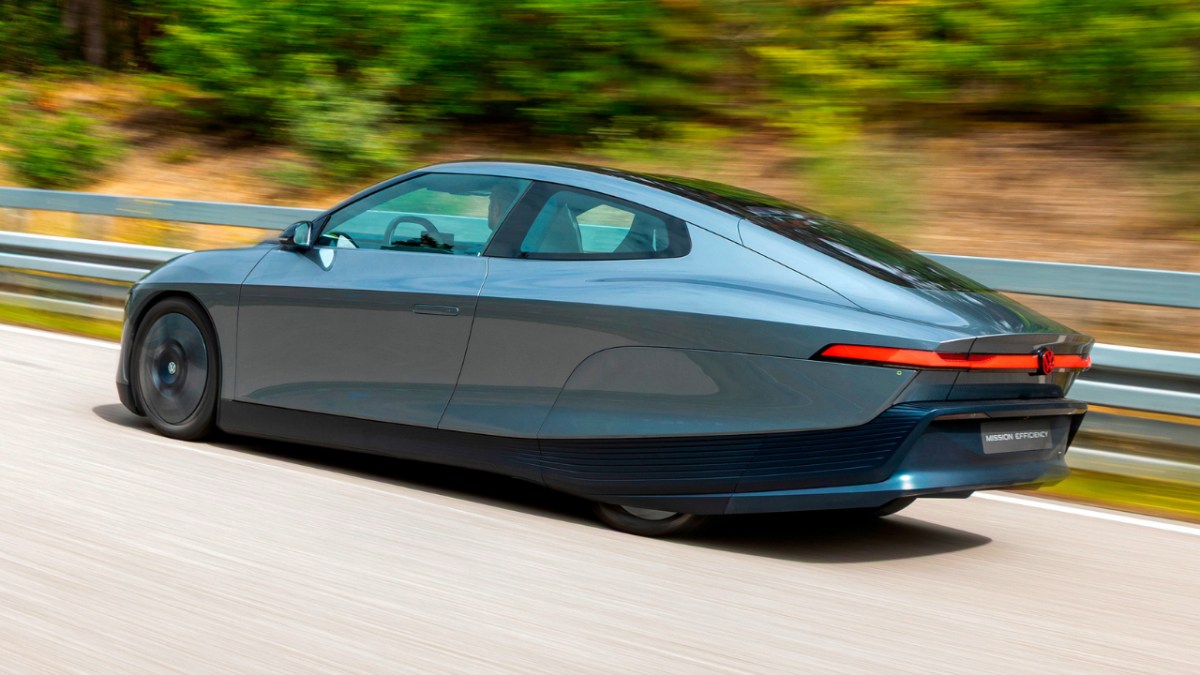
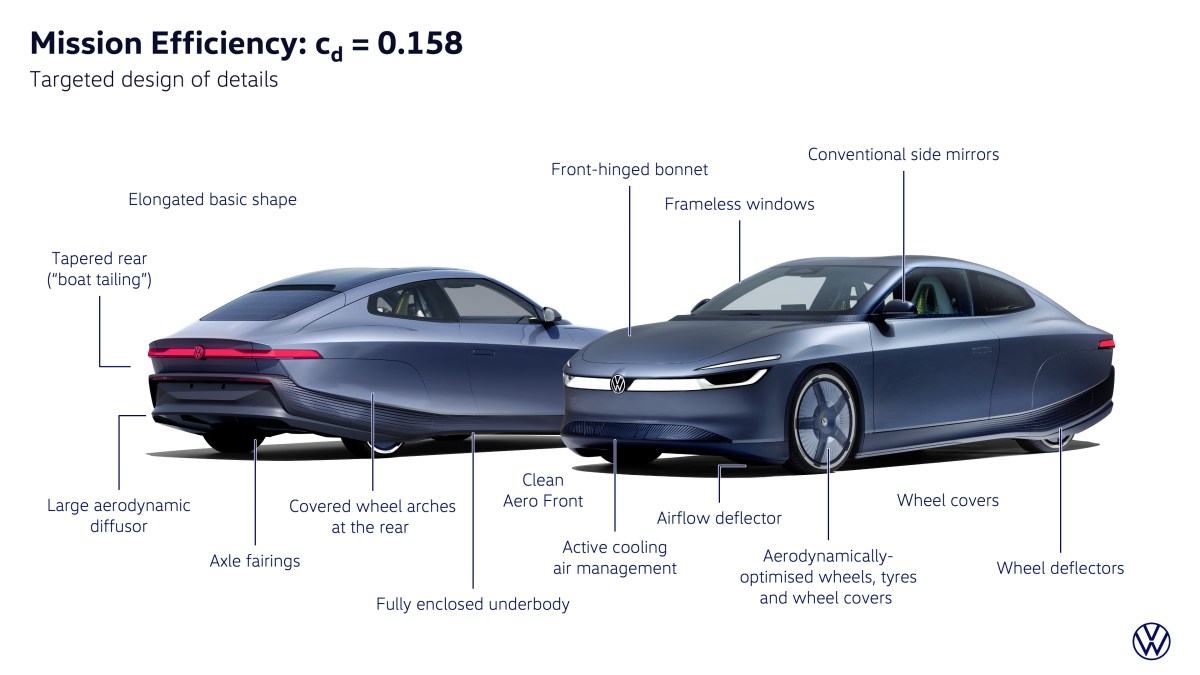
How did Wolfsburg pull off these numbers? By waging an uncompromising war on the air. Modern electric SUVs barge down the highway with all the aerodynamic subtlety of a flying brick, but the Mission Efficiency registers a drag coefficient of just 0.158 - a claimed world record for road-legal passenger vehicles. The original XL1 recorded 0.186; General Motors' fabled EV1 hovered at 0.19.
The new concept achieves this using a teardrop silhouette, a tight frontal area of only {{2.08 m²}}, active radiator flaps that seal shut when cooling demands drop, flush door latches, and fully covered rear wheels that stop air swirling around the arches. The airflow management is so fanatical that VW patented dedicated inner-rim deflectors to keep turbulence from building inside the wheel barrels.
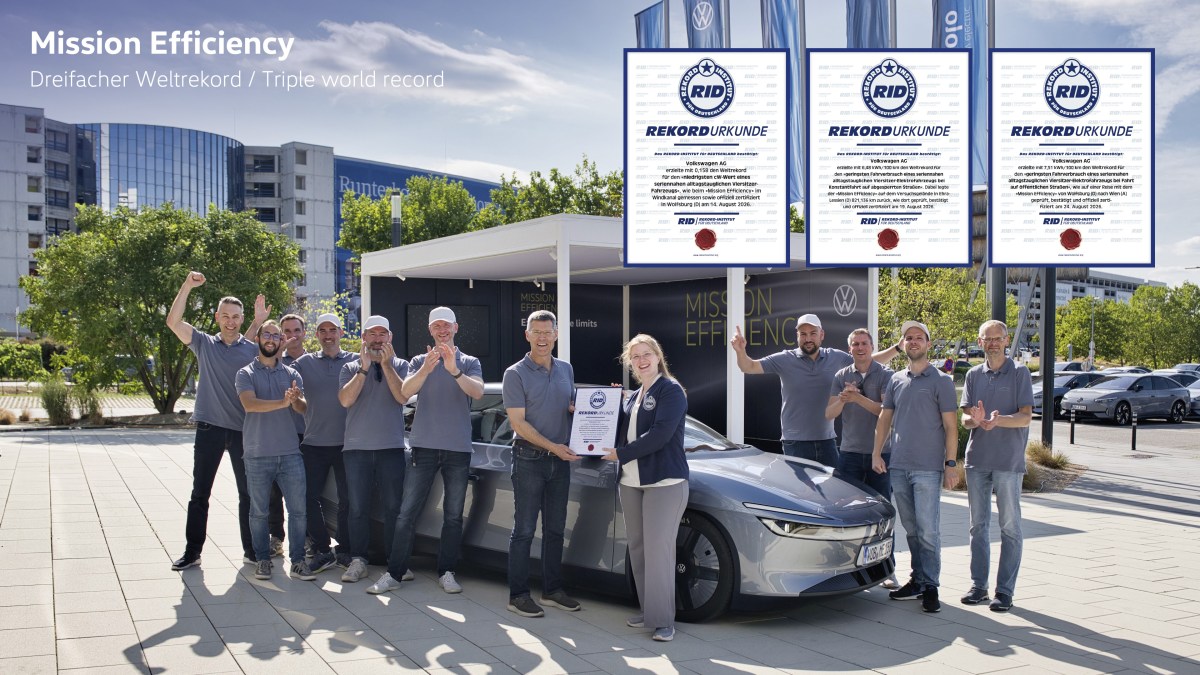
Past 50 mph, atmospheric drag is the absolute enemy of EV range; Volkswagen claims this shape demands 30% less energy than a standard ID. Polo at motorway speeds, slicing through the air at 87 mph on the exact same energy draw that the hatchback burns at 62 mph.
The Stuttgart machine measures 195.9 inches in length and stands 53.1 inches off the ground. Surprisingly, Volkswagen's nearest contender the Mercedes Vision EQXX is more compact at 188 inches long, sits marginally taller at 54.8 inches, and presents an even smaller nose to the oncoming wind - and yet, it "only" manages cD of 0.17. VW also avoids the excessive proportions of the ill-fated Lightyear 0, a vehicle that stretched to 200.1 inches in length and 56.9 inches in height while demanding an absurd $293,000 before its Dutch creator drifted into financial ruin.
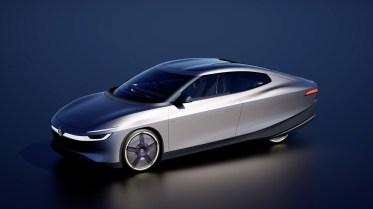
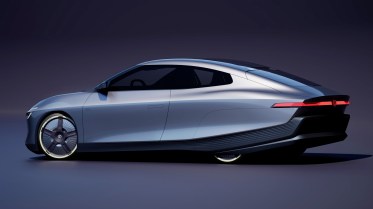
What makes this concept genuinely intriguing, is that under its composite exterior is almost zero bespoke race-car engineering. Rather than fabricating an exotic platform from scratch, engineers bolted the body straight onto Volkswagen's everyday, front-wheel-drive MEB+ architecture - the same high-volume platform used by the upcoming ID. Polo and ID. Cross. Tucked between the front struts sits an ordinary 99 kW (135 horsepower) electric motor wired to a standard 54.9 kWh (usable) battery pack.
The front suspension uses standard MacPherson architecture, but the rear axle debuts a new electromechanical brake system engineered in partnership with AUMOVIO. By ditching heavy hydraulic fluid lines and variable hardware at the back, the setup trims extra friction and manages to get sharper energy recuperation under deceleration. In essence, it is everyday commuter hardware dropped into a slippery bullet.
That ruthless thriftiness carries straight down to where the rubber meets the tarmac. Because rolling resistance and wheel turbulence typically eat up between 25% to 30% of a vehicle's total resistive drag, Volkswagen partnered with Continental to develop a tailor-made compound based on the EcoContact 7. With a rolling resistance rating of just 10.8 lb per tonne, the tyres sit roughly 25% below the qualifying threshold for the European Union's highest Class A efficiency grade.
Up top, the glass roof and rear tailgate get 370W of solar power. Thankfully, rather than attempting the fool's errand of charging the high-voltage traction pack directly, the solar cells feed the 12-volt auxiliary system, lightening the load on the main battery and adding up to 19 miles of driving per day in bright summer conditions.
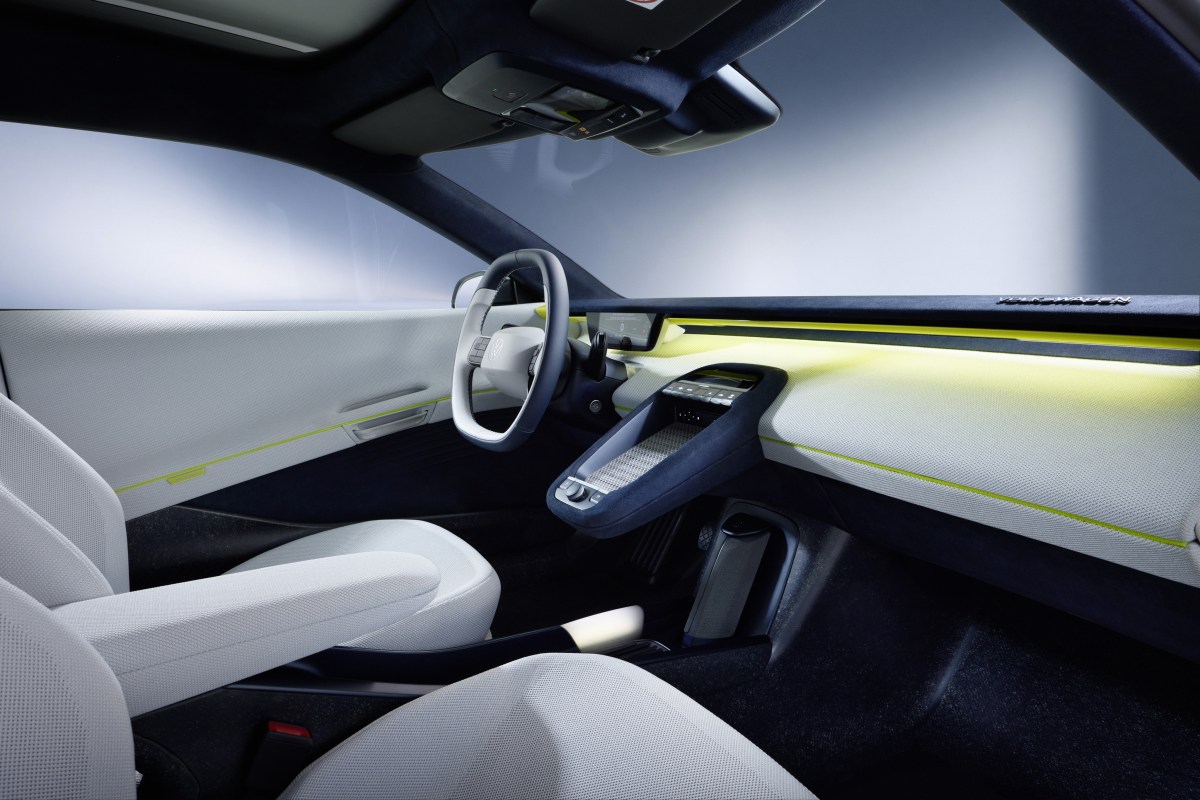
The spartan philosophy continues inside. There is no cinema-wide touchscreen on the dashboard - instead, you get a clean "Bring Your Own Device" bracket (thank you Dacia Spring), where your personal smartphone or tablet clips in to manage navigation and telemetry. A standalone portable Bluetooth speaker in the center console replaces audio hardware.
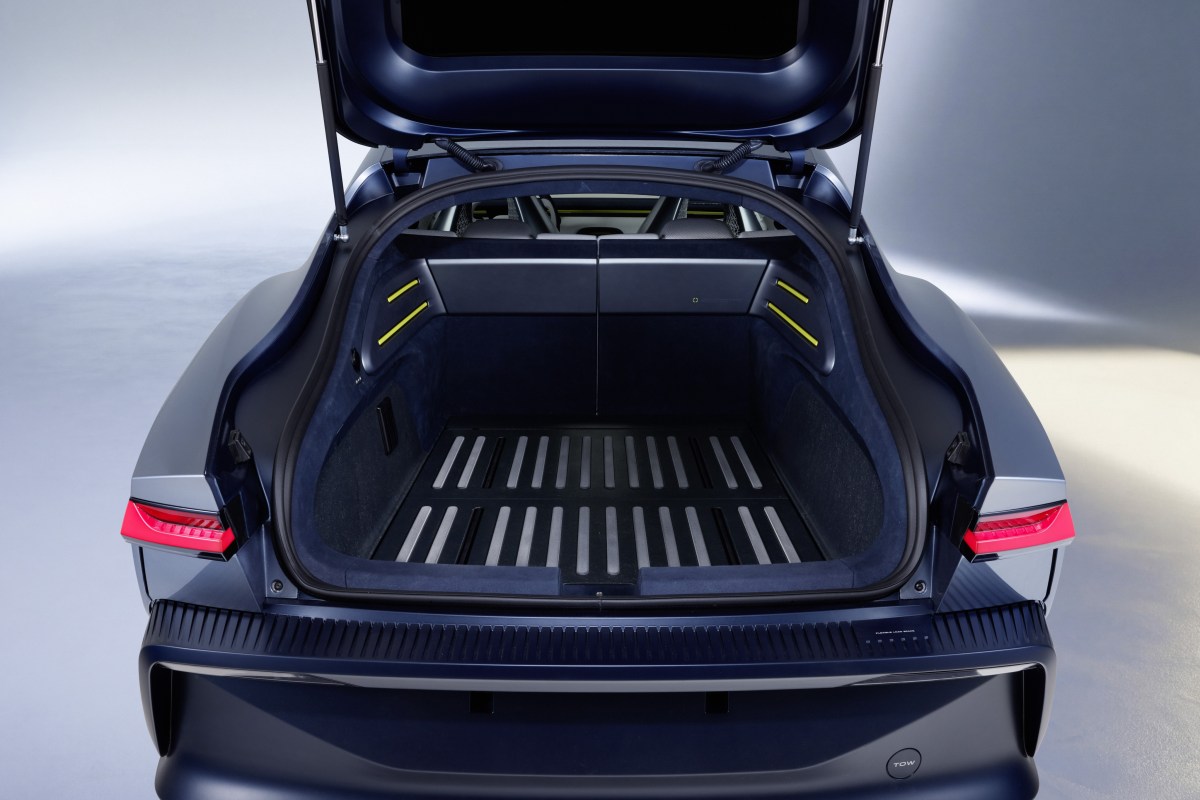
The interior is strictly configured as a 2+2. Front occupants enjoy adult-sized head and legroom, but the sharply raked roofline means the two rear sculpted seats are limited to people under 5.25 ft tall. Because the teardrop profile stretches out rather than chopping off abruptly, the rear cargo bay swallows 17 ft³ of luggage, out-hauling the token 4.24 ft³ cavities normally found in one-off eco-specials.
But I think that celebrating this slippery triumph and ignoring wider picture would be wrong. When technicians in Wolfsburg were busy fine-tuning millimeter-precise wheel deflectors, the bosses were confronting the bitter reality of German factory closures for the first time in the company's history. Tens of thousands of jobs are about to go, shifts are being eliminated, and the brand is cutting its product lineup.
The European electric vehicle market has softened, aggressive Chinese brands like BYD are stripping VW of its long-held market dominance in the East, and the first generation of ID-badged electric cars left a sour taste among early buyers thanks to uninspired cabin plastics, infuriating haptic controls, and troubled Cariad software.
Which brings us right back to that maddening thirteen-year gestation period. In 2013, Volkswagen had the ultimate aerodynamic and lightweight efficiency blueprint sitting right in front of its nose. Instead of putting that obsession with drag and weight into the electric transition, Wolfsburg spent years mired in the aftermath of the diesel crisis, followed by years of building slab-sided electric crossovers that need mammoth battery packs to brute-force their way through the air. It took thirteen years to arrive at the blindingly obvious conclusion: you do not need a 1,984 lb battery pack to cross a country if you shape the vehicle properly in the first place.
Will Volkswagen actually put this machine into showrooms? Brand chief Thomas Schäfer framed the car as a testament to "technology for the masses, not just for the few," but anyone who has followed the industry long enough knows how this script plays out. The sleek teardrop silhouette will be wheeled into the company museum, the frameless glass and slick aero skirts will be softened by accountants, and the ID. Polo will hit dealer lots as a conventional, upright supermini.
If a production derivative of the Mission Efficiency ever does escape the boardroom guillotine, it will not arrive carrying the $29,300 window sticker everyday motorists are begging for. More likely, it would morph into a limited-production halo exercise priced well north of $176,000 - a showpiece for eccentric collectors, just as the XL1 was before it.
That is a properly bitter pill - the Mission Efficiency shows that the engineering genius that once defined Wolfsburg's finest hours is still alive, kicking, and capable of weaving miracles out of everyday Polo-grade running gear. The technical staff understands the cure for electric range anxiety - not heavier chemistry, but aerodynamics. Yet it counts for very little when the mothership is bruised, and financially defensive. Until Volkswagen has the stomach to build this car for the people (like it says on its badge), the Mission Efficiency will be a bittersweet reminder of what Wolfsburg can do when it gets out of its own way.
Related
Reader comments
- social engineering
Post a concept car to push down recent media. How many VW factories closing? How many people getting cut? How long has software been delayed?
- 15 Sep 2026
- kmq
- Anonymous
as mentioned..this is just hypermilling. you can do that with ice car and get incredible results. why not test doing 200km/h+ on the autobahn.
- 15 Sep 2026
- D6e
- Anonymous
Nobody liked Mercedes EQ design, which was as aerodynamically as technically feasible.
- 15 Sep 2026
- JHd