Tesla’s Chinese powerhouse is feeding the world while losing home turf
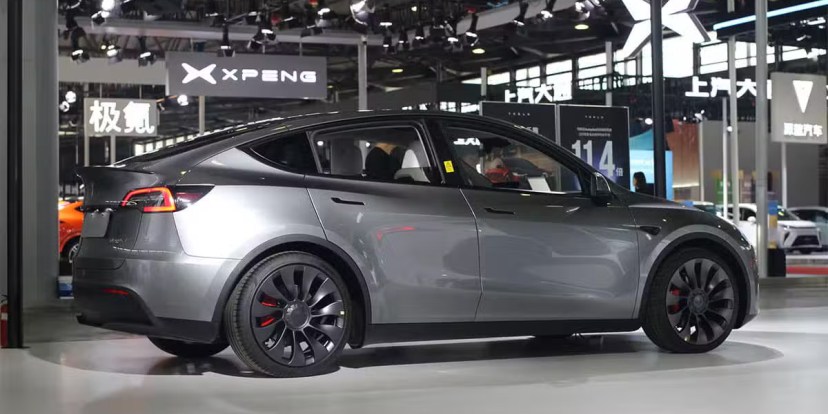
Remember the big declarations made when Tesla broke ground on the muddy outskirts of Lingang back in 2019? Elon Musk stood before local dignitaries and promised that Gigafactory Shanghai would exist purely to build electric cars for Chinese drivers. Fast forward to the first half of 2026, and that original promise has aged poorly - like many others.
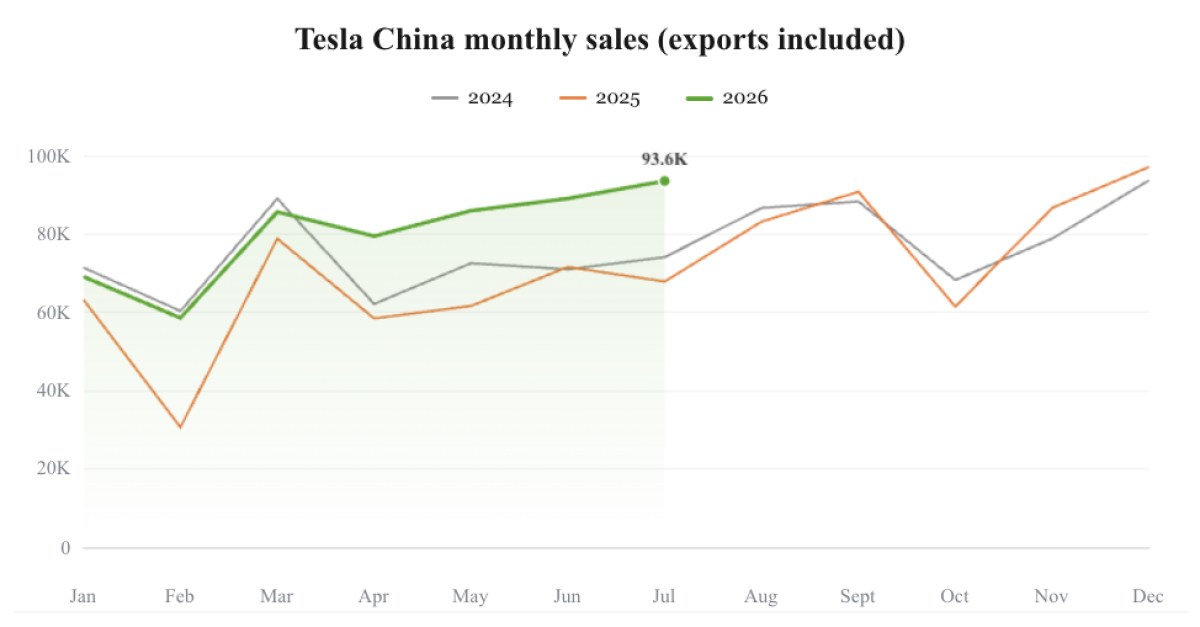
Look closely at the fresh numbers from the China Passenger Car Association (CPCA), and you will spot an issue that many financial headlines love to gloss over. The official wholesale output looks amazing on paper at 467,949 vehicles produced in the first six months of the year - a 28% jump year-over-year that sits a razor-thin 2% shy of Giga Shanghai's all-time record set in 2023. Corporate spin machine: engaged!
 Source: CnEvPost
But peel back the shiny "wholesale" totals (which lump domestic sales together with export cars), and reality shows an ugly face. Actual retail sales to Chinese buyers slumped to 238,955 Teslas between January and June. That's a 9% drop year-over-year, and a stinging 19% drop from the company's first-half domestic high-water mark of 294,105 units from 2023.
Where do all those extra EVs actually go? Domestic sales might have hit the skids, but exports out of Shanghai jumped by 127% to 228,994 vehicles. Giga Shanghai has quietly turned into an offshore supply engine, feeding hungry showrooms across Europe, Canada, and Australia. In fact, nearly 49% of all vehicles rolling out of Giga Shanghai are now shipped abroad - a giant leap up from 28% just a year ago.
 Source: CnEvPost
By July 2026, when Tesla reported a wholesale figure of 93,000 vehicles, the vast majority were once again wearing protective transit wrap and heading toward overseas docks. The factory that was built to conquer China is effectively keeping the rest of the planet stocked.
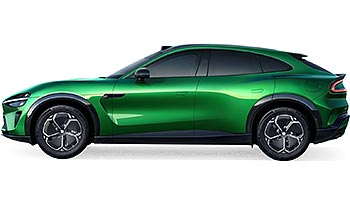
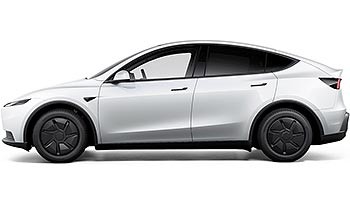
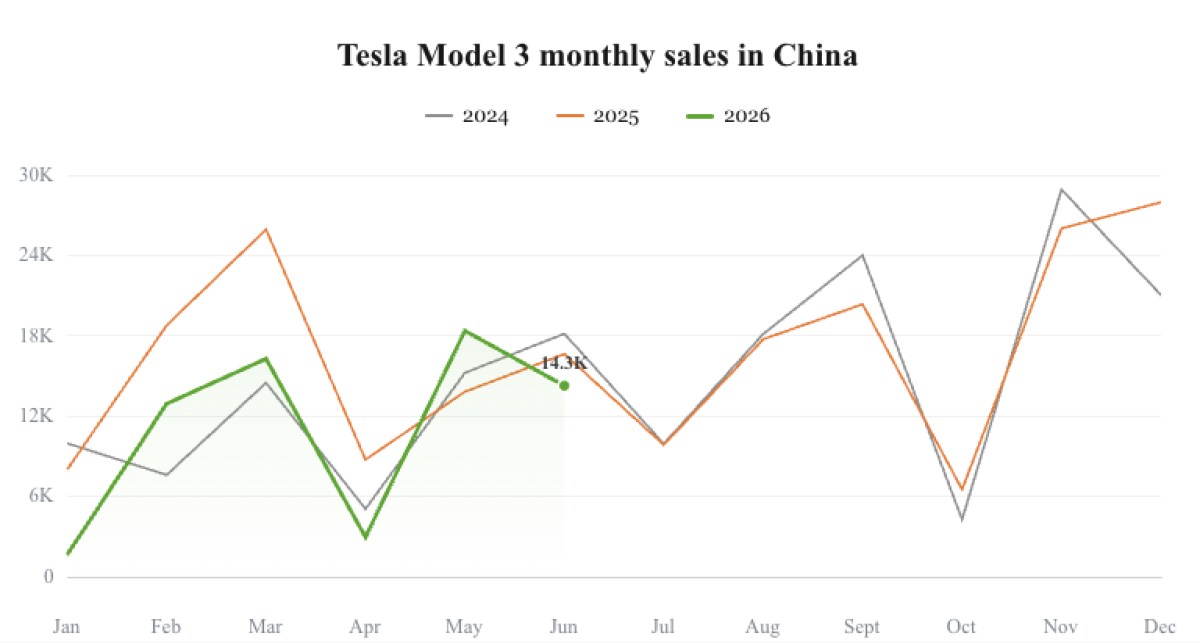
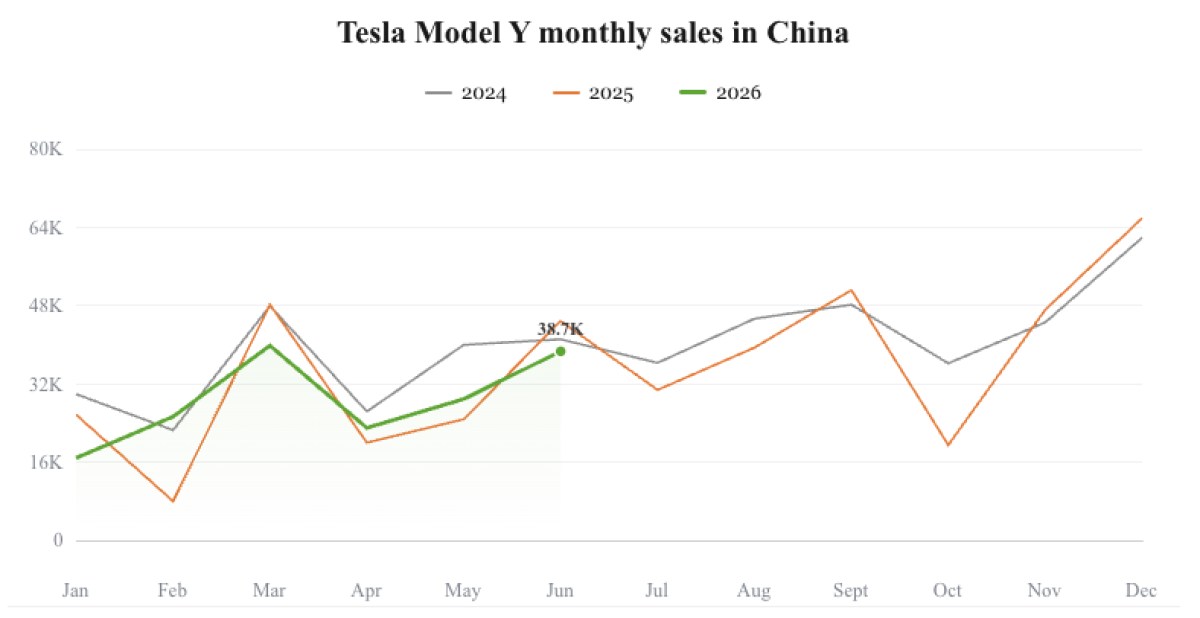
But this domestic slide isn't some anomaly - it is the result of a hyper-competitive price war taking place across the Chinese market. Local brands like BYD, Nio, and Xiaomi are stealing Tesla's market share with ultra-rapid product cycles, aggressive technology integration, and razor-sharp pricing - and Tesla's lineup shows its age. Chinese buyers are no longer mesmerized by the minimalist cabin of an aging Model 3 or Model Y.
 Source: CnEvPost
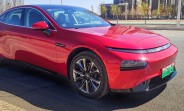
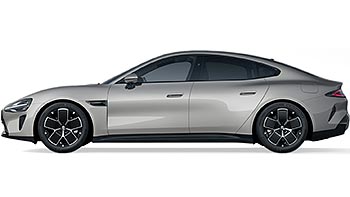
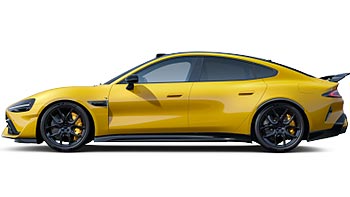
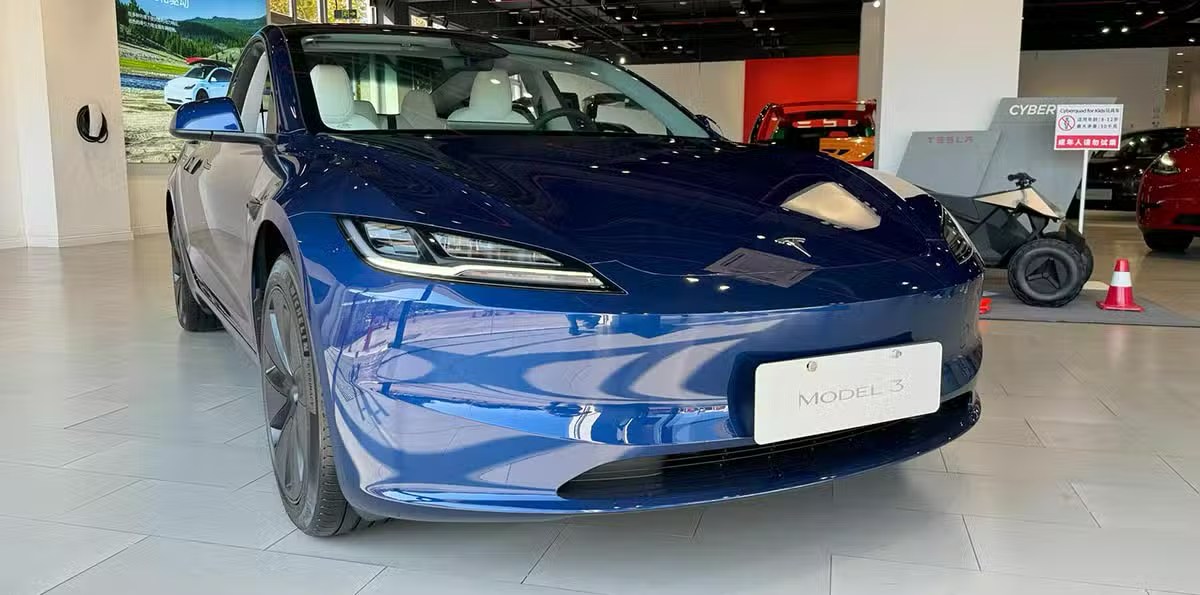
Take a look at the physical real estate and price tags on offer in China right now. The entry-level Tesla Model 3 has a starting price of RMB 235,500 (roughly $34,800). For a Chinese consumer shopping around today, that is increasingly tough to justify against domestic heavyweights. The sleek Xiaomi SU7 gives buyers more road presence, a lavish digital cabin, and genuine performance credentials for just RMB 215,900 (around $30,400).
BYD Seal undercuts the Tesla by tens of thousands, starting at an eye-popping RMB 109,800 (about $16,200). When domestic buyers can offer fresher styling and more performance for far less cash, Tesla's once-invincible aura begins to flake off.
Using Shanghai as an export hub was a clever idea when the factory needed to keep its assembly lines going during supply chain hiccups in early 2025. But using foreign markets to hide a domestic slide creates a long-term headache.
China is the world's largest EV market, and 2025 was Tesla's first-ever annual sales decline in the country. Trying to paper over a domestic slump with international shipping works okay for quarterly calls, but it doesn't change the fact that Chinese buyers have moved on to shinier toys.
 Source: CnEvPost
To make matters even more complicated, the export boom comes alongside a geopolitical knot. Reports from The Wall Street Journal suggest that Tesla leadership is weighing radical options for its Chinese business - contemplating everything from a structural spinoff or outright sale to winding down operations entirely - to clear a path for a potential corporate merger with SpaceX.
Try explaining to security auditors in Washington that your rocket company, a main Pentagon defense contractor, shares its manufacturing backbone with a facility in Shanghai. Musk predictably labeled the report "fake news" but the tensions are undeniably real.
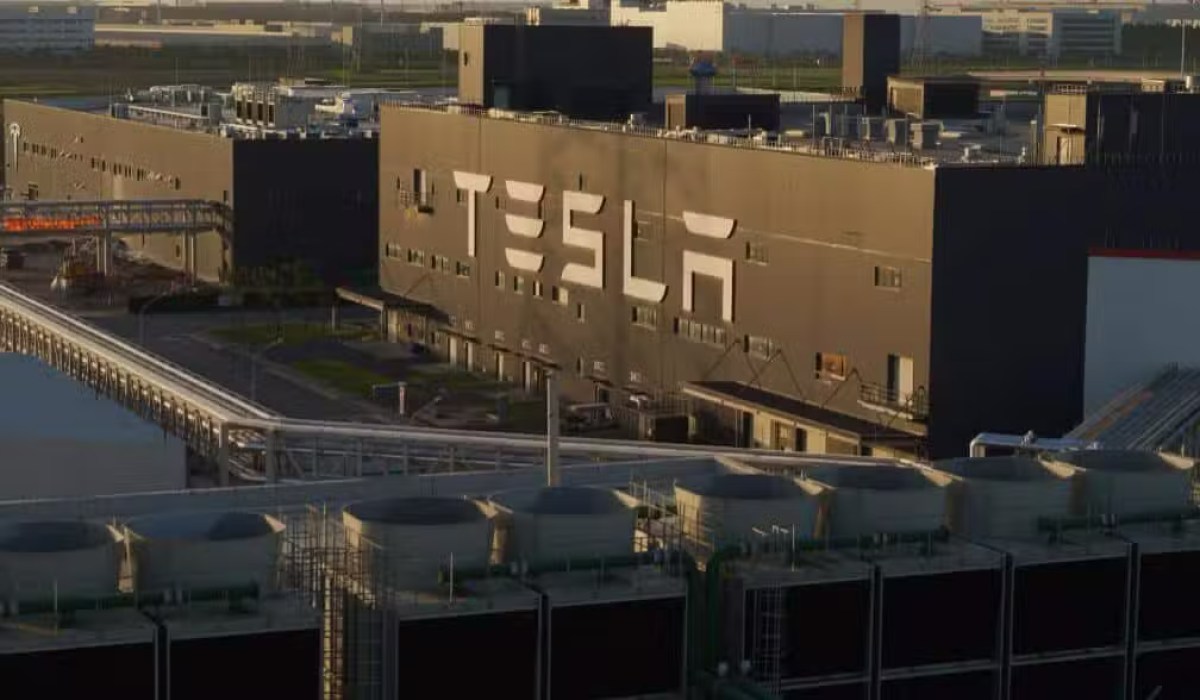 Tesla Giga Shanghai
If Tesla were forced to carve off its Shanghai operations to appease Washington, the collateral damage would be devastating. A spinoff wouldn't just mean handing away a shrinking slice of Chinese retail sales - a loss Tesla could survive. It would mean surrendering nearly half a million vehicles worth of the company's most efficient manufacturing capacity. It would cut the main supply that keeps European and Canadian showrooms stocked.
What started as a plan to dominate Chinese roads has turned into a balancing act between geopolitical friction and global manufacturing logistics. Giga Shanghai may no longer be the domestic powerhouse Elon Musk hoped for, but it has become the engine driving Tesla's global volume, and losing it would leave a big hole in the brand's international strategy.
Related


Reader comments
Nothing yet. Be the first to comment.