Tesla’s cold-gas-powered Roadster has landed
Nine years is an eternity in the auto world - long enough for a clean-sheet platform to be conceived, engineered, facelifted, and sent to the great scrapheap in the sky. When Elon Musk drove a cherry-red targa out from the back of the electric Semi in late 2017, the brief seemed simple enough: build a gorgeous car that would deliver a proper, petrolhead-grade black eye to internal combustion. We were promised a grand tourer capable of crushing 620 miles on a single charge while embarrassing Maranello’s finest.
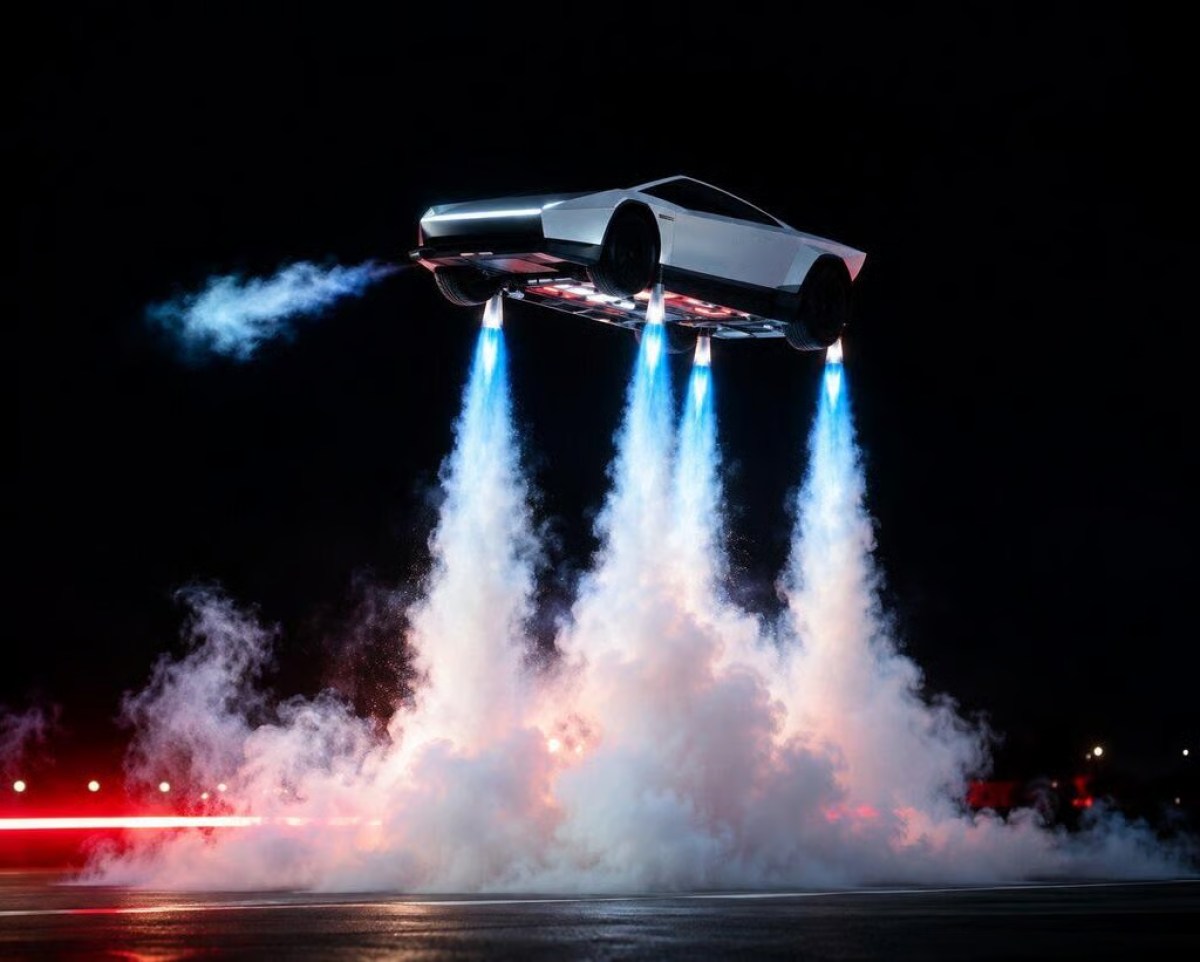
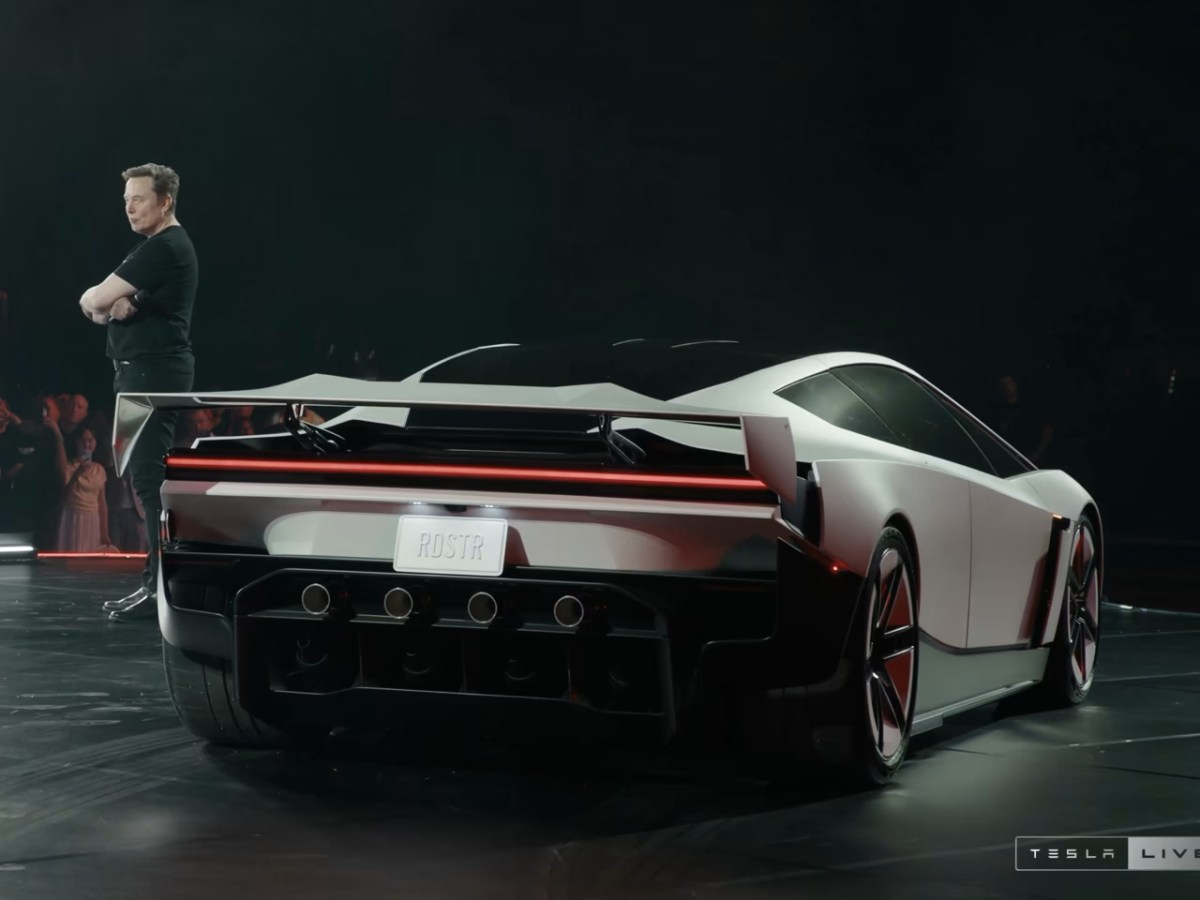
But what rolled out onto the stage last night was not the salvation of the purebred two-door sports car that I hoped for - it was an audition for a corporate defense contract. Between the fighter-jet posturing and the surreal spectacle of a road car doing flips in mid-air, the message was clear: the old script has ended up in the incinerator.
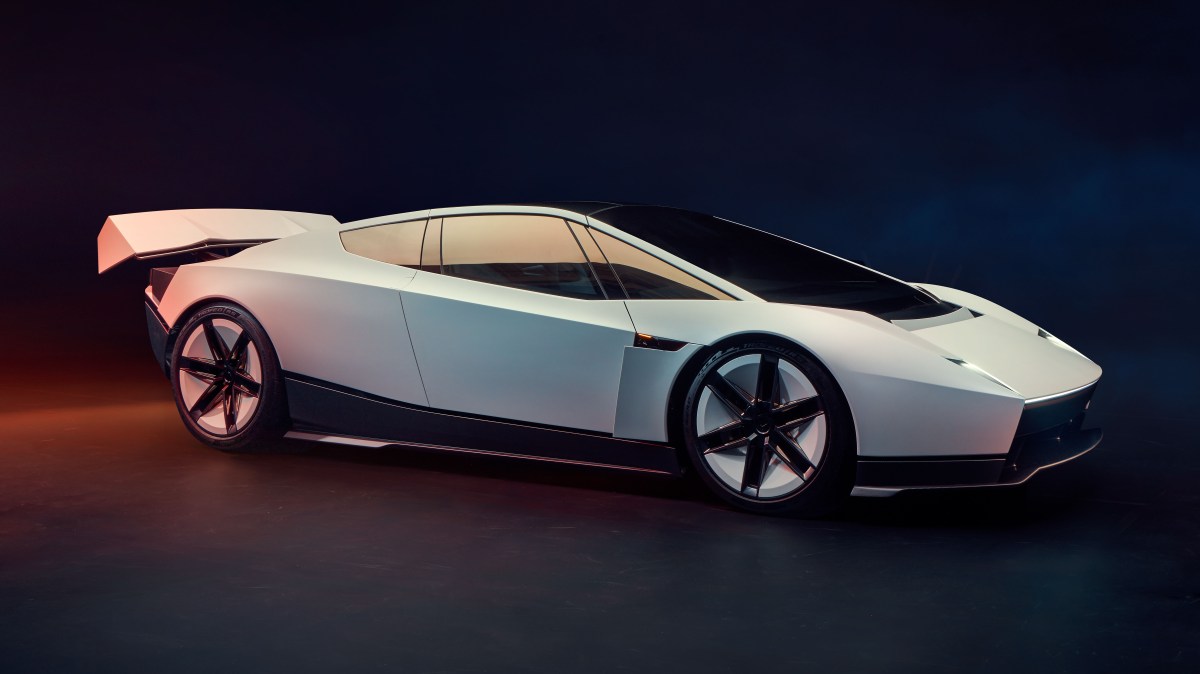
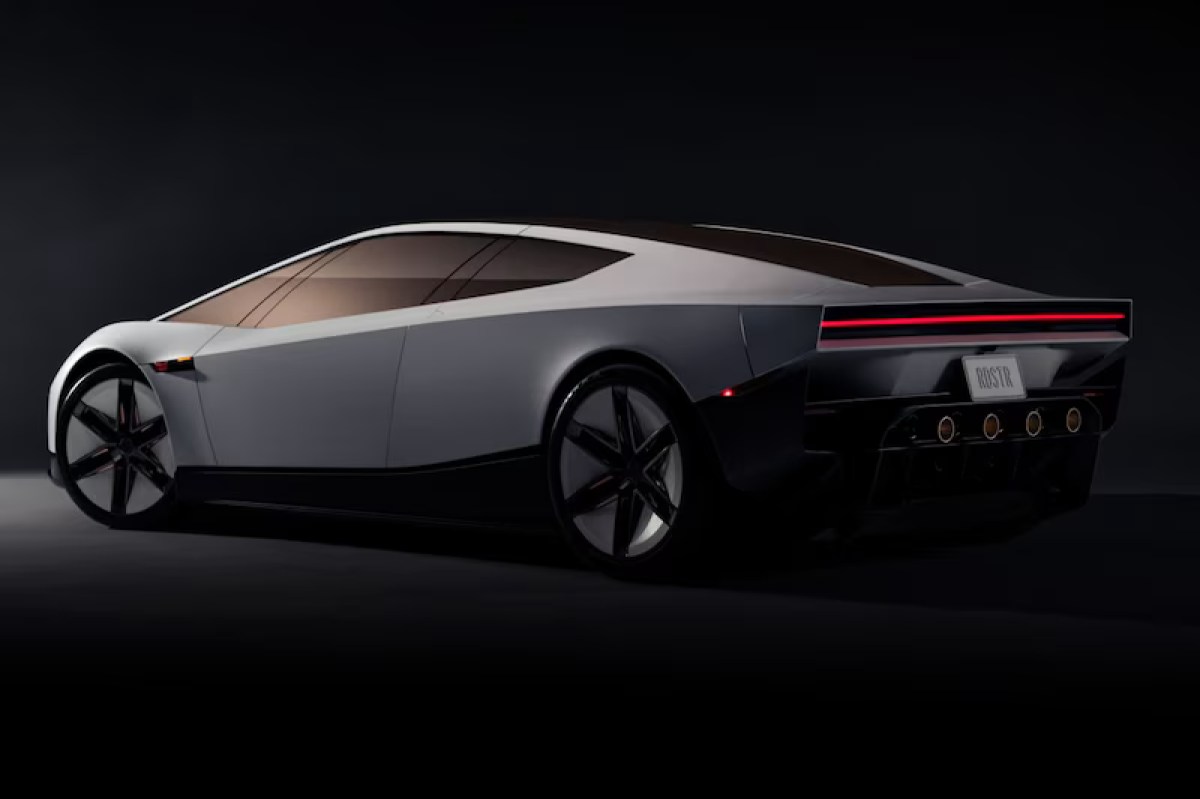
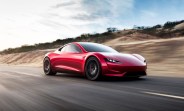
The sensual, organic curves of the 2017 concept have been butchered in the name of corporate synergy. Tesla calls the new design language a product of “cyberfication,” drawing inspiration from the SR-71 Blackbird and the F-35, though in the metal it shares far more DNA with the Cybertruck and the Cybercab. I can’t help but keep seeing a tricked-up Lamborghini Aventador.
Draped in an anti-reflective “Ano White” coating originally created to protect rocket fairings, the bodywork trades classic sports car proportions for flush-mounted aerodynamic planes, squinting hidden headlamps, and a single slash of taillight. The glasshouse is covered in a gold-tinted vapor-deposited film mimicking an astronaut’s helmet visor - a party trick that looks really good, even if nobody actually asked for it. It is menacing, cold, and divorced from the road-hugging grace of the one we were shown nearly ten years ago.
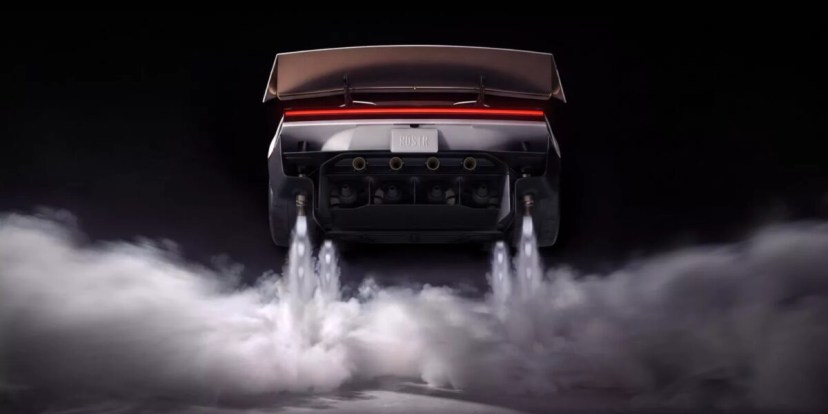
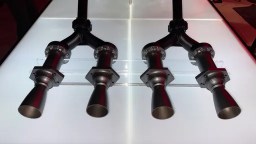
Peel away the stealth-fighter posturing, and there’s some genuinely mind-bending (if lunatic) engineering going on. Right behind the passenger cell - where you would normally expect to find a tailored luggage set - is a 7.1 ft³ composite-overwrapped pressure tank. This carbon-fiber sphere stores compressed nitrogen at an eye-watering 10,000 psi.
To keep the plumbing from grenading under explosive decompression, the car uses equal-length titanium feeder tubes and Inconel splitters, governed by heavy-duty actuator motors ripped straight out of the ankle joint of Tesla’s Optimus humanoid robot. Lars Moravy and his engineering crew had to ensure gas pulse parity down to the millisecond; any fractional delay in gas flow between the left and right cold-gas nozzles would induce terrifying, out-of-control yaw at triple-digit speeds.
Then we have the underfloor wizardry. Tesla has fitted the Roadster with what it calls a “multi-mode suction system” - the same ground-effect fan concept pioneered by Gordon Murray’s Brabham BT46B and perfected by McMurtry Automotive.
The company claims this vacuum arrangement can generate up to 10,362 lb of static downforce - enough to stick the car to the ceiling of a tunnel before the wheels have even rotated an inch. And it works - if you haven’t seen the new Roadster driving upside down yet, there’s a video at the end of this article.
Source: MotorTrend
The idea behind mounting rocket nozzles to an automobile boils down to the physics of tire friction. Even with all-wheel drive, sticky bespoke rubber, and a mountain of instant torque, an electric launch eventually slams headfirst into the coefficient of friction. Traditional hypercars plateau when the tires slip; Tesla’s solution is simply to brute-force physics by shooting 80 kN of supersonic gas out of four rear nozzles.
In theory, that supplementary push sidesteps the tire problem entirely, hurling the car from 0 to 60 mph in a stated (and incomprehensible) 0.81 seconds. But watching the slow-motion footage reveals that the thrusters must prime and fire fractions of a second before the wheels roll - I’d call it aerospace turbo lag.
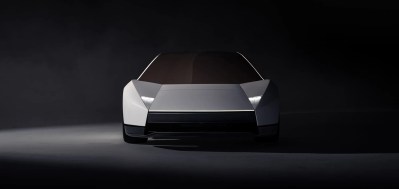
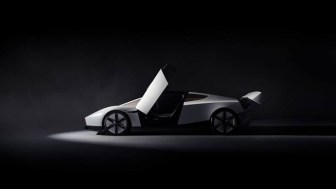
There will be three flavors of the Roadster eventually available: the entry-level Performance, the race-focused Thrust, and the unhinged Rocket. Looking at the specification sheet reveals just how much genuine automotive usability has been cannibalized to chase these drag-strip parlor tricks. The 2+2 grand touring layout is dead; the Performance and Thrust cars are strictly two-seaters, and the top-shelf Rocket ditches the passenger seat entirely to make room for auxiliary pressure tanks and upward-facing stabilization thrusters.
More telling is the range figure, which cratered from the original 620 miles down to a pedestrian “over 300 miles.” In 2017, Tesla planned to pack in an enormous battery pack to draw the immense amperage needed for hypercar speeds. And now, courtesy of pneumatic thrusters and fan suction to deliver performance spikes, they have downsized the battery, leaving real-world touring range in the fantasy world.
Is there any competition out there? The Rimac Nevera R is a carbon-tub masterpiece stretching 187 inches nose to tail and carrying a hefty 5,020 lb curb weight. It costs an astronomical $2,690,000, but it achieves its savage performance entirely through four-wheel torque vectoring and tire management, carving lap times without spewing compressed gas at the pit wall.
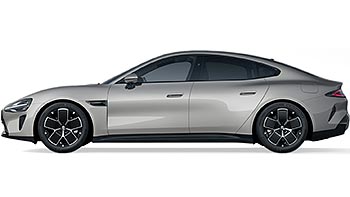
Mainstream performance benchmarks like the Xiaomi SU7 Ultra (with the new Extreme version already spotted testing) and Porsche Taycan have been hunting lap records on the Nürburgring Nordschleife using mechanical downforce and thermal endurance. Those cars feel like tools built by and for drivers - Tesla’s latest creation is an engineering dare designed to generate ten-second social media clips.
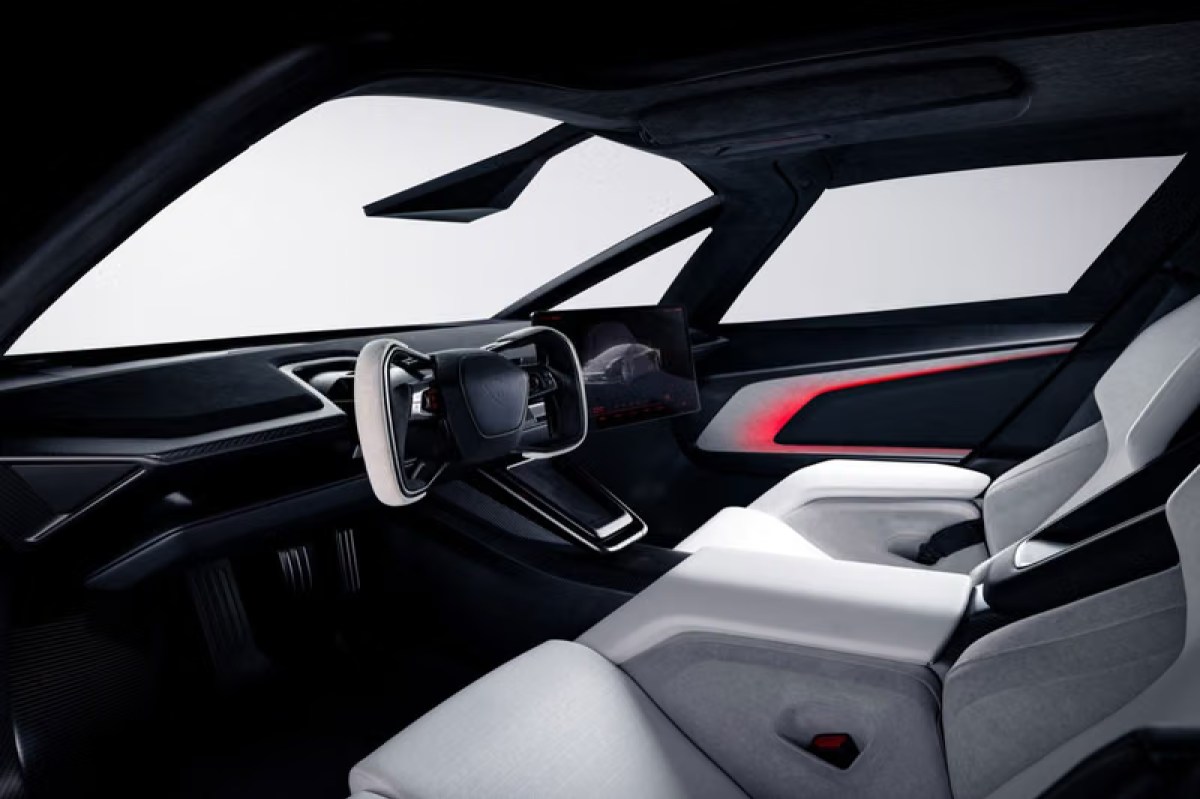
The divergence from traditional sports car ethos only deepens once you climb inside the cockpit. You sit unusually high for an exotic - a dead giveaway that a structural skateboard battery pack is sandwiched under the floor, rather than packaged behind the spine as Maserati has done in the GranTurismo Folgore.
The driver grips a minimalist steer-by-wire yoke flanked by a standard Tesla display, staring out through that gold-tinted windscreen. The seats are fixed to the composite monocoque with manual adjusters to save precious grams, with swathes of exposed titanium and structural magnesium. It is stark, functional, and very high-tech, but steer-by-wire combined with aggressive vacuum skirts means driver feedback will be synthetic.
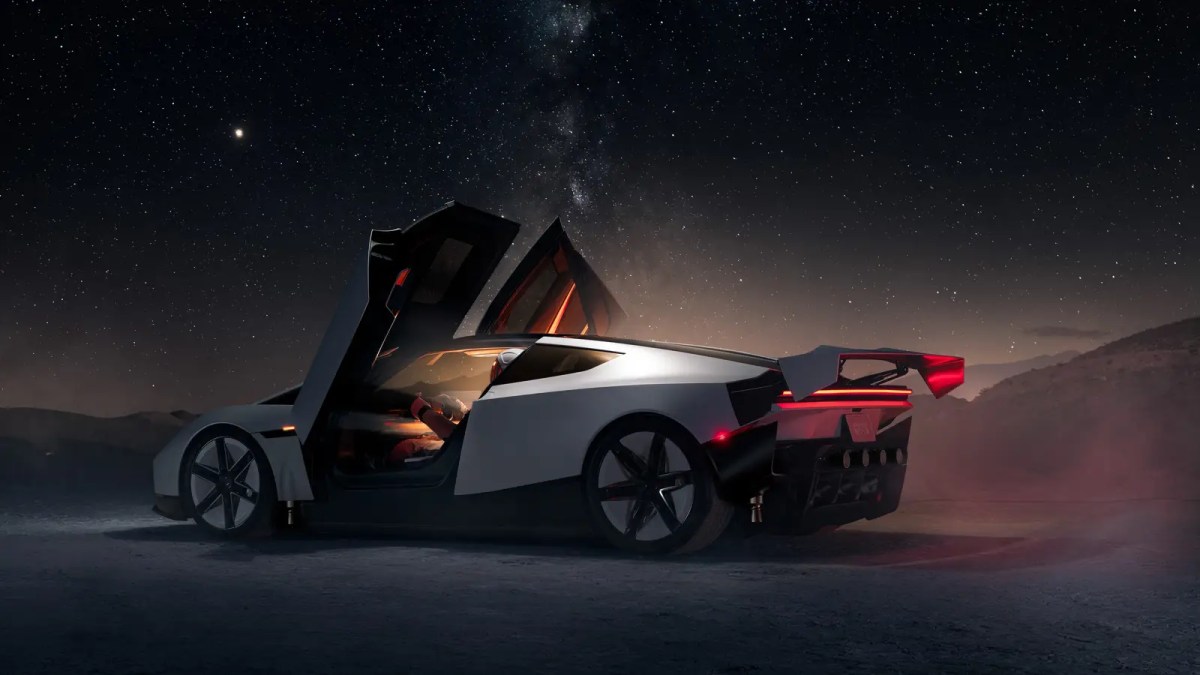
But the fun starts when you realize the logistical nightmare of trying to use this car anywhere near civilization. Blasting high-velocity gas out of the rear bumper might look awesome on a runway, but on a Sunday morning or on a crowded track day, that supersonic wash would pelt marshals, spectators, and trailing cars with tire marbles and track debris.
The Rocket trim is already not approved for public road use, and even the Thrust variant seems destined to get immediate circuit bans from track organizers. And the question of recharge cycles is still unanswered, though Musk himself suggested the car can “recharge its own tanks.” If a single flying lap or high-speed launch completely exhausts the 10,000-psi tank, will drivers be forced to wait twenty minutes for the onboard compressors to draw massive current from the traction battery to repressurize the tanks? Will there be any range left after?
The spectacle of cold-gas thrusters and kick-flipping prototypes hides a familiar playbook that the whole world knows all too well. The timing of this presentation - heavy on SpaceX cross-pollination and light on homologation realities - brings back the uncomfortable memories of the 2016 Solar Roof demonstration, staged right before Tesla bought SolarCity.
For the enthusiasts who handed over deposits ranging from $50,000 to $250,000 nearly a decade ago, the reward is an indefinite production target pushed to “2028, actually,” paired with an order book demanding yet another $45,000 within ten days just to keep a spot in line for an unpriced machine. There is incredible brilliance in the engineering here - nobody will ever doubt that. But until this winged, gas-belching wedge sets a verified time on a track that we can actually drive on, it is nothing more than a dazzling sideshow.
Related

Reader comments
Nothing yet. Be the first to comment.